
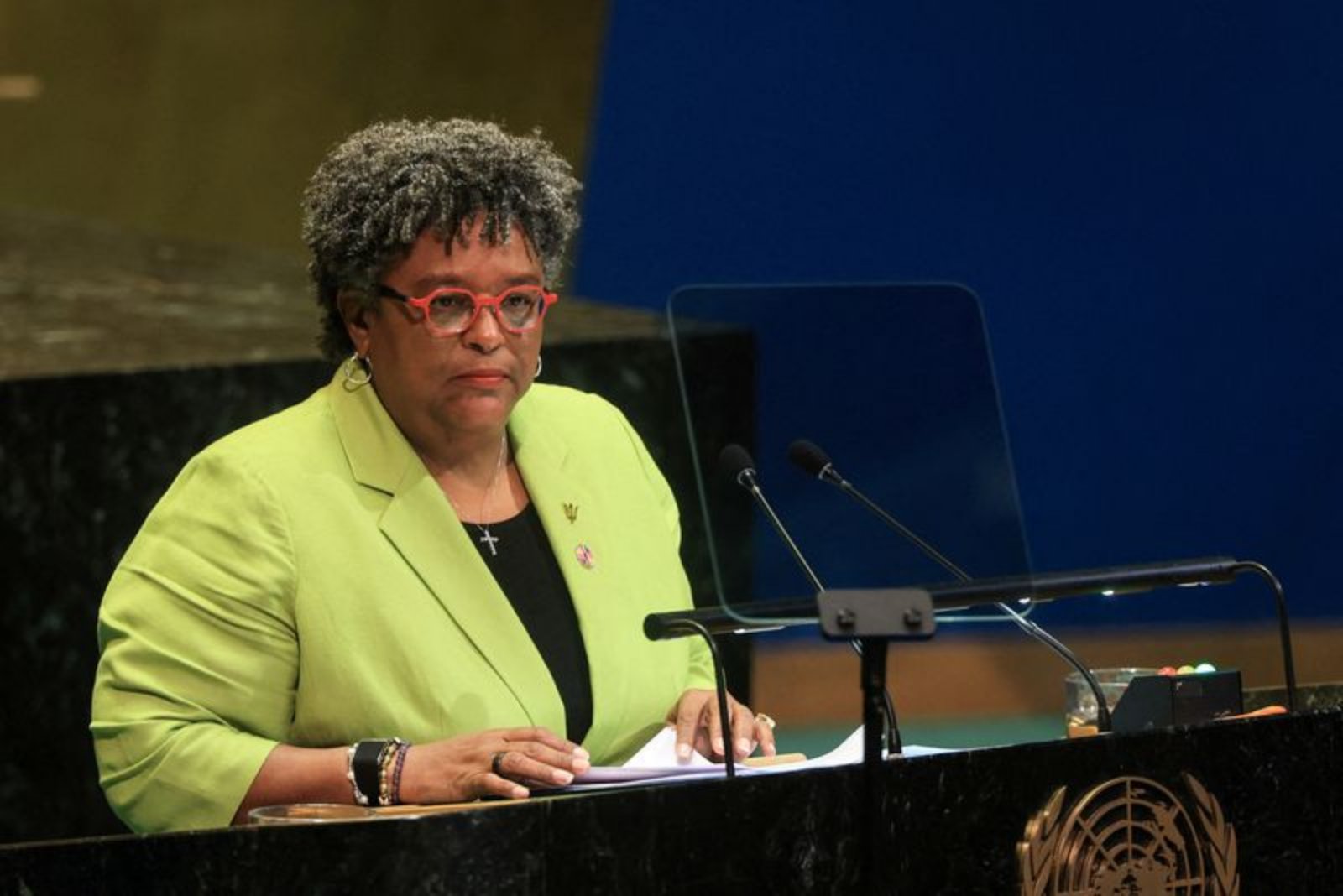
On Feb 11, citizens across Barbados cast their ballots in a general election in which Prime Minister Mia Mottley sought a third straight term in office, competing against opposition leader Ralph Thorne.
Barbados, the easternmost nation in the Caribbean with a population of roughly 283,000 people and an area a little over half the size of Singapore, delivered another high-stakes vote. Mottley has established a notable international profile among Caribbean leaders. She has served as rotating chair of the Caribbean Community, spoken on global stages urging stronger action on climate change, and in 2021 oversaw the nation's change in status from a British colony to a republic.
Only one other leader in Barbados has previously held more than two consecutive terms in office. The country has no constitutional term limits, and a successful third term for Mottley would make her the first woman to reach that milestone.
Mottley’s Barbados Labour Party (BLP) entered the contest from a position of parliamentary strength. The BLP held 29 seats in the House of Assembly going into the election, after sweeping all 30 seats in both the 2018 and 2022 elections. The Democratic Labour Party (DLP), led by Ralph Thorne, held a single seat. That balance shifted in 2024 when Thorne - who had been elected as a BLP representative for the Christ Church South district - crossed the floor and became leader of the opposition, giving the DLP its current representation.
Each campaign presented differing priorities. The governing party pledged to continue work on economic issues, cost of living concerns and its role on the international stage. The opposition focused criticism on matters of security and infrastructure and insisted policy attention should emphasize the domestic priorities of Barbadians.
In the run-up to voting, several candidates from opposition parties raised concerns about possible inaccuracies on the electoral register, citing issues such as missing names. The electoral commission responded by rejecting accusations of interference and asserting that the electoral process was legitimate.
Observers and voters awaited results that would determine whether the BLP would extend its dominance or whether the DLP could expand its parliamentary presence. Given the close attention to both international and domestic policy themes, the outcome carries implications for ongoing government priorities and for how the island positions itself externally and at home.
Contextual notes
- Mottley’s international profile includes regional leadership and climate advocacy, and she presided over the transition to a republic in 2021.
- The BLP held 29 seats entering the election; the DLP held one seat following a 2024 defection.
- Opposition candidates raised concerns about the electoral register; the electoral commission dismissed claims of interference.