
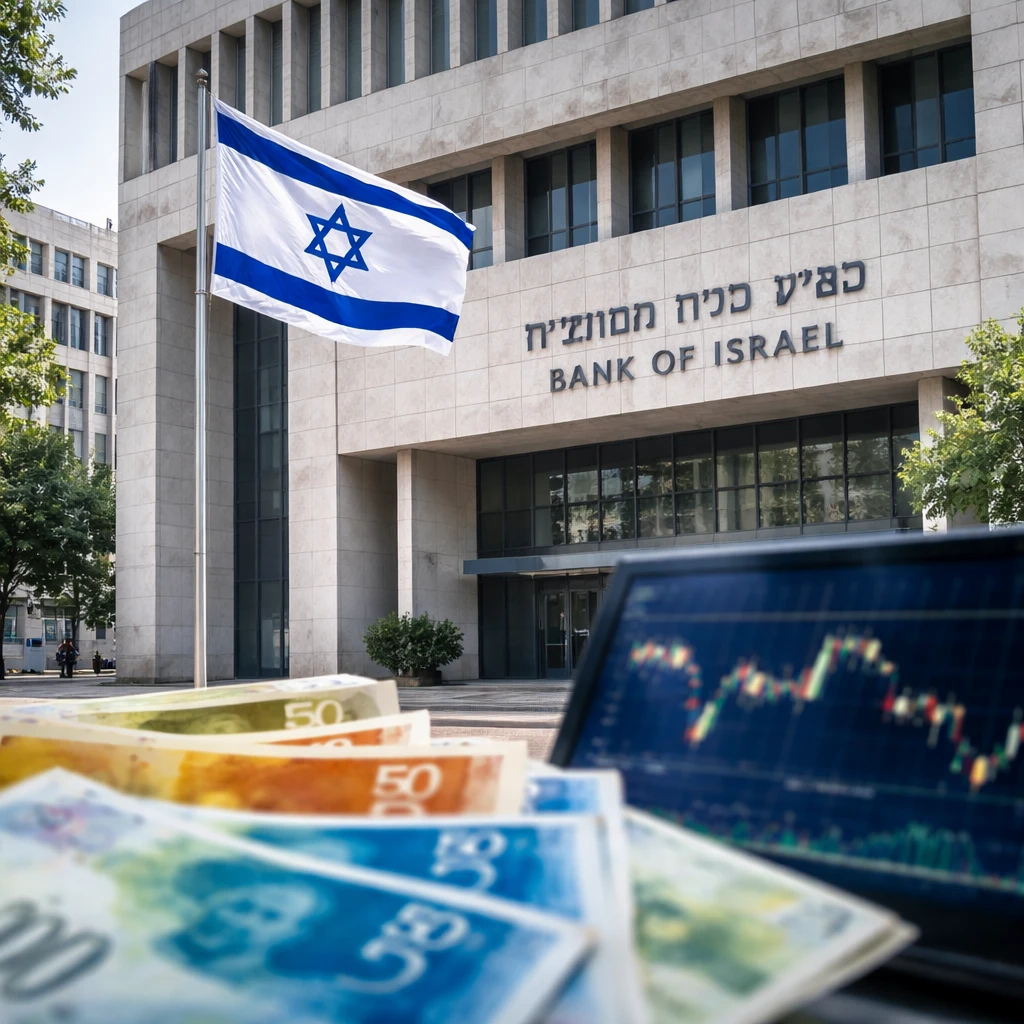
The Bank of Israel on Monday opted to maintain its benchmark interest rate, citing a policy framework centered on price stability, supporting economic activity and preserving market stability. The decision came as geopolitical uncertainty resurfaced in recent days over a potential confrontation with Iran, a development the central bank flagged in its announcement.
Inflation and price dynamics
Annual inflation moderated to 1.8 percent in January, placing it near the midpoint of the central bank's target range and following an uptick observed in December. On a monthly basis, the Consumer Price Index fell 0.3 percent in January after registering no change in December. Within the CPI components, the annual rate of increase for owner-occupied housing services rose from 2.6 percent in November to 3.8 percent in January. Separately, the central bank noted that home prices have resumed an upward trajectory in the two most recent readings of the index.
Output and demand
The first estimate for National Accounts data covering the fourth quarter of 2025 showed quarterly growth of 4 percent in seasonally adjusted annual terms, a rate above the long-term trend. That expansion was heavily influenced by a sharp 25.6 percent jump in exports, while current consumption rose 3.6 percent over the quarter. For the calendar year as a whole, gross domestic product increased by 3.1 percent.
Labour market and wages
The labour market remains tight, according to the Bank of Israel. The ratio of job vacancies to unemployed workers continued to be high, and the job vacancy rate held steady at 4.6 percent in both December and January. The broad unemployment rate for prime working ages remained low at 3.2 percent in December. Wage growth in the business sector was robust, with wages up 5.1 percent in the September-November period compared with the same three months a year earlier.
Financial indicators and fiscal position
Since the previous rate decision, the shekel strengthened by 1.1 percent against the US dollar and by 0.4 percent against the euro. The central bank observed that Israel's risk premium rose slightly in recent days amid geopolitical developments, moving closer to its prewar level. On the fiscal side, the cumulative government budget deficit over the past 12 months widened to 4.9 percent of GDP in January.
The monetary committee's decision to keep the policy rate unchanged reflects a balancing act between evolving price dynamics, solid near-term output growth and elevated geopolitical uncertainty. The central bank underlined its threefold policy focus - price stability, support for economic activity and market stability - as guiding considerations for its stance.