
Overview
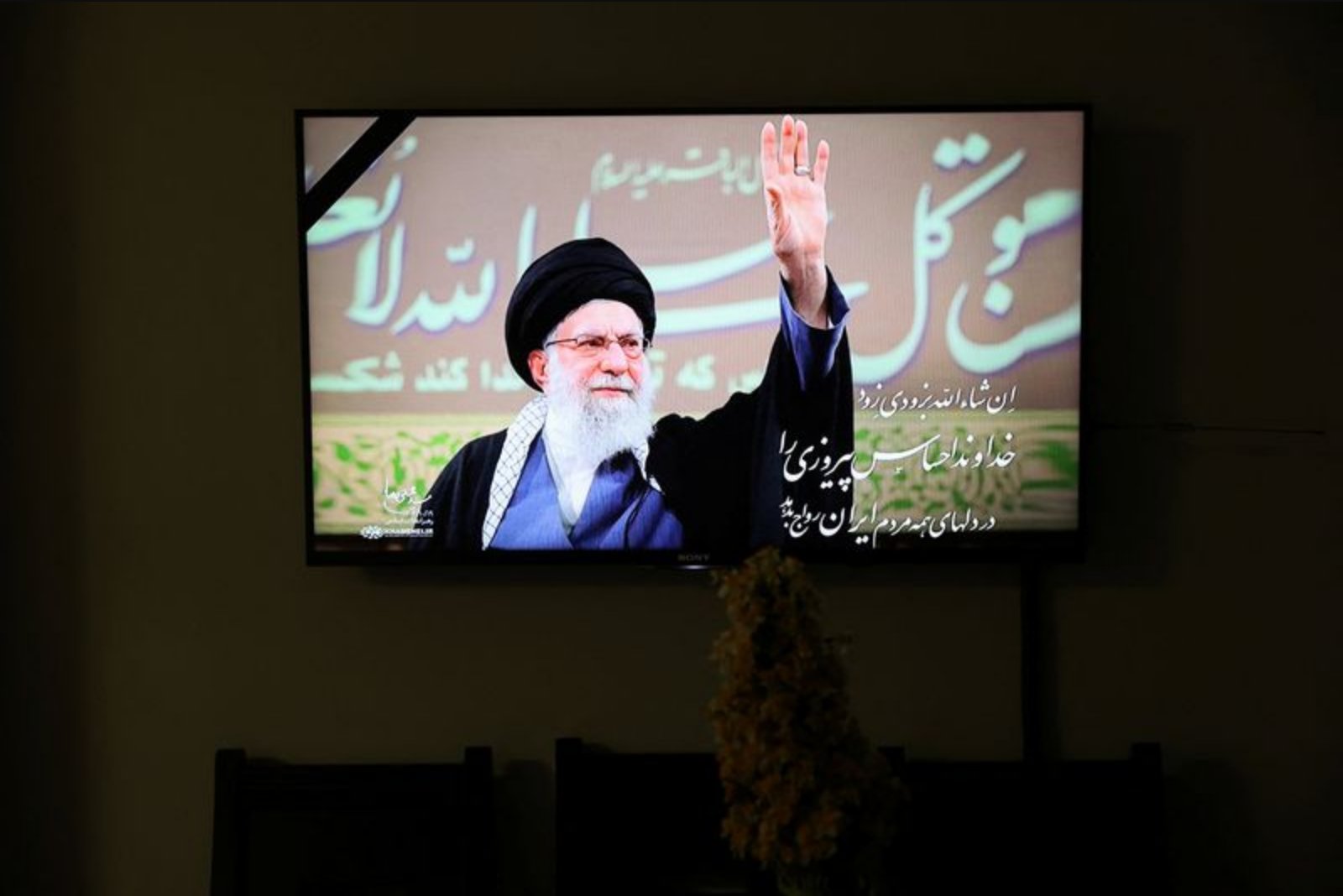
Iranian state media announced that Ayatollah Ali Khamenei, who led the Islamic Republic for 36 years, was killed on Saturday in air strikes carried out by Israel and the United States that destroyed his central Tehran compound. At age 86, Khamenei leaves behind a legacy shaped by a prolonged hostility toward the United States and Israel, a deliberate policy of empowering regional allies and proxy forces, and the repeated use of force at home to silence opposition.
From an unlikely successor to the centre of power
Khamenei’s elevation to the role of supreme leader after the death of Ayatollah Ruhollah Khomeini was initially met with skepticism. Observers described him as weak and indecisive at the outset, an unexpected choice to succeed a charismatic founder. Over time, however, Khamenei tightened his hold on state institutions and became one of the most powerful figures in Iran’s modern history. Karim Sadjadpour at the Carnegie Endowment for International Peace described him as "an accident of history" who rose from a comparatively weak president to, in effect, one of the five most influential Iranians of the last century.
As supreme leader, Khamenei inherited sweeping constitutional powers that made his directives effectively final. He commanded the armed forces, appointed senior figures across the judiciary, security services and state media, and placed loyalists in key positions, including as commanders within the Islamic Revolutionary Guard Corps. Through these levers he sought to prevent any faction, including those within his own circle, from accumulating enough independent authority to challenge his rule or the fundamental anti-Western orientation he championed.
Domestic repression and the assertion of authority
Throughout his tenure, Khamenei repeatedly confronted domestic dissent with decisive force. Large-scale student demonstrations in 1999 and 2002 showed early public challenges to the clerical establishment, but the 2009 unrest following a disputed presidential vote presented a more acute test to his legitimacy. Khamenei had validated the contested election results, and the violent protests that followed - and the government’s response - left a persistent crisis of legitimacy that persisted through the remainder of his life.
In 2022, mass demonstrations erupted after the death in custody of Mahsa Amini, a 22-year-old Iranian-Kurdish woman detained by morality police. Facing what critics described as some of the most sustained unrest since the revolution, Khamenei appealed to narratives blaming Western adversaries and authorized a harsh crackdown that included executions and public displays of those executed. The severity of the response sent a clear signal that, as supreme leader, he would not tolerate a challenge to the regime’s control.
Those actions reflected a wider pattern in which human rights organisations and international activists repeatedly accused Iran of abuses, even as Tehran maintained that its record was better than that of many other states in the region. Within Iran, the supreme leader’s authority and his control over appointments to the judiciary and security apparatus enabled a governance approach that prioritized state security and regime survival above political liberalisation.
Nuclear policy and the limits of diplomacy
Khamenei consistently denied that Iran’s nuclear programme aimed to develop an atomic weapon, insisting instead that uranium enrichment was for civilian energy needs. Nonetheless, he cautiously endorsed the 2015 nuclear accord negotiated between Iran and world powers during the administration of President Hassan Rouhani. That agreement placed curbs on Iran’s nuclear activities in return for sanctions relief and led to a limited easing of Iran’s economic and political isolation.
The breakthrough was, however, fragile. The 2018 withdrawal by the United States under President Donald Trump and the reimposition of coercive sanctions that targeted Iran’s oil and shipping sectors reignited tensions. In response to the U.S. withdrawal, Khamenei aligned with hardline critics of Rouhani, portraying the pragmatist’s policies as a form of appeasement.
As diplomatic exchanges re-emerged years later, and as the Trump administration in its second term pressed Iran to agree to new constraints in 2025, Khamenei maintained scathing rhetoric toward U.S. leaders, denouncing them as "rude and arrogant" and asking, "Who are you to decide whether Iran should have enrichment?" He also issued religious rulings opposing the manufacturing and use of nuclear weapons, asserting in the mid-1990s that such weapons ran counter to Islamic principles.
Regional posture - the Axis of Resistance
Over decades, Khamenei invested heavily in building an informal network of allies and proxy groups across the Middle East intended to counter U.S. and Israeli influence. He allocated resources to Shiite militias in Iraq and Lebanon, supported Bashar al-Assad’s government in Syria with personnel and materiel, and funded groups such as Hamas in Gaza and the Houthi movement in Yemen. Collectively described by Tehran as the "Axis of Resistance," these ties drew on the Revolutionary Guards’ influence and became a central element of Iran’s foreign policy, intended to project power and deter adversaries.
Setad, an organisation founded under Khomeini and greatly expanded under Khamenei, grew into a substantial financial apparatus through which the supreme leader exercised economic influence. Its holdings were estimated to be worth tens of billions of dollars, reflecting the intertwining of political authority and economic control in the Islamic Republic.
Despite substantial investment over decades, the alliances supported by Khamenei suffered setbacks beginning in 2024 and into 2025. Iran’s regional influence was described as contracting after the ousting of Assad, and strong military pressure from Israel produced losses for Hezbollah and Gaza’s Hamas, including the killing of senior figures. The long-running shadow conflict between Iran and Israel - which had included targeted assassinations of Iranian nuclear scientists and Revolutionary Guard commanders - escalated openly during Israel’s war on Hamas beginning in Gaza in 2023.
Escalation to open conflict and the fatal strikes
Tensions shifted from covert actions to overt military confrontation. In April 2024, Iran launched hundreds of missiles and drones at Israel in response to an Israeli strike on Tehran’s embassy compound in Damascus; Israel responded with strikes on Iranian territory. The contests continued to intensify, culminating in June 2025 when Israel conducted extensive air strikes using hundreds of fighter jets against Iranian nuclear and military sites and targeted senior personnel. The campaign provoked missile exchanges and broadening hostilities.
In that campaign, the United States participated in the air offensive against Iranian targets for 12 days. U.S. and Israeli officials warned that further strikes would follow if Iran continued advancing its nuclear and missile programmes. Those warnings preceded the most ambitious joint U.S.-Israeli operation in decades, in which air strikes that levelled Khamenei’s central Tehran compound were carried out on Saturday, resulting in the supreme leader’s death as confirmed by Iranian state media.
Officials from both sides engaged in diplomatic discussions as recently as the Thursday before the attack, but U.S. officials said Iran was not prepared to relinquish its capacity to enrich uranium. Tehran argued its enrichment activities were intended for energy production, while Washington maintained they would enable a nuclear weapons option.
Religious rulings and controversial edicts
Khamenei’s religious authority extended beyond state appointments and military oversight to issuing doctrinal rulings. While he declared nuclear weapons inconsistent with Islamic thought in the mid-1990s, he also supported a 1989 edict from Khomeini calling for the killing of the novelist Salman Rushdie following the publication of "The Satanic Verses." Khamenei’s official website reaffirmed the ongoing validity of that death edict as recently as 2017. In 2022, Rushdie was stabbed at a public lecture in New York; he survived, and the assailant was later sentenced in 2025 to 25 years in prison for attempted murder. The assailant did not testify at the trial.
Consolidation of power and personal history
Born in Mashhad in April 1939, Khamenei entered religious life early, becoming a cleric at about age 11 and studying in religious centres including Qom and in Iraq. His father, a traditionalist religious scholar of Azeri background, opposed the mixing of politics and religion, a stance that contrasted with his son’s embrace of revolutionary Islamist politics.
Khamenei was politically active from a young age and experienced imprisonment as a result. In 1963 he spent the first of several terms in detention for political activities and later endured prison and reported torture in Mashhad the same year, according to his official biography. After the overthrow of the shah, Khamenei held various posts in the new Islamic Republic. As deputy defence minister, he strengthened ties with the military and played a significant role during the 1980-88 war with Iraq, a conflict that resulted in an estimated one million casualties.
His rise included high-visibility roles such as serving as Khomeini’s appointed Friday prayer leader in Tehran and later winning the presidency with Khomeini’s backing. The combination of political appointments and clerical authority positioned him to succeed Khomeini as supreme leader despite questions about his popular appeal and clerical standing early on.
Political style and legacy
Observers depicted Khamenei as a secretive ideologue who was suspicious of potential rivals, an outlook that may have been reinforced by an assassination attempt in 1981 that left him with a permanently paralysed right arm. That caution, coupled with his extensive appointment powers, enabled him to shape Iran’s political trajectory decisively.
Within the region, his policies prioritized confrontation with Israel and the United States, even while periodically engaging in diplomacy when it suited strategic needs. He repeatedly denounced Washington, using terms such as "the Great Satan" that harked back to rhetoric central to the 1979 revolution, which ushered in the clerical regime and exiled the last shah.
Domestic voices and the path ahead
Khamenei’s death arrives amid renewed domestic dissent, particularly among younger Iranians who have voiced frustration with the state’s priorities. "I just want to live a peaceful, normal life ... Instead, they (the rulers) insist on a nuclear programme, supporting armed groups in the region, and maintaining hostility toward the United States," said Mina, 25, by phone from Kuhdasht in western Lorestan province at the start of 2026. The unemployed university graduate added, "Those policies may have made sense in 1979, but not today. The world has changed." Such sentiments reflect a generational and social tension between the state’s strategic choices and public desires for stability and opportunity.
With the supreme leader now deceased and Iran simultaneously confronting active military strikes from Israel and the United States, as well as enduring internal unrest, the Islamic Republic faces a period of acute uncertainty. How Iran’s institutions, security forces and political elite respond will determine the near-term course of the conflict with Israel and the U.S., and the state’s ability to manage dissent at home. At the moment, the facts are limited to the announced death, the circumstances of the air strikes, and the continuing regional and domestic pressures that have accumulated over decades under Khamenei’s leadership.
Conclusion
The passing of Ayatollah Ali Khamenei marks the end of a 36-year chapter in the Islamic Republic’s history defined by entrenched anti-Western rhetoric, the strengthening of the Revolutionary Guards, the cultivation of regional proxies, and the suppression of internal opposition. His death came amid a sharp escalation of hostilities that transformed long-simmering covert confrontations into large-scale air campaigns by Israel and the United States. Iran now faces a complex set of immediate and unresolved questions about leadership succession, domestic order and the course of a regional conflict that has expanded markedly in recent years.