
World February 21, 2026

Australia Denies Coordinating Return of Families from Syrian Camp

Government rejects media claim it is arranging repatriation of 34 women and children held in a northern Syrian detention camp

By Sofia Navarro
Australia Denies Coordinating Return of Families from Syrian Camp

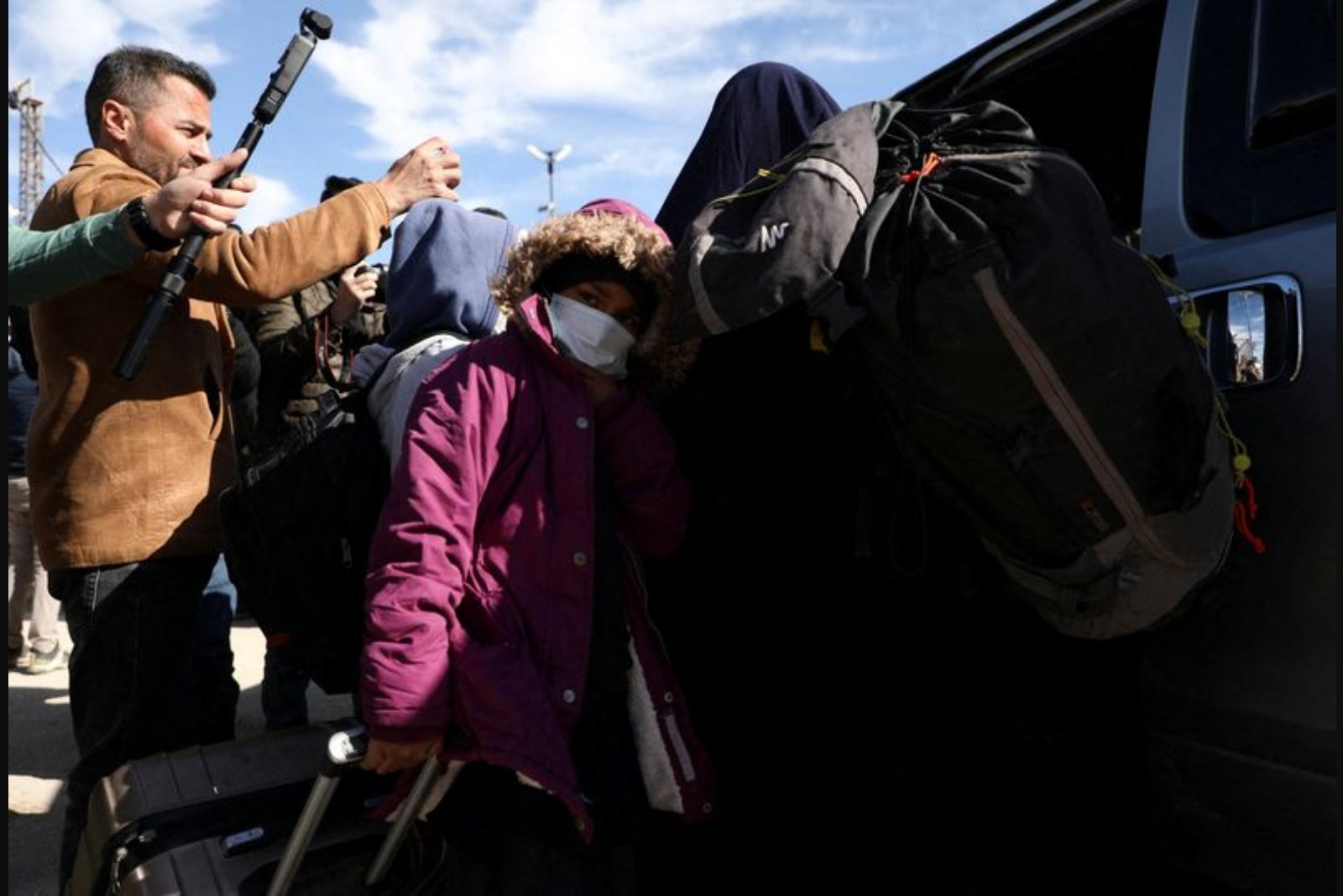
Australian officials have publicly refuted a newspaper report that said the government was preparing to repatriate a group of 34 women and children held at a Syrian camp for relatives of suspected Islamic State militants. The cohort was briefly released from the camp and then returned to detention for technical reasons. Officials say the group is expected to travel to Damascus before any eventual return to Australia, a plan opposed by lawmakers across the political spectrum.

Key Points

  • 34 women and children were briefly released from a northern Syrian camp and then returned to detention for technical reasons; authorities expect travel to Damascus prior to eventual return to Australia.
  • Home Affairs Minister Tony Burke denied claims the federal government is conducting a repatriation or coordinating meetings with state governments about such a repatriation.
  • The case is politically sensitive in Australia, affecting political discourse and public sentiment toward immigration and national security, with implications for law enforcement and government policy.

Australia's centre-left government has rejected a Sunday media report that it is actively arranging the repatriation of Australians held in a camp in northern Syria that contains families of suspected Islamic State militants.

Government officials confirmed that the group of 34 women and children were released from the camp on Monday but were subsequently returned to the detention centre because of technical reasons. According to officials, the group is expected to travel to Damascus at some point prior to an eventual return to Australia. That proposed itinerary has drawn objections from both members of the ruling party and opposition lawmakers.

On Sunday, Home Affairs Minister Tony Burke directly challenged the reporting in the Sunday Telegraph, saying the story overstated official activity. "In that report, it makes a claim that we are conducting a repatriation. We are not," Burke told Australian Broadcasting Corp television. He added: "It claims we have been meeting with the states for the purposes of a repatriation. We have not."

Prime Minister Anthony Albanese, who leads the Australian Labor Party, previously said this week that his government would not assist the group in returning to Australia.

The issue has become politically charged in Australia, where the return of relatives of suspected Islamic State militants is a contentious topic and has contributed to increased support for the right-wing, anti-immigration One Nation party led by Pauline Hanson.

The Australian government regards Islamic State as a listed terrorist organisation. Under Australian law, membership of the group can carry a prison term of up to 25 years. The government also has the authority to strip dual nationals of citizenship if they are members of Islamic State.

The unfolding situation remains constrained by the limited operational details released by officials. Authorities have described a sequence in which the group was released and then returned to detention for technical reasons and have indicated travel to Damascus is expected before any further movement toward Australia, while parliamentary objections persist.


Key factual points

  • Thirty-four women and children were released from a Syrian camp on Monday but returned to the detention centre for technical reasons.
  • Officials say the group is expected to travel to Damascus before any eventual return to Australia, a plan that has provoked objections from lawmakers across parties.
  • Home Affairs Minister Tony Burke denied that the government is conducting a repatriation or meeting with states for that purpose.

Risks

  • Political backlash and heightened domestic debate - the issue has attracted objections from both ruling and opposition lawmakers and may further influence political parties and voter sentiment, impacting the political sector.
  • Operational uncertainty over travel and custody - officials cited technical reasons for the return to detention and have provided limited operational details, creating uncertainty about the timing and logistics of any repatriation, which affects government security and consular operations.
  • Legal and security consequences for individuals linked to Islamic State - membership is criminalized with penalties up to 25 years in prison and the government can strip dual nationals of citizenship, creating legal risks for those identified as members.

More from World

Australian Frigate Makes Transit Through Taiwan Strait; China Says PLA Tracked Passage Feb 21, 2026 Islamic State Claims Two Attacks in Syria, Declares 'New Phase' Against Leadership Feb 21, 2026 Willie Colón, Pioneering Salsa Trombonist and Composer, Dies at 75 Feb 21, 2026 Ukraine Strikes Ballistic Missile Factory in Udmurtia, Kyiv Says Feb 21, 2026 Germany’s CDU votes to bar social media for under-14s and tighten age checks Feb 21, 2026