
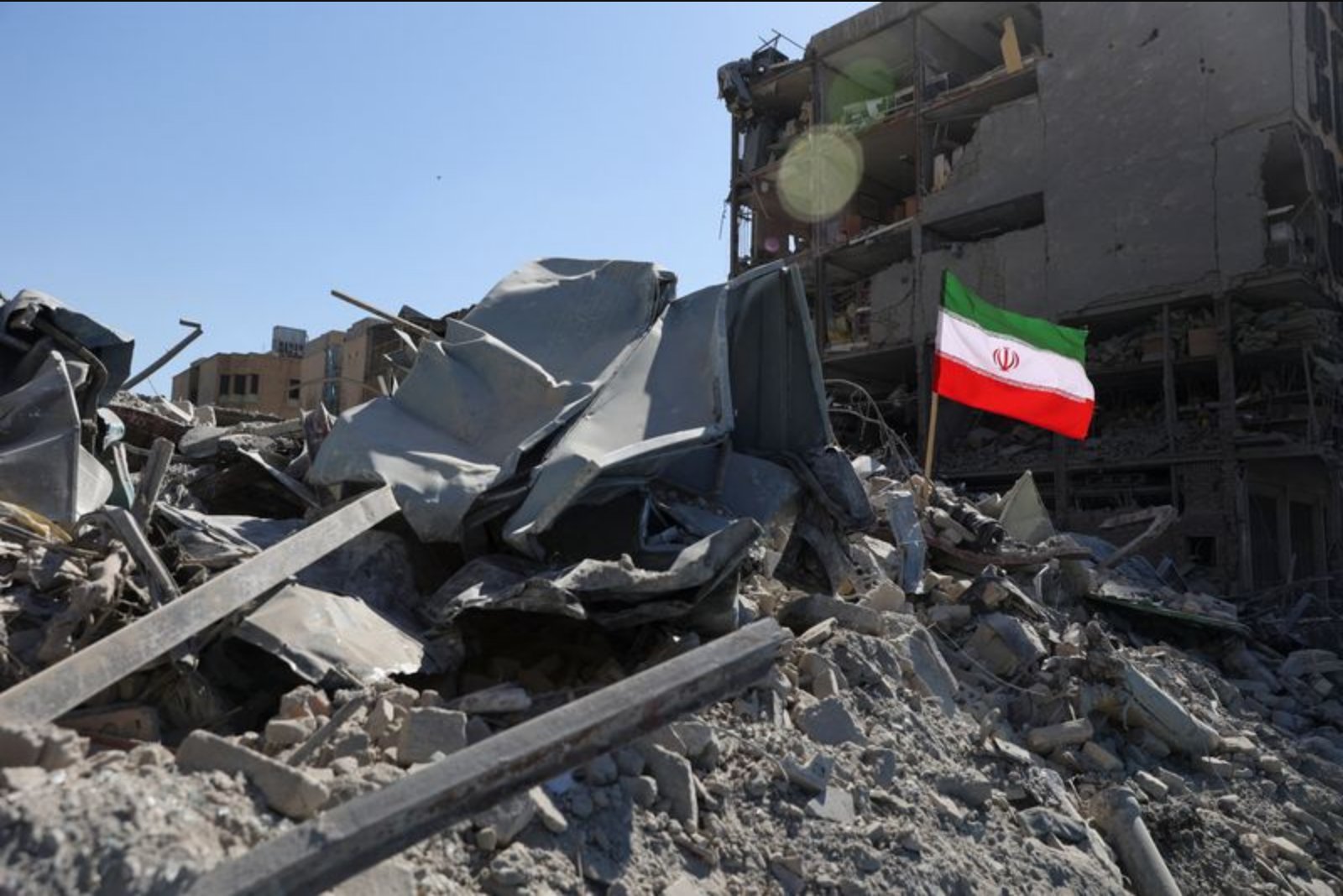
Lawmakers and defence analysts across Asia are weighing the strategic consequences of recent U.S. and Israeli strikes on Iran, asking whether Washington’s military focus on the Middle East will create a gap in the defences that currently help deter China.
In a closed-door session at the ruling party offices in Tokyo, Japanese politicians pressed officials on a range of concerns - from evacuation plans and the exposure of energy-related assets to the legal grounds for U.S. operations. One question raised during that meeting, according to a participant, cut to the heart of the region’s unease: if Washington redirects ships and missiles it now uses to help deter China, how will Asian allies respond to the resulting shortfall?
That worry is immediate for states with significant U.S. military footprints. Japan and South Korea host major American bases that contribute to countering Chinese military activity and deterring nuclear-armed North Korea, while Taiwan depends on U.S. arms and presence as a check on Beijing’s ambitions.
"We hope this operation is fast, limited, and that resources can be promptly shifted back to Asia," said Chen Kuan-ting, a lawmaker in Taiwan who sits on its parliament’s foreign affairs and defence committee. Chen added that a prolonged conflict could undermine "stability and peace in the Indo-Pacific" and that Taipei must prepare for Beijing to intensify "coercion" while the United States is occupied elsewhere.
President Trump has indicated U.S. operations in the Middle East could last four or five weeks, but he has also said they could continue for a much longer period. He intends to meet Chinese President Xi Jinping at the end of March, although China has not formally confirmed the meeting.
Responding to the unfolding situation, Mao Ning, a spokesperson for China’s foreign ministry, reiterated Beijing’s stance that Taiwan is an internal matter for China and that it strongly opposes the use of force to infringe on other countries’ sovereignty and security.
The U.S. State and Defense Departments did not immediately provide comment for this report.
Concerns in Tokyo were amplified when a Japanese politician who attended Monday’s session recounted that a senior foreign ministry official said Tokyo had sought assurances from Washington that U.S. military assets would not be redeployed away from the region.
Data cited in recent analyses show that about 40% of U.S. navy ships ready for operations are currently positioned around the Middle East, a figure made public in a report by the Center for Strategic and International Studies last month. These assets reportedly include the aircraft carrier Abraham Lincoln and at least six missile destroyers that are normally associated with Pacific ports in California, Hawaii and Japan, according to information relayed by the U.S. Naval Institute on Monday.
Complicating the operational picture in Asia, the only U.S. carrier previously deployed in the region, the George Washington, is in maintenance at its base in Yokosuka, Japan.
"The U.S. Navy is stretched thin," said Bryan Clark, a former U.S. defence official who specialises in naval operations at the Hudson Institute. He warned that if the Middle East conflict extended over time, the United States could realistically be forced to draw down naval strength in Asia to reinforce operations in the Middle East. "The fleet ... is not sufficient to keep a steady presence in every theatre," he said.
Beyond ships and platforms, the Iran conflict has also eaten into U.S. munitions reserves, a development that defence planners and experts had long flagged as a risk. The U.S. military has asked defence manufacturers to increase production of munitions, but ramping up capacity could require several years.
A U.S. official, speaking on condition of anonymity because of the sensitivity of the subject, warned that rebuilding munitions stockpiles in the Indo-Pacific is important for deterring China from military action regarding Taiwan over the medium term. At the same time, Japan has experienced delays in deliveries of hundreds of Tomahawk missiles ordered from the United States, and those schedules could slip further, Jan van Tol, a senior fellow at the Center for Strategic and Budgetary Assessments, said.
The anxieties in Asia arrive at a time when Washington had recently framed the Indo-Pacific as the central "geopolitical battleground" in a newly unveiled security strategy, prioritising the deterrence of conflict over Taiwan. But in recent weeks U.S. policy has been consumed by a string of bold operations and statements: the capture of Venezuela’s leader in a military action, a threat to annex Greenland, and a coordinated air campaign against Iran alongside Israel.
Some observers argue that Washington’s actions against Venezuela and Iran have simultaneously weakened allies that supplied China with substantial streams of cheap oil, potentially limiting Beijing’s economic advantages. Others have suggested these moves could be components of a larger plan to preserve U.S. capacity to later refocus on China.
Still, the longer the United States remains militarily engaged in the Middle East, the greater the risk that Beijing could begin to gain strategic advantage. "The grand strategy is supposed to be 'contain Iran in the Middle East, then shift resources toward dealing with China,'" said a Japanese ruling party lawmaker who spoke on condition of anonymity. "But the question is whether there will be enough resources left to shift."
Jennifer Parker, a former warfare officer with the Royal Australian Navy and a non-resident fellow at the Lowy Institute, noted that China has taken advantage of periods when the United States was focused elsewhere. She pointed to China’s rapid militarisation of islands in the South China Sea during the period when the U.S. was engaged in Afghanistan operations, and added, "Beijing will be watching closely."
For allies across the Indo-Pacific, the immediate policy challenge is practical and operational: to secure commitments from Washington that forces and munitions can be made available for regional deterrence and to plan for contingencies should those assurances falter. For markets and industries, the ripple effects include potential volatility in energy supplies and heightened demand pressures for defence contractors as munitions production schedules are accelerated and inventories rebuilt.
In the near term, governments in Tokyo, Taipei and Seoul are pushing for clarity on evacuation procedures, legal justifications for allied strikes, and the protection of energy and trade links that underpin both domestic supply chains and regional economic stability.