
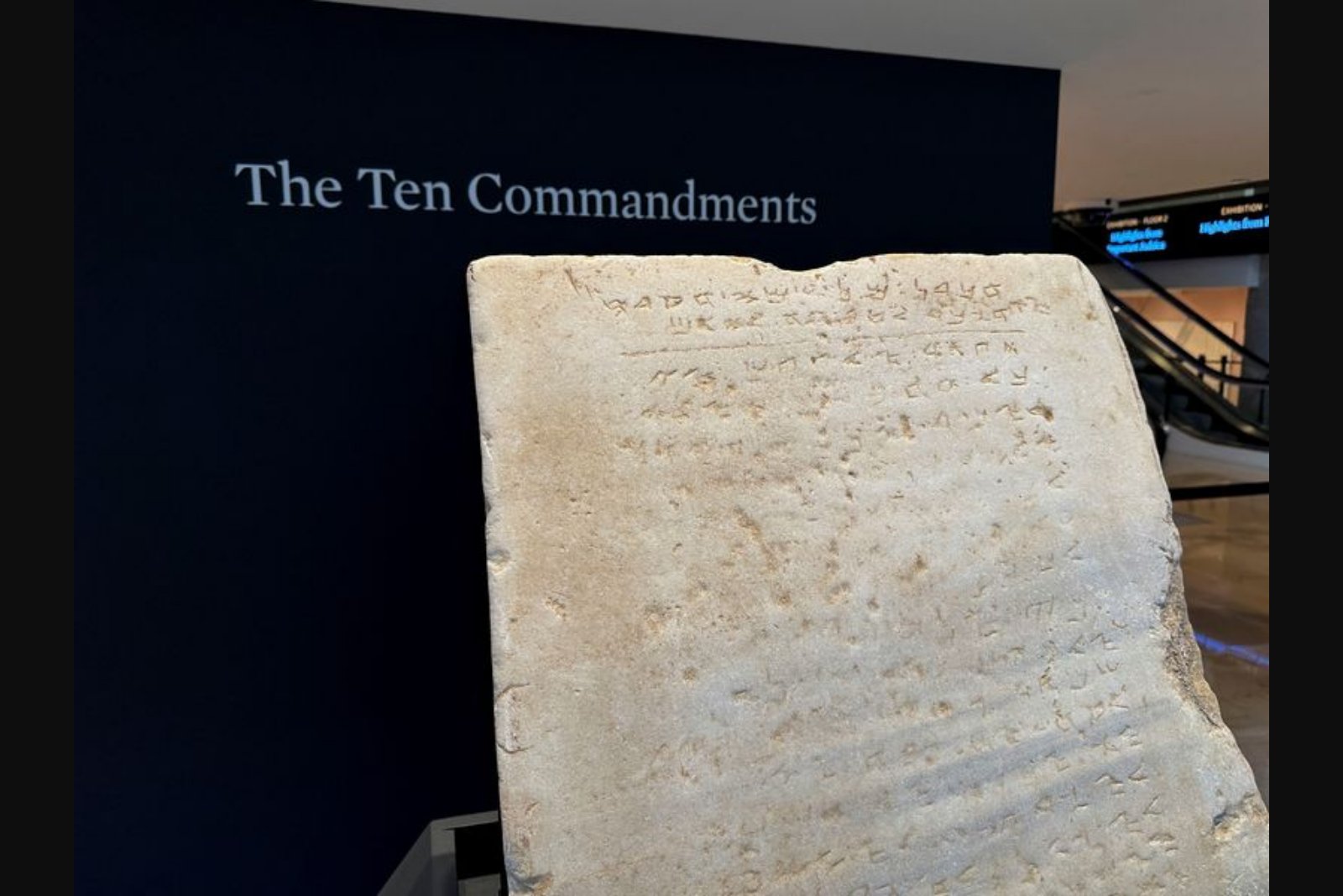
In a closely divided decision, the full 5th U.S. Circuit Court of Appeals in New Orleans on Friday cleared the way for a Louisiana statute requiring the Ten Commandments to be displayed in classrooms across the state to be implemented. The court overturned a prior judge's ruling that had declared the law unconstitutional, voting 11-7 to send the matter back to be evaluated based on how local school boards actually apply the mandate.
The measure, enacted as H.B. 71 and signed into law in 2024 by Louisiana Governor Jeff Landry, requires posters or framed copies of the Ten Commandments to be displayed in K-12 public school classrooms and in state-funded colleges. Parents had sued, arguing the law violated their religious rights under the First Amendment. Their lawyers did not offer immediate comment following the appeals court decision.
The 5th Circuit's majority underscored that the statute vests discretion in local school boards, and therefore cannot be judged unconstitutional in every conceivable application. The majority noted that important details remain unknown, including placement and prominence of the displays, whether other materials will accompany them, and whether teachers will reference the text during instruction.
"We do not know, for example, how prominently the displays will appear, what other materials might accompany them, or how—if at all—teachers will reference them during instruction," the unsigned opinion said. "More fundamentally, we do not even know the full content of the displays themselves."
The appeals court majority, composed of judges appointed by Republican presidents, described its ruling as narrow, emphasizing that the decision does not foreclose subsequent challenges that may arise after the law is put into practice. The court's approach hinges on the idea that constitutionality may turn on context and implementation rather than the statute's existence standing alone.
Not all judges on the court agreed. U.S. Circuit Judge James Dennis, joined by five colleagues appointed by Democratic presidents, issued a dissent. He sharply criticized the majority's approach as a maneuver to avoid binding Supreme Court precedent. In his dissent, Judge Dennis warned that placing the Ten Commandments on permanent display in public school classrooms, outside curricular or pedagogical use, effectively elevates religious text into an object of reverence and exposes students to government-endorsed religion in settings of compulsory attendance.
"By placing that text on permanent display in public school classrooms, not in a way that is curricular or pedagogical, the State elevates words meant for devotion into objects of reverence, exposing children to government‑endorsed religion in a setting of compulsory attendance," Dennis wrote.
The legal history in this matter includes a trial court injunction issued in November 2024 that blocked the law from taking effect. Earlier, a three-judge panel of the 5th Circuit had upheld that injunction in October. The full appeals court later voted to rehear the case en banc, culminating in Friday's 11-7 decision reversing the lower court's finding of unconstitutionality.
The Louisiana law has parallels in other states. According to the record in the litigation, Arkansas and Texas passed comparable laws in 2025, which also prompted litigation and courts to block those measures. The Louisiana statute was described in court filings as the first such state-level requirement enacted since the U.S. Supreme Court struck down a similar Kentucky law in 1980.
The litigation is proceeding under the case caption Roake et al v Brumley et al, 5th U.S. Circuit Court of Appeals, No. 24-30706. Counsel listed in the filings include Jonathan Youngwood of Simpson Thacher & Bartlett representing the plaintiffs, and J. Benjamin Aguinaga of the Louisiana Department of Justice representing the state.
The 5th Circuit majority stressed that its decision is limited: it allows the law to take effect for now, but does not decide the ultimate constitutional question. The court left open the prospect that plaintiffs or other parties may bring subsequent challenges focusing on how a local school board displays or contextualizes the Ten Commandments in classrooms and collegiate settings.
Context and next steps
Under the court's ruling, the practical effects of the law will depend on choices made at the local level. School boards will determine the physical presentation and surrounding materials, and those implementation decisions are likely to be central in any future lawsuits that contest particular applications of the statute.