
World March 4, 2026

Appeals Begin in Case Over Former President Yoon’s Role in Martial Law Attempt

Seoul High Court hears arguments in obstruction conviction as separate insurrection ruling looms over legal status

By Priya Menon
Appeals Begin in Case Over Former President Yoon’s Role in Martial Law Attempt

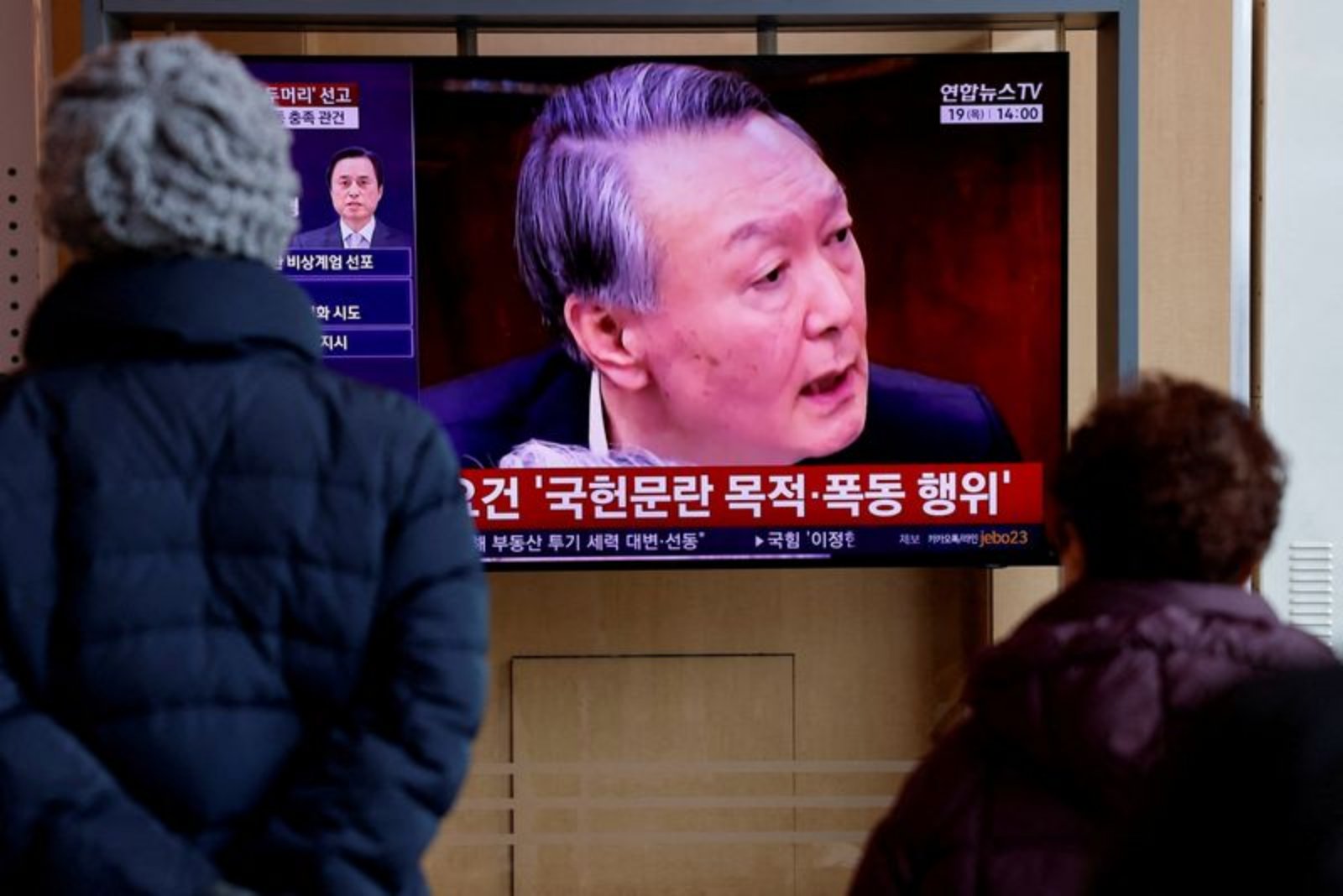
An appeals hearing opened at the Seoul High Court on Wednesday for former South Korean President Yoon Suk Yeol, who was sentenced by a lower court to five years in prison on charges including obstruction of arrest tied to his December 2024 attempt to impose martial law. Prosecutors urged a harsher penalty, while Yoon and his defence team sought acquittal, and the proceeding follows a separate lower-court life sentence in a related insurrection case.

Key Points

  • An appeals hearing at the Seoul High Court addresses a five-year prison sentence for former President Yoon Suk Yeol on charges that include obstructing arrest related to his December 2024 martial law attempt - impacts political and legal sectors.
  • Prosecutors, who had sought a 10-year term, argued the lower-court sentence was too lenient and highlighted Yoon's lack of remorse, while defence counsel maintained the sentence exceeded his culpability and challenged the validity of arrest warrants - relevant to judicial and rule-of-law considerations.
  • The appeals proceeding follows a separate lower-court conviction that sentenced Yoon to life for leading an insurrection during the short-lived imposition of martial law, creating concurrent high-stakes legal outcomes affecting governance and political stability.

An appeals session was held on Wednesday at the Seoul High Court concerning former South Korean President Yoon Suk Yeol, who faces a five-year jail sentence issued by a lower court. The conviction includes charges of obstructing arrest linked to his attempt to impose martial law in December 2024.

During the opening hearing, Yoon attended in a dark navy suit, according to media accounts. Prosecutors, who had originally requested a 10-year prison term, told the appeals court that the five-year sentence was "far too lenient," asserting that Yoon had shown no remorse and had not offered an apology to the public.

Yoon's defence team countered that the five-year sentence already exceeded his culpable responsibility. They also argued that the arrest warrants issued against him were invalid from the beginning and urged the court to overturn the lower-court decision and enter an acquittal.

When given the opportunity to speak by the presiding judge, Yoon reiterated his denial of wrongdoing.


The appeals hearing takes place against the backdrop of a more severe verdict in a separate but related case. In that separate proceeding, a lower court sentenced the former president to life imprisonment after finding him guilty of leading an insurrection during the short-lived imposition of martial law.

Legal arguments at the appeals hearing focused on both procedure - including challenges to the validity of arrest warrants - and on assessments of appropriate punishment. Prosecutors maintained that the lower-court punishment did not reflect the seriousness of the conduct, while defence lawyers urged the appellate court to reverse the conviction on the grounds of excessive sentencing and procedural infirmities.

The appeals trial will determine whether the lower-court ruling in the obstruction case is upheld, modified, or overturned. The proceeding is distinct from the separate insurrection conviction that resulted in a life sentence at the lower court level; both legal matters, however, relate to Yoon's actions during the brief martial-law episode.

Further details on timing for subsequent hearings or rulings were not provided during the opening session.

Risks

  • Ongoing legal uncertainty surrounding a former head of state may prolong political instability and affect public confidence - relevant to government and political institutions.
  • Potential for divergent outcomes between the separate appeals and the distinct life-sentence case creates unclear legal finality, which could influence investor sentiment in sensitive sectors tied to political risk.
  • Disputes over procedural validity of arrest warrants and contested sentencing raise the possibility of further legal litigation and appeals, extending the period of judicial uncertainty.

More from World

Hezbollah’s intervention on Iran’s behalf deepens political isolation at home Mar 4, 2026 Legal Questions Surround U.S.-Led Strikes on Iran as Leaders Killed and Thousands of Targets Hit Mar 4, 2026 Young Men Who Boosted Trump in 2024 Express Both Support and Doubts After Strikes on Iran Mar 4, 2026 Submarine Strike Sinks Iranian Vessel Near Sri Lanka; Dozens Injured, Many Missing Mar 4, 2026 Indonesia Pauses Talks on U.S.-Proposed Gaza 'Board of Peace' as Iran Conflict Escalates Mar 4, 2026