
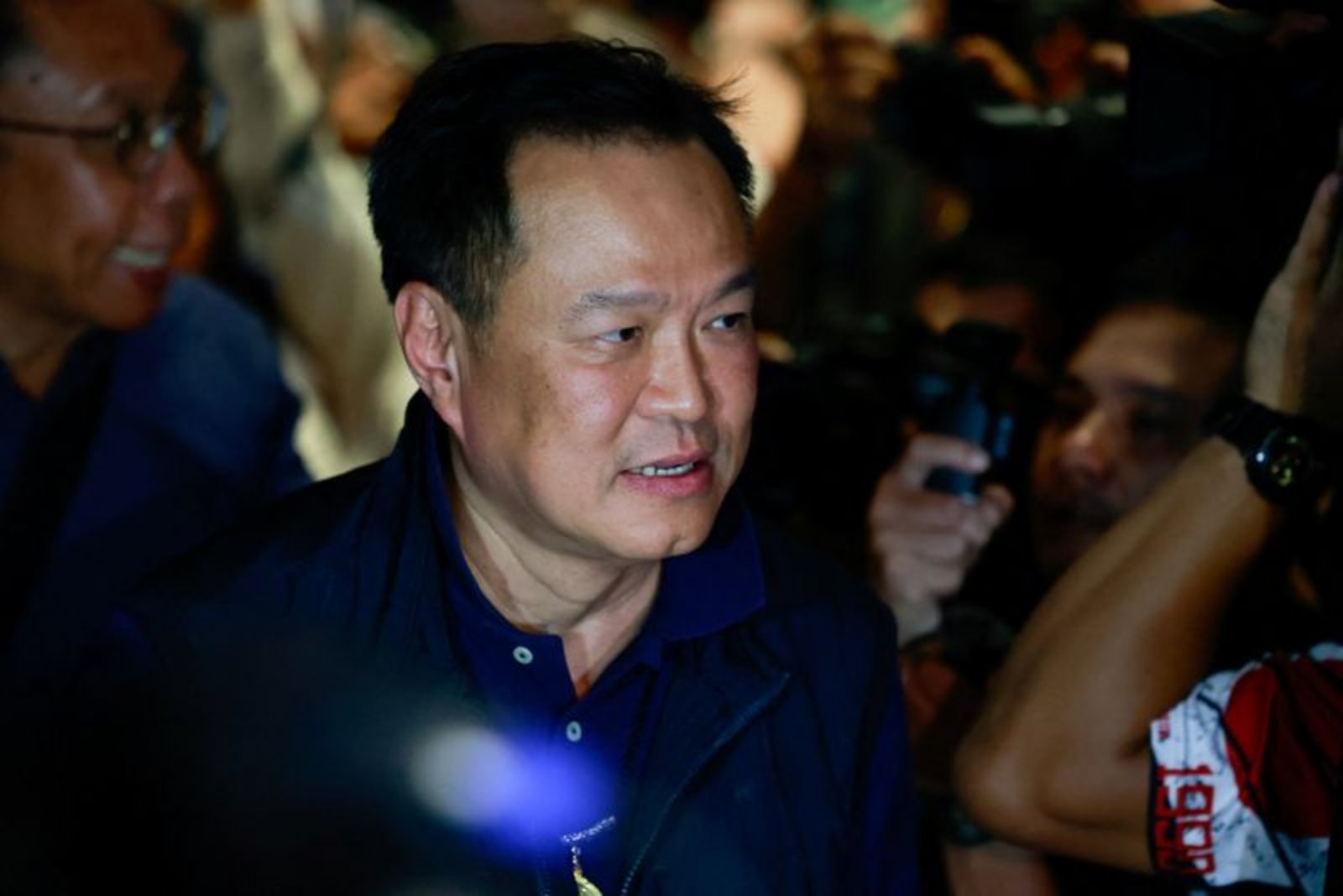
At a rally in Bangkok last month, Anutin Charnvirakul framed the contest as a test of patriotic fidelity, urging voters to make his Bhumjaithai Party their default choice in Sunday’s general election. "I promise to you all that I will safeguard Thailand with my life," the 59-year-old politician told supporters, adding: "Just choose Bhumjaithai to guard the country, to help safeguard all of our land."
The speech crystallized a campaign strategy built around nationalism, a theme that has gained traction in Thailand after a sharp border conflict with Cambodia. That approach appears to have resonated with voters: preliminary results from Thailand’s Election Commission, released late on Sunday, showed Bhumjaithai taking a commanding lead over the progressive People’s Party and the populist Pheu Thai.
As counts continued, Anutin told reporters: "Nationalism is in the heart of everybody in the Bhumjaithai party. Our people have given us more than what we expected." If he can assemble a governing coalition, he would become the first Thai prime minister to be voted back into office in twenty years, a milestone that underscores the chronic instability that has marked politics in Southeast Asia’s second-largest economy.
Once best known for spearheading the legalisation of cannabis in 2022, Anutin navigated his way into the premiership with a minority government after his predecessor was removed by a court order last August. His ascent and decision to call a snap election reflect both tactical opportunism and a calculation that the recent border fighting would bolster his nationalist credentials.
Returning power to the people
His current term began about six weeks after Thailand and Cambodia reached a ceasefire intended to halt intense clashes along their shared boundary. The ceasefire did not hold: fighting flared again in early December with renewed intensity, extending across the entire land border between the two countries. The confrontation has provided Anutin with a platform to present himself as a defender of national sovereignty while seeking a clearer parliamentary mandate.
Late on the night of December 11, fewer than 100 days after taking office, Anutin posted a brief message on social media: "I am returning power to the people." The post accompanied his decision to dissolve parliament following a falling-out with the People’s Party, which had initially backed his premiership. That dissolution triggered the snap election.
Family roots in business and politics
Anutin’s trajectory is shaped by a family background that blends commerce and public service. Born into a family of Chinese ancestry, he came up where money and influence intersect. His father, Chavarat Charnvirakul, founded the Sino-Thai Engineering and Construction Company, a firm that began by taking on projects that included fencing U.S. military sites in Thailand and later expanded into a major construction business. Chavarat also pursued a political career, serving briefly as Thailand’s acting prime minister and holding short stints in the interior and health ministries.
After earning an engineering degree in the United States, Anutin followed a similar path: he led Sino-Thai before entering politics, joining an administration led by Thaksin Shinawatra in 2004. Three years later, Thaksin’s populist Thai Rak Thai party was dissolved by a court order, and the ruling also imposed a five-year ban on Anutin from political activity.
Rebuilding a party and brokering coalitions
Anutin re-emerged in 2012 as the leader of Bhumjaithai, a party that had been a regional force rooted in Thailand’s rural northeast. Over the past decade he transformed it into a national vehicle capable of heading a coalition government. Observers point to his skill at balancing the interests of provincial powerbrokers, who deliver votes in the hinterland, with an appeal to urban constituencies by bringing technocrats into key ministries.
"I think many can see that, strategically speaking, Bhumjaithai is the best chance to fend off the progressives and the Thaksin-ites," said Napon Jatusripitak of the Bangkok-based Thailand Future think-tank. "It’s definitely a marriage of convenience." Thailand’s conservative-royalist establishment has rallied behind Anutin, seeing his party as a bulwark against the rising progressive movement represented by the People’s Party and the enduring influence of Thaksin-aligned forces.
Even if he succeeds in forming a government, Anutin will face immediate and entrenched challenges. The Thai economy is described as being in the doldrums, weighed down by trade tensions and high household indebtedness. Regionally, ties with Cambodia remain strained and Myanmar is engulfed in civil war, contributing to an unstable neighbourhood. Political fragility remains a feature of Thai governance: no democratically elected prime minister has completed a full term since Thaksin did so in 2005.
For now, Anutin’s return to the electoral battleground and the early returns suggest that nationalism has become a decisive political force in Thailand. The coming weeks will determine whether that surge translates into a durable parliamentary majority and whether his government, if formed, can address the economic and regional pressures noted by analysts and observers.