
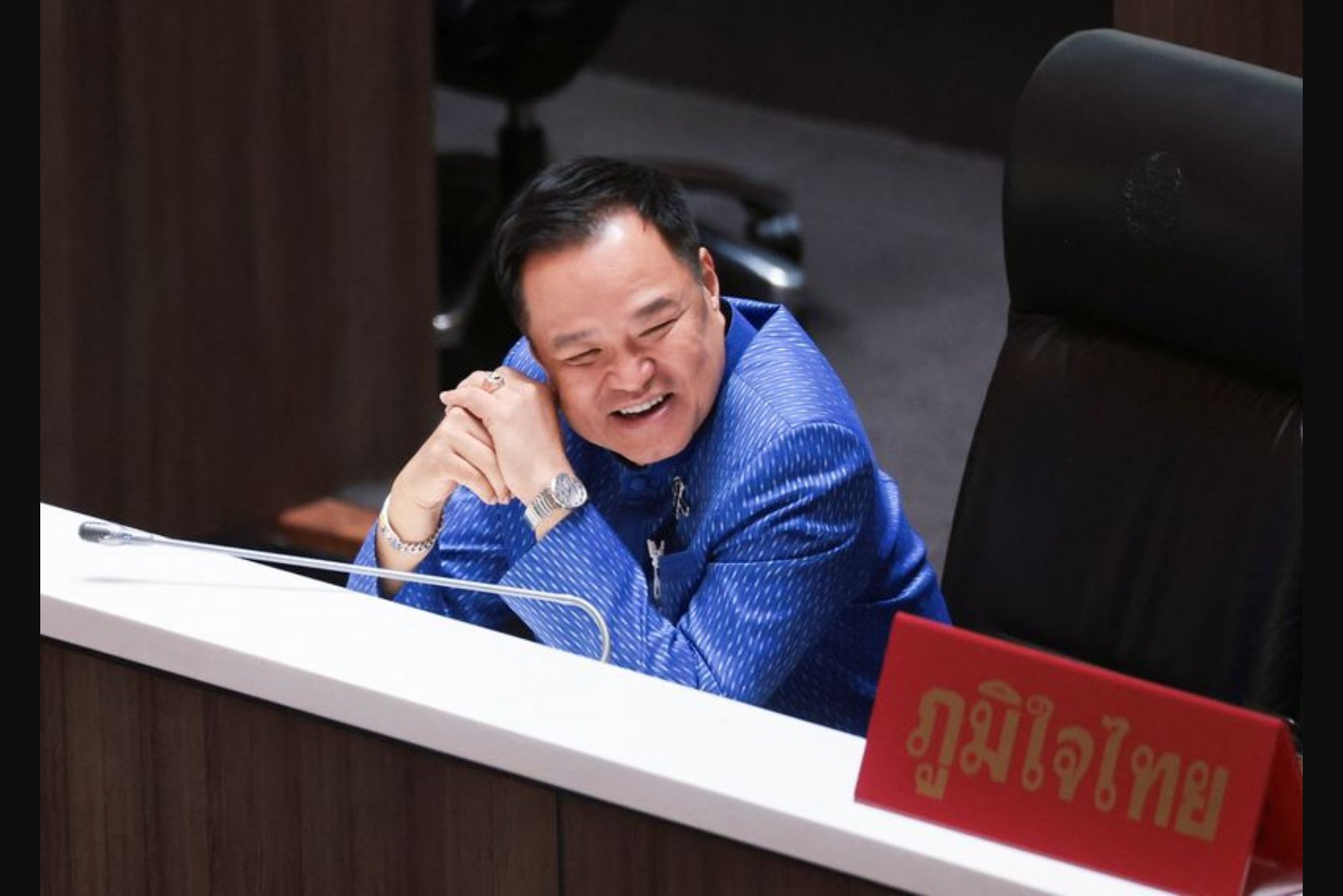
BANGKOK, March 19 - Anutin Charnvirakul was reelected as Thailand’s prime minister on Thursday after winning a clear victory in a parliamentary vote, securing a fresh mandate that supporters say could bring a degree of stability to a nation long marked by political turmoil.
The vote was a rout for his main rival, Natthaphong Ruengpanyawut, who leads the progressive People’s Party and had been the surprise runner-up in last month’s election. From the outset, Anutin - head of the Bhumjaithai Party - led the contest and ultimately passed the threshold needed to reclaim office.
Anutin’s return to power is notable: he is the first Thai premier in two decades to be voted back into the premiership, underscoring the depth of political upheaval that has characterised the country’s recent history.
How the victory unfolded
Bhumjaithai’s strong showing represented a striking reversal for a party that for years had struggled to make major inroads in national politics. The party’s decisive performance followed a period in which it capitalised on a swell of nationalism linked to last year’s military conflicts with Cambodia, translating that momentum into electoral gains.
Much of Anutin’s success traced to tactical moves last year. As the once-dominant Pheu Thai party declined, Anutin dismantled ties with its coalition and moved quickly to assemble his own governing alliance after a court removed a second prime minister within just over a year. That rapid realignment enabled Bhumjaithai to form a stable coalition ahead of Thursday’s parliamentary confirmation.
Bhumjaithai’s coalition pact with a politically weakened Pheu Thai and several small parties held firm in the chamber vote. Anutin comfortably surpassed the 251 votes required to win reelection; his alliance is expected to control 292 of the current 499 seats in parliament.
Immediate priorities and political stance
In the run-up to the vote, Anutin, 59, pledged to move quickly to form a cabinet and address national problems. Addressing rival lawmakers, he said,
"Your voices are equally heard. I’m ready to accept suggestions so I can carry out my duty as head of government. We all have the same goals - the wellbeing of the people."
A committed royalist and a long-serving figure in Thai politics, Anutin has weathered two decades of upheaval by positioning Bhumjaithai between rival elites, a posture that has repeatedly secured the party a role in coalition governments.
Prospect of stability and constraints
Parliamentary approval gives Anutin a clearer mandate to lead at a moment when Thailand’s economy is struggling. The country faces a long-stuttering economy weighed down by massive household debt and confronting external pressures from trade uncertainty and the fallout of the U.S.-Israeli war on Iran. Those economic headwinds were cited as the backdrop for governance challenges.
Analysts point to Anutin’s survival instincts and his ability to bridge political divides as potential assets. Bhumjaithai has so far avoided direct confrontation with Thailand’s powerful military and judiciary - institutions that have previously played central roles in the removal of governments and parties.
Napon Jatusripitak, a political scientist at ISEAS–Yusof Ishak Institute in Singapore, noted that with Bhumjaithai poised to exert control over both upper and lower houses of parliament and apparent alignment among the country’s institutional powers, prospects for medium-term stability look promising. He said,
"People have strong reasons to believe that this government can last, particularly because it’s the first time in a long while that the referee and the players are on the same side. There’s control. And we have a highly fragmented opposition."
What this means for markets and policy focus
While the parliamentary endorsement offers Anutin a clear governing mandate, the article’s account highlights remaining economic vulnerabilities rather than detailing new policy measures. The government’s immediate tasks include forming a cabinet and addressing the issues that have constrained growth, including heavy household indebtedness and trade headwinds. The political consolidation could reduce short-term policy uncertainty, though the account does not specify concrete economic reforms or timelines for implementation.
Overall, Anutin’s reelection marks a noteworthy shift in Thai politics: a party that navigated a turbulent environment has secured a position of authority, and the contours of governance in the months ahead will be shaped by how the new administration addresses entrenched economic challenges and manages institutional relationships.