
Thailand’s Anutin Charnvirakul clinched a decisive parliamentary victory on March 19, becoming the first prime minister in roughly 20 years to win reelection, a result that could provide the Southeast Asian nation with a period of political steadiness after prolonged turbulence.
In the vote, Anutin received support from 293 of the 499 members of parliament, more than double the 119 votes earned by his chief challenger, Natthaphong Ruengpanyawut, leader of the progressive People’s Party. Anutin’s margin secured him the majority needed to continue leading the government.
Shortly after the vote, Anutin did not offer an extended public statement on the parliamentary outcome, but he proceeded to a meeting on energy security. Speaking after that session, he said: "Thailand has no issues and is able to still buy oil. We will ensure public confidence."
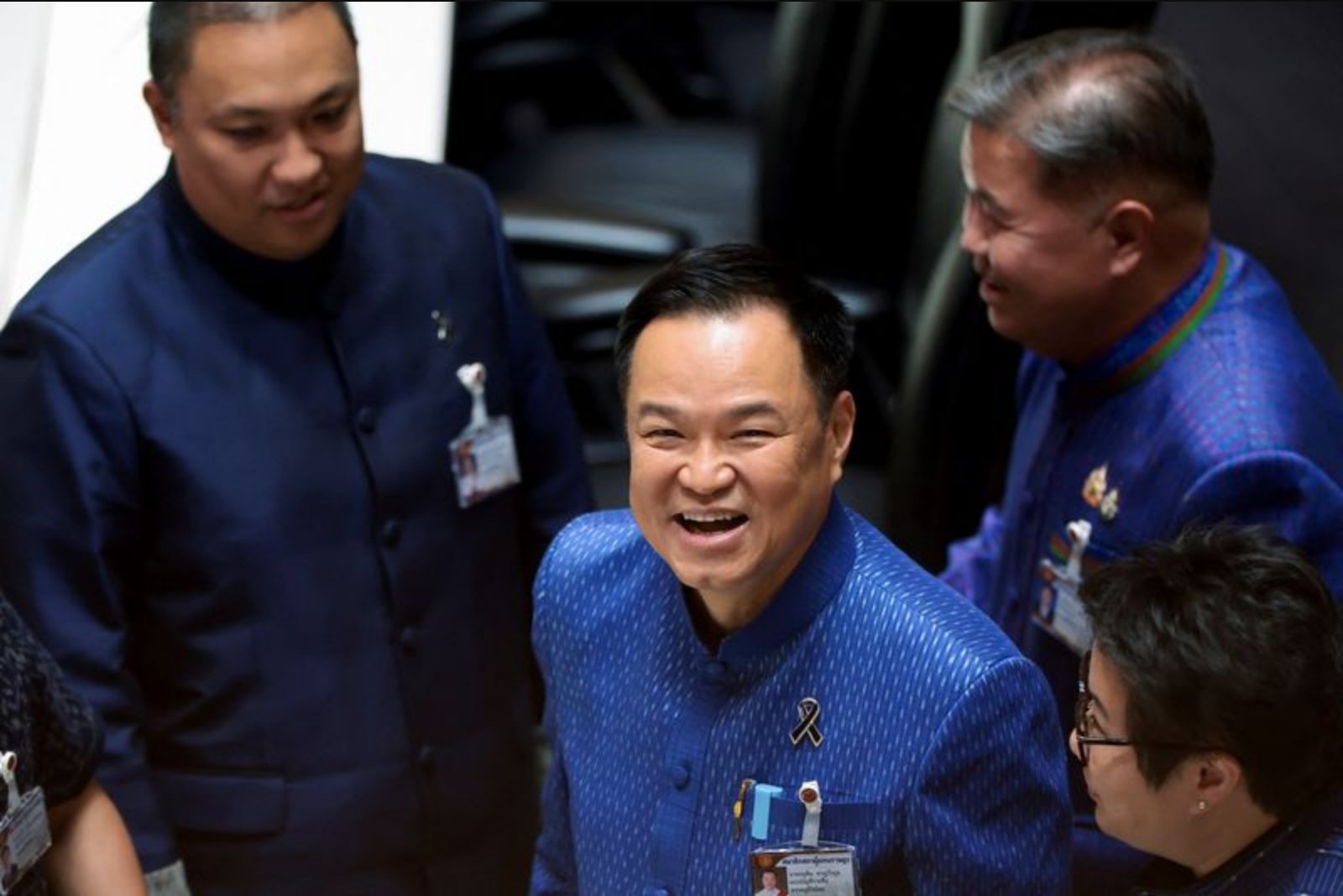
Earlier on the day of the vote, Anutin appeared in Thai traditional dress colored in his party’s blue and greeted allies in the parliamentary chamber, exchanging handshakes and posing for photographs as he marked the successful result.
How the win unfolded
Bhumjaithai’s rise from a party that had struggled to leave a mark in national politics to one that decisively won last month’s election has been described as a striking turnaround. The party’s success rode a tide of nationalism that, according to the account in the vote, followed last year’s military confrontations with neighboring Cambodia.
Analysts and observers point to Anutin’s readiness to capitalize on the weakening of the once-dominant Pheu Thai party. He had previously withdrawn from Pheu Thai’s coalition government and then moved quickly to assemble his own governing pact after a court removed a second prime minister within slightly more than a year. Those maneuvers left Bhumjaithai positioned to lead a coalition that included Pheu Thai and several smaller parties.
The coalition cohesion was evident in the parliamentary ballot, where the pact held and Anutin comfortably exceeded the 51% threshold required to win the premiership.
Addressing lawmakers - including those not aligned with his coalition - Anutin said he would immediately begin forming a cabinet and work on addressing the country’s challenges. "Your voices are equally heard," he said. "I’m ready to accept suggestions ... We all have the same goals - the wellbeing of the people."
Political positioning and profile
At 59, Anutin is a political veteran whose background includes serving as deputy premier, interior minister and health minister, and he led Thailand’s COVID-19 response as the government’s pandemic coordinator. He is the son of a former cabinet minister and had a family background tied to a construction firm. He is widely described as a staunch royalist.
Though often characterized as conservative, Anutin gained prominence for championing the legalization of cannabis, an effort that led to a large and largely unregulated expansion of marijuana retailers across the country. His capacity to survive repeated political upheavals has been attributed to his strategic positioning between competing elite factions, enabling his party to participate in successive coalition governments despite instability elsewhere.
Prospects for governance and economic context
With this parliamentary endorsement, Anutin enters office with a clearer mandate to lead a country facing persistent economic weaknesses, including a long-stuttering economy and heavy household indebtedness. The administration will also have to manage external headwinds linked to trade uncertainty and the broader fallout from geopolitical developments involving the U.S., Israel and Iran, which were cited as part of the economic backdrop.
Political scientist Napon Jatusripitak of the ISEAS–Yusof Ishak Institute in Singapore noted that medium-term stability appeared possible, given that Bhumjaithai exerts influence in both houses of parliament and that Thailand’s institutional powers - including the military and judiciary, credited with engineering the removal of previous governments - seemed to be aligned behind Anutin.
"It’s the first time in a long while that the referee and the players are on the same side," Napon said. "There’s control. And we have a highly fragmented opposition."
As he moves to form a cabinet, Anutin faces the immediate task of translating his parliamentary majority into functional governance while addressing energy concerns and economic challenges that could shape public confidence and market reactions in the months ahead.