
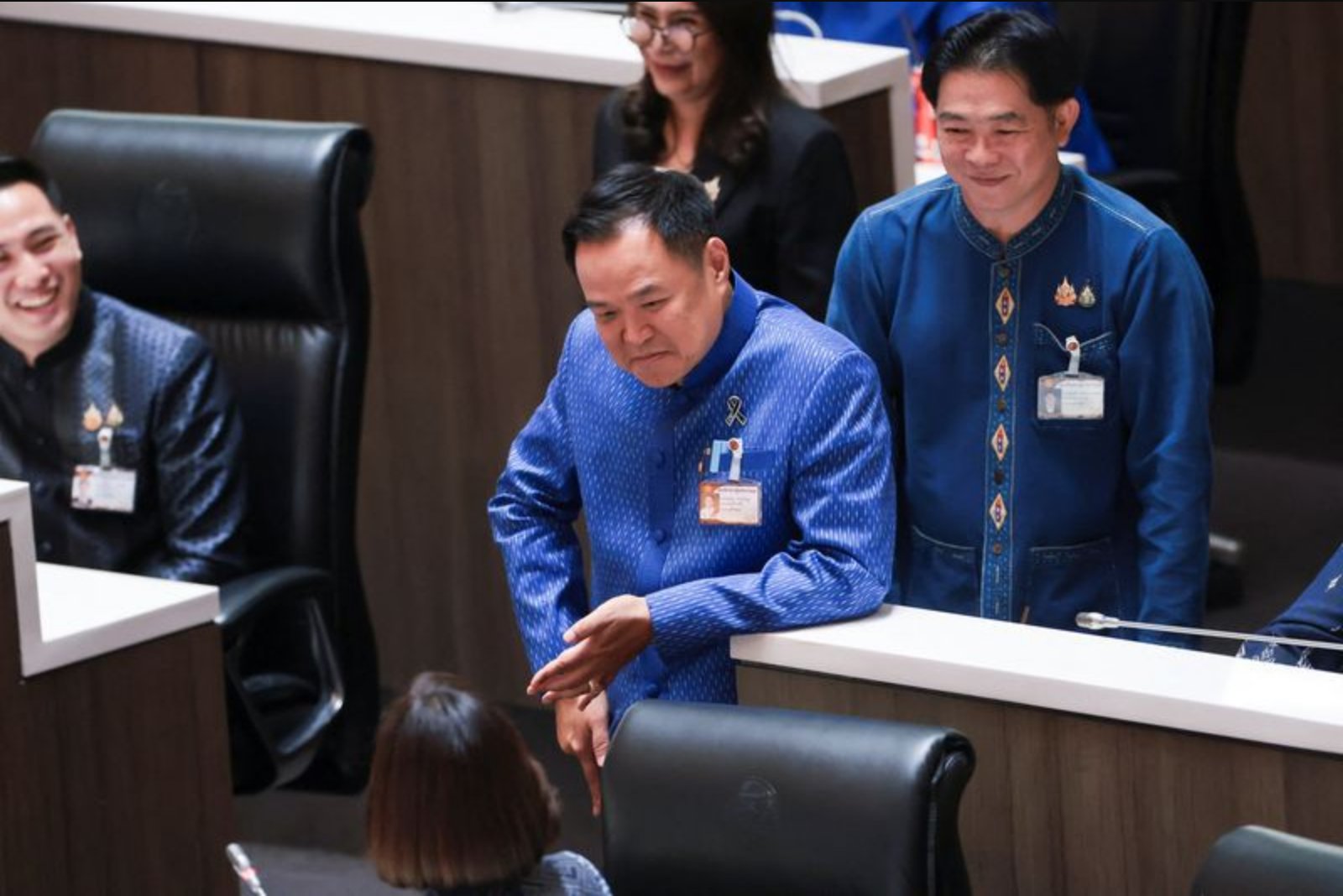
Weeks before Thailand’s February general election, Prime Minister Anutin Charnvirakul addressed a rally in Bangkok and urged voters to make his Bhumjaithai Party their clear choice. "I promise to you all that I will safeguard Thailand with my life," the 59-year-old told supporters, adding: "Just choose Bhumjaithai to guard the country, to help safeguard all of our land." That appeal to patriotism framed a campaign that capitalised on a surge of nationalism following intense border fighting with Cambodia last year - a strategy that delivered significant electoral dividends.
Bhumjaithai captured 191 seats in the 500-member parliament, outperforming the progressive People’s Party, and then assembled a broad coalition made up of 16 parties. The alliance, which includes the populist Pheu Thai, controls 292 seats. On Thursday, parliament voted to re-elect Anutin as prime minister, making him the first Thai premier to win a parliamentary vote to remain in office in two decades, an outcome that underscores the recurring political volatility in Southeast Asia’s second-largest economy.
As results came in last month, Anutin described nationalism as central to his party. "Nationalism is in the heart of everybody in the Bhumjaithai party," he told reporters. "Our people have given us more than what we expected." The victory capped a rapid move from minority leader to head of a dominant coalition.
Known for his pragmatic political operations and earlier for advancing Thailand’s legalization of cannabis in 2022, Anutin initially entered the premiership at the head of a minority government after his predecessor was removed from office by a court order last August. That earlier stint as prime minister was brief; it began six weeks after Thailand and Cambodia agreed to a ceasefire intended to end fierce border clashes. The truce did not hold long: fighting resumed in early December and intensified, stretching the full length of the land border between the two nations.
The resumption of clashes provided Anutin, a conservative firmly aligned with Thailand’s influential monarchy, an opening to strengthen his nationalist credentials and to seek a clearer parliamentary mandate. Less than 100 days into that first term, on the night of December 11, he announced on social media: "I am returning power to the people." The message accompanied his decision to dissolve parliament after a falling out with the opposition People’s Party that had earlier backed his premiership, precipitating the snap election.
Anutin’s political ascent is rooted in a family background that blended commercial influence with public service. He was born into a family of Chinese ancestry whose activities straddled construction and politics. His father, Chavarat Charnvirakul, founded the Sino-Thai Engineering and Construction Company, which initially undertook projects including the fencing of U.S. military sites in Thailand and later grew into a substantial construction enterprise. Chavarat also served briefly as Thailand’s acting prime minister and held short stints in the interior and health ministries.
After earning an engineering degree in the United States, Anutin followed a similar trajectory: he led Sino-Thai and then entered political life, joining an administration led by billionaire Thaksin Shinawatra in 2004. Three years later, the Thai Rak Thai party was dissolved by a court order, and Anutin received a five-year ban from politics.
He returned to politics in 2012 as leader of Bhumjaithai, which at the time was primarily a provincial party anchored in Thailand’s rural northeast. Over the subsequent decade, Anutin reshaped it into a force capable of leading a national coalition. Observers note his ability to balance rival provincial powerbrokers, who control significant hinterland vote blocs, while also courting urban voters by recruiting technocrats into key ministries. Thailand’s conservative-royalist establishment, which has long opposed populist currents associated with Thaksin and more recent progressive movements led by the People’s Party, has coalesced around Anutin. "I think many can see that, strategically speaking, Bhumjaithai is the best chance to fend off the progressives and the Thaksin-ites," said Napon Jatusripitak of the Bangkok-based Thailand Future think-tank. "It’s definitely a marriage of convenience."
Despite his electoral success, the new administration confronts a range of headwinds. Thailand’s economy is described as being in the doldrums, affected by trade tensions and tighter energy markets tied to the Iran conflict, and burdened by high household debt levels. Regional instability also complicates governance: relations with Cambodia remain tense following the border clashes, and Myanmar is engulfed in civil war.
Political continuity has been difficult to sustain in Thailand; no democratically elected prime minister has completed a full term since Thaksin in 2005. That record frames the uncertain environment Anutin now faces as he seeks to translate his parliamentary majority into effective governance.
Summary
Anutin Charnvirakul led Bhumjaithai to a decisive parliamentary position by tapping nationalist sentiment intensified by renewed border clashes with Cambodia. The party’s 191 seats, combined with a 16-party coalition holding 292 seats, allowed parliament to re-elect Anutin as prime minister. His rise follows a political career shaped by family business ties, a prior ministerial role, a temporary ban from politics, and the party-building job he undertook from 2012. The government takes office amid economic weakness, regional security strains, and persistent domestic political instability.
Key points
- Bhumjaithai won 191 seats in the 500-member parliament and formed a 16-party coalition controlling 292 seats, enabling Anutin’s re-election as prime minister.
- Anutin’s campaign leaned on nationalism after renewed border warfare with Cambodia, and he has consolidated support from conservative-royalist elements.
- Economic pressures - trade tensions, tightened energy markets linked to the Iran conflict, and high household debt - are immediate constraints on policy and markets, affecting sectors such as energy, trade, and consumer-facing industries.
Risks and uncertainties
- Political instability - Thailand has not seen a democratically elected prime minister complete a full term since 2005, creating uncertainty for medium-term policy continuity that can affect investor confidence.
- Border conflict with Cambodia - the resumed clashes that stretched the full land border could sustain nationalist politics and complicate bilateral relationships, with potential implications for cross-border trade and security-related expenditures.
- Economic headwinds - trade tensions and tighter energy markets tied to the Iran conflict, combined with elevated household debt, may constrain domestic demand and fiscal flexibility, impacting consumer sectors and energy-dependent industries.
Tags
- Thailand
- Politics
- Economy
- Energy
- Nationalism