
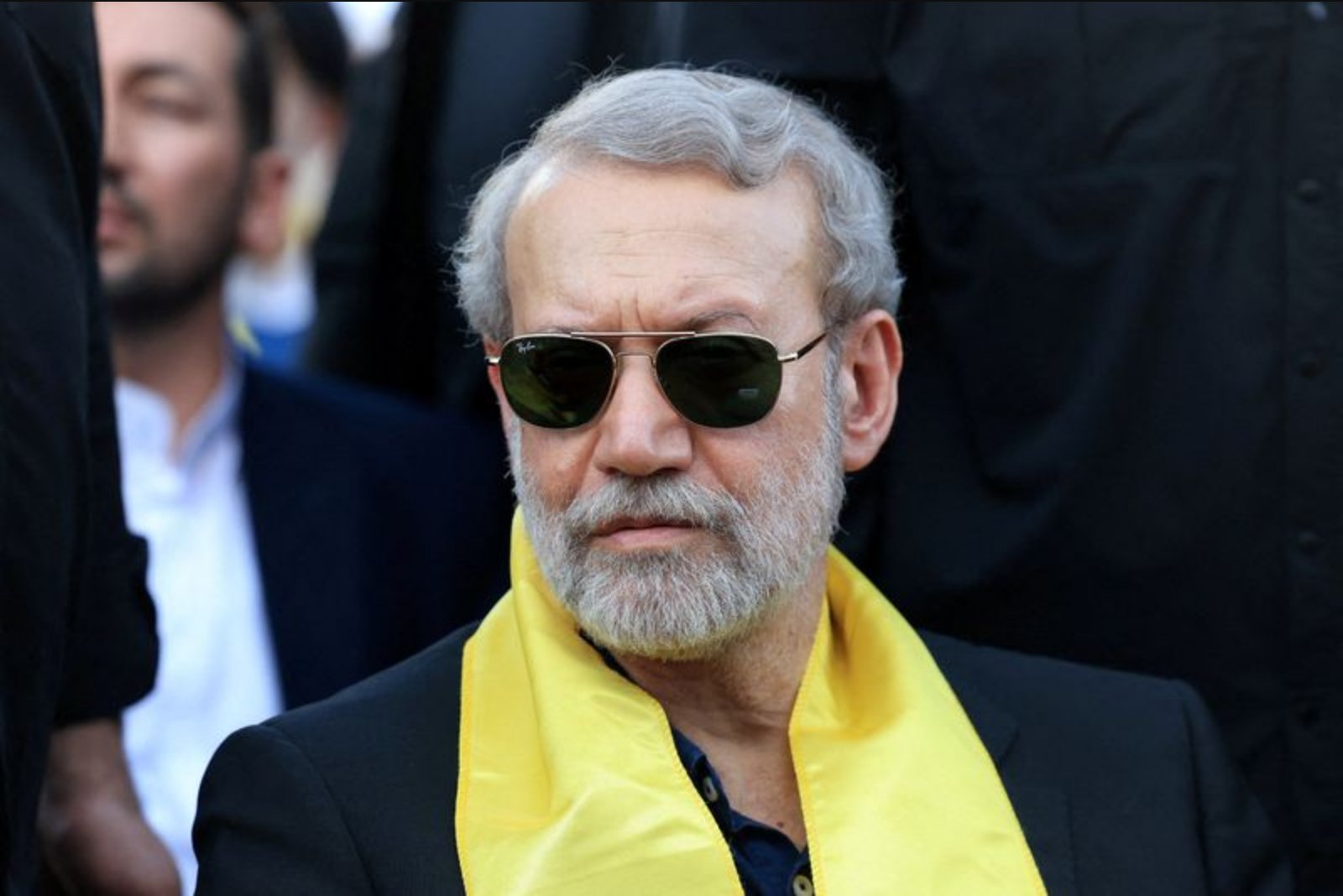
Ali Larijani, a veteran figure who occupied some of the most consequential roles in the Islamic Republic’s governing architecture, has died at the age of 67, Iranian media reported on Tuesday. Israel’s Defence Minister, Israel Katz, said earlier on the same day that Larijani had been killed in an Israeli strike.
Larijani was widely regarded inside Iran as one of the supreme leader’s principal confidants and as an influential operator across security, diplomacy and domestic politics. He emerged from a prominent clerical family whose members held high office after the 1979 Islamic Revolution. Observers described him as politically shrewd and pragmatic, yet resolute in defending the country’s theocratic foundations.
From Revolutionary Guard Officer to State Communicator
Born in 1958 in Najaf - a major Shiʿite religious centre in Iraq where his clerical family had been based while opposing what they regarded as the shah’s rule - Larijani relocated to Iran as a child and pursued academic studies, eventually earning a PhD in philosophy. He came of age amid revolutionary upheaval. At 20, after the 1979 Islamic Revolution installed Ayatollah Ruhollah Khomeini as supreme leader, Larijani joined the Islamic Revolutionary Guards Corps, the ideologically driven military force established to defend the new order.
When Iraq invaded Iran along a long front months after the revolution, Larijani served within the Guards during a conflict that became a defining test for Iran’s post-revolutionary generation of leaders. He rose to a staff officer role, focused on the organisational and managerial duties that sustained the war effort. That wartime record, together with the influence of his family, helped elevate his standing inside the nascent republic and deepened his ties to the Guards - an institution that retained and expanded its power throughout his life.
Following the end of the Iran-Iraq war, Larijani entered a series of civilian posts. He served as culture minister and then as head of the Islamic Republic of Iran Broadcasting (IRIB), the state broadcaster that plays a central role in the regime’s ideological messaging and domestic influence. He was appointed to the cabinet during the presidency of Ali Akbar Hashemi Rafsanjani, who led Iran from 1989 to 1997, a period that also saw Ayatollah Ali Khamenei become supreme leader in 1989.
Larijani’s time at IRIB and his subsequent appointment as head of the Supreme National Security Council provided him with a sustained presence at the intersection of domestic messaging and national security policy. He later made an unsuccessful bid for the presidency in 2005 before entering parliament in 2007.
Parliamentary Leadership and Regional Diplomacy
From 2008 to 2020, Larijani served as speaker of Iran’s parliament, a 12-year tenure during which he played an influential part in shaping legislation and in ensuring that international agreements aligned with the expectations of hardline elements within the political establishment. As speaker, he participated in managing Tehran’s external relationships and helped to guard the domestic acceptability of foreign policy deals.
Larijani carried particular responsibility for key diplomatic interlocutors. He made repeated visits to Moscow and met President Vladimir Putin, engaging with a major regional ally that served as a counterweight to pressure from Western governments. He was also involved in advancing negotiations with China, a process that culminated in a 25-year cooperation agreement reached in 2021.
Chief Nuclear Negotiator
Between 2005 and 2007, Larijani was Iran’s chief nuclear negotiator. In that capacity he defended Tehran’s insistence on its right to enrich uranium - a technology Iran maintains is necessary for generating fuel for nuclear power but which can also produce material suitable for a weapon. International concern had mounted after 2003, when undisclosed enrichment activities were uncovered, prompting fears about a potential weapons programme and leading to sanctions. Iran has consistently denied seeking a nuclear weapon.
Larijani adopted a language that mixed defiance and a claim of technological inevitability. He famously likened proposals to abandon domestic fuel production to "exchanging a pearl for a candy bar", and he asserted that Iran’s nuclear programme "can never be destroyed". In a lengthy quote preserved from an interview he gave to PBS’s Frontline programme in September 2025, he argued that once a technology is realized it cannot be taken away - comparing it to inventing a machine that, even if stolen, can be reproduced.
During his tenure as a negotiator and later as a parliamentary leader, Larijani presented the voice of the supreme leader on nuclear policy when called upon, translating Khamenei’s positions for foreign interlocutors and using television and public platforms to convey Tehran’s negotiating stance.
Return to Security Council and the Escalating Crisis
Larijani returned to lead the Supreme National Security Council last year, following a 12-day air war launched by Israel. According to accounts, he was engaged in efforts to avert a further attack on Iran until shortly before the current wider conflict began. Speaking early this year to Oman state television about ongoing talks, Larijani said, "In my view, this issue is resolvable." He added that if the Americans’ primary concern was preventing Iran from moving toward acquiring a nuclear weapon, that issue "can be addressed."
After a series of U.S.-Israeli strikes that began on February 28, Larijani was among the first senior Iranian figures to speak publicly. He accused Iran’s attackers of seeking to disintegrate and plunder the country, and he issued strong warnings against any would-be protesters, reflecting his dual focus on external threats and domestic stability.
Domestic Crackdown and Sanctions
Despite a reputation for a more measured, cautionary approach relative to other hardline figures, Larijani was implicated by Washington in the violent suppression of mass protests earlier this year. U.S. authorities said he played a central role in the crackdown that followed demonstrations, initially described by several senior politicians - including Larijani - as permissible expressions of economic grievance.
The U.S. Treasury, in announcing sanctions on Larijani and other officials on January 15, accused him of being "one of the first Iranian leaders to call for violence in response to the legitimate demands of the Iranian people," and said he had acted at the supreme leader’s behest. Rights organisations say the crackdown killed thousands of protesters, describing the unrest as the worst domestic violence in Iran since the Islamic Revolution.
The domestic repression also had international reverberations: one of Larijani’s daughters was dismissed from a medical teaching position at Emory University in the United States after protests by Iranian-American activists who objected to his role in suppressing the demonstrations.
Position in a Shifting Power Structure
Larijani’s status as a chief insider gave him a broad portfolio that stretched from nuclear discussions with Western counterparts to the management of Tehran’s regional alliances and the oversight of domestic unrest. He was known for a style that combined a capacity for diplomacy with a firm commitment to preserving the theocratic system of governance centred on the supreme leader.
Yet even as he remained a leading voice of the establishment, the distribution of power inside Iran showed signs of shifting. The death of Ayatollah Khamenei in an airstrike last month - an event referenced in accounts of the turmoil surrounding Larijani - has been followed by what some observers described as an expanding role for the Revolutionary Guards in decision-making, a development that reduced the room for maneuver by political powerbrokers like Larijani. The Guards’ growing prominence had already been evident in recent years and, according to reporting, intensified amid the current crisis.
Legacy and Final Days
Larijani’s career spanned military command during wartime, stewardship of the state’s principal broadcasting agency, leadership in national security institutions and a lengthy term as the speaker of parliament. He operated as a translator of the supreme leader’s intentions to both domestic and foreign audiences, and he managed relationships with major external partners, including Russia and China.
His death came as Tehran faces multiple external pressures, including air strikes by Israel and allied operations, and internal strains resulting from severe unrest and international sanctions. Washington’s punitive measures against Larijani following the January crackdown underscore the extent to which domestic security decisions have had diplomatic and economic consequences.
Accounts announcing his death indicate he was killed in an Israeli strike, a claim also made by Israel’s defence minister. Iranian state media confirmed his passing, saying he had been killed at 67. Beyond those reported facts, available public accounts reflect the contours of a career built around loyalty to theocratic governance, a pragmatic streak in diplomatic dealings, and a persistent presence at the center of Iran’s security and policy apparatus.
As Iran contends with the aftermath of significant leadership losses and ongoing military pressure, the practical effects of Larijani’s death on policymaking bodies - including the Supreme National Security Council and the parliamentary leadership he formerly headed - remain a matter reflected in the current reconfiguration of power inside the country. The long-term implications for Iran’s approach to nuclear policy, regional relationships and internal dissent will unfold amid the broader dynamics already in motion.
Source notes: The reporting available indicates Larijani’s roles and the actions described above, including his leadership positions, his quotes on nuclear policy, his involvement in diplomacy with Russia and China, his return to the Supreme National Security Council, his public statements after the strikes that began on February 28, and the U.S. sanctions tied to the January crackdown. Specific details such as his age at death, the assertion by Israel’s defence minister that he was killed in an Israeli strike, and the dismissal of a daughter from a U.S. university following protests are included in public accounts.