
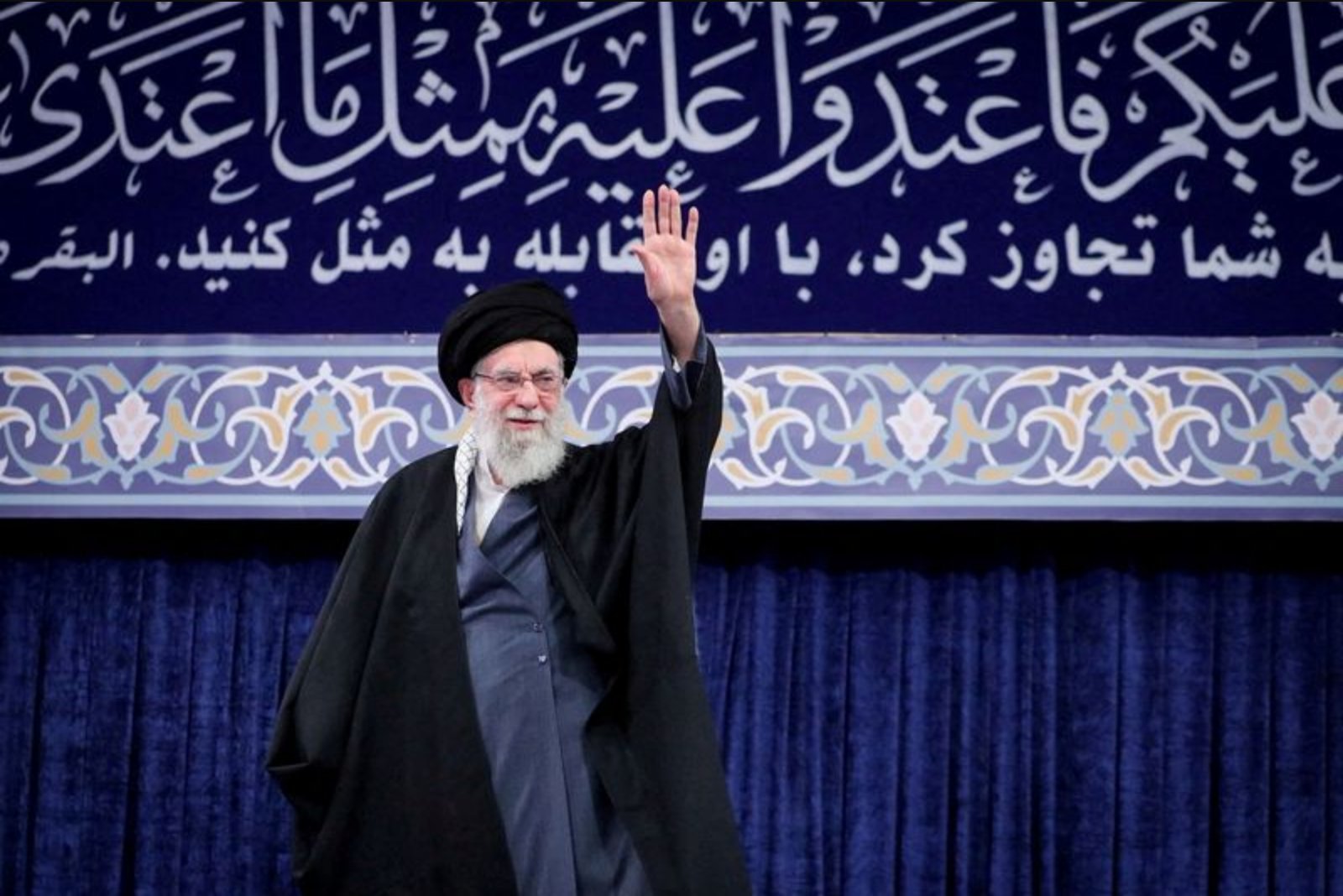
Among the opening objectives in the coordinated U.S. and Israeli airstrikes that struck Iran was the Tehran compound housing Supreme Leader Ayatollah Ali Khamenei. A source with knowledge of the operation reported that Khamenei was relocated ahead of the assault to a secure site outside the capital, though independent verification of his status was not immediately available. Satellite imagery released after the strikes showed marked damage at his compound in Tehran.
Officials involved in planning the strikes said there had been an attempt to kill Khamenei, an outcome that would represent an acute rupture for the Islamic Republic. Khamenei has been Iran’s supreme leader since 1989, assuming the post a decade after emerging as a prominent figure during the 1979 theocratic revolution that ended the monarchy.
A leader under unprecedented strain
At 86 years old, Khamenei has withstood pressure from abroad before. Yet, even before this weekend’s strikes, his rule was confronting its most severe test in decades. He has been navigating fraught talks with the United States over Iran’s nuclear programme while simultaneously overseeing the country’s response to a wave of domestic unrest. Authorities mounted what he described as the deadliest crackdown since the 1979 revolution after nationwide protests erupted earlier this year, initially sparked by rising prices. Khamenei responded by directing that protesters "should be put in their place," and security forces fired on demonstrators who chanted "Death to the dictator!"
Just last June, Khamenei had gone into hiding for nearly two weeks amid intense airstrikes by Israel and then U.S. forces that killed several of his close aides and Revolutionary Guard commanders and inflicted heavy damage on Iran’s nuclear and missile facilities. Those strikes were among the indirect consequences of the October 7, 2023 attack on Israel carried out by the Iranian-backed Palestinian group Hamas - an event that not only precipitated the ongoing Gaza war but also prompted Israel to intensify strikes on Tehran’s regional proxies.
Multiple regional developments have constrained Khamenei’s ability to project power. Hezbollah’s capabilities have been diminished in Lebanon, while the regime of Syria’s Bashar al-Assad has been described as toppled in the context of the original reporting. At the same time, U.S. policy has pressed Tehran to relinquish its ballistic missile capabilities, a demand Khamenei has refused to entertain. Iran regards its missiles as a primary deterrent against Israeli attacks, and Khamenei’s refusal to negotiate on this point has been framed as a factor that may have contributed to the latest escalation.
Decision-making concentrated at the top
Khamenei’s approach to governance reflects a lifetime shaped by revolutionary politics, war with Iraq, prolonged friction with the United States and a deliberate centralisation of power. While elected officials administer daily government affairs, no major policy - particularly those involving relations with the United States - moves forward without his explicit sign-off. His control over Iran’s layered system of clerical authority and limited democratic institutions limits the ability of other factions to countermand his decisions.
When first elevated to the role of supreme leader, Khamenei was often viewed as a less authoritative figure than his predecessor. He had not attained the clerical rank of ayatollah at the time of his appointment, which initially weakened his standing in a system that prizes religious authority. After a prolonged period of consolidating power, he succeeded in establishing dominance largely by building a loyal security apparatus devoted to his command.
Deep distrust of the West, and the United States in particular, has been a constant in Khamenei’s rhetoric and policy. In the aftermath of January’s protests, he publicly blamed former U.S. President Donald Trump for the unrest, stating: "We consider the U.S. president criminal for the casualties, damages and slander he inflicted on the Iranian nation." Yet despite a rigid ideological stance, Khamenei has on occasion shown a willingness to make tactical concessions when he deems them necessary for the regime’s survival.
He characterised such pragmatism as "heroic flexibility," a term he first used in 2013, which allows for temporary compromises to preserve longer-term objectives. This logic guided his guarded support for the 2015 nuclear agreement with six world powers, a deal he accepted as a means to secure sanctions relief and stabilise an economy that was a fundamental pillar of his political control. The 2015 accord was later abandoned by President Trump in 2018, which led Tehran to incrementally breach limitations previously agreed upon under the pact.
Security forces and financial instruments that underpin authority
When confronting internal discord or external pressure, Khamenei has routinely relied on the Islamic Revolutionary Guard Corps (IRGC) and the Basij - a vast volunteer paramilitary network - to suppress dissent. These forces were instrumental in quashing the protests that followed Mahmoud Ahmadinejad’s disputed re-election in 2009 and were again central in the crushing of demonstrations sparked by the death in custody of Mahsa Amini in 2022. Most recently, the Guards and the Basij played the decisive role in subduing the protests that erupted in January.
Another pillar of Khamenei’s power is Setad, a parastatal financial conglomerate directly under his control. Valued in the tens of billions of dollars, Setad has expanded throughout his tenure and channelled substantial investment into entities aligned with the Revolutionary Guards. The financial resources under Setad’s command have reinforced Khamenei’s capacity to sustain loyal forces and to support strategic programs deemed essential to regime survival.
Scholars who study Iran portray Khamenei as a secretive ideologue deeply concerned about betrayal, a fear that has been reinforced by personal experience. In June 1981, an assassination attempt using a bomb concealed in a tape recorder left him with a paralysed right arm. His official biography recounts severe torture in 1963 when, at age 24, he endured his first prison term for political activities under the shah’s rule. During the Iran-Iraq war from 1980 to 1988, Khamenei forged close ties with the Revolutionary Guards while serving as deputy defence minister, a relationship that bolstered his influence after the revolution.
He obtained the presidency with the backing of Ayatollah Ruhollah Khomeini and later was unexpectedly chosen as successor to the supreme leader despite lacking the mass appeal and higher clerical credentials of his mentor. As one analyst observed in the original reporting, an "accident of history" transformed Khamenei from a comparatively weak president to a supreme leader who has become one of the most powerful figures in Iran over the past century.
Implications and context within current constraints
The recent strikes that damaged Khamenei’s compound and targeted other strategic sites in Iran arrived against a backdrop of severe internal unrest and heightened external pressure. They underscore the fragility of Tehran’s regional network of proxies and the sensitivity of the regime’s remaining strategic deterrents, such as its ballistic missile forces. The combination of a loyalised security apparatus, a substantial financial resource base in Setad, and Khamenei’s willingness to exercise selective flexibility has so far allowed the leadership in Tehran to weather significant shocks. How the regime responds to this latest attack will be closely watched, though this account contains no definitive information about subsequent developments beyond the immediate reporting of strikes and damage.
Note: Where the available information was limited, this article reflects the facts as reported and refrains from asserting outcomes or developments not supported by the reporting.