
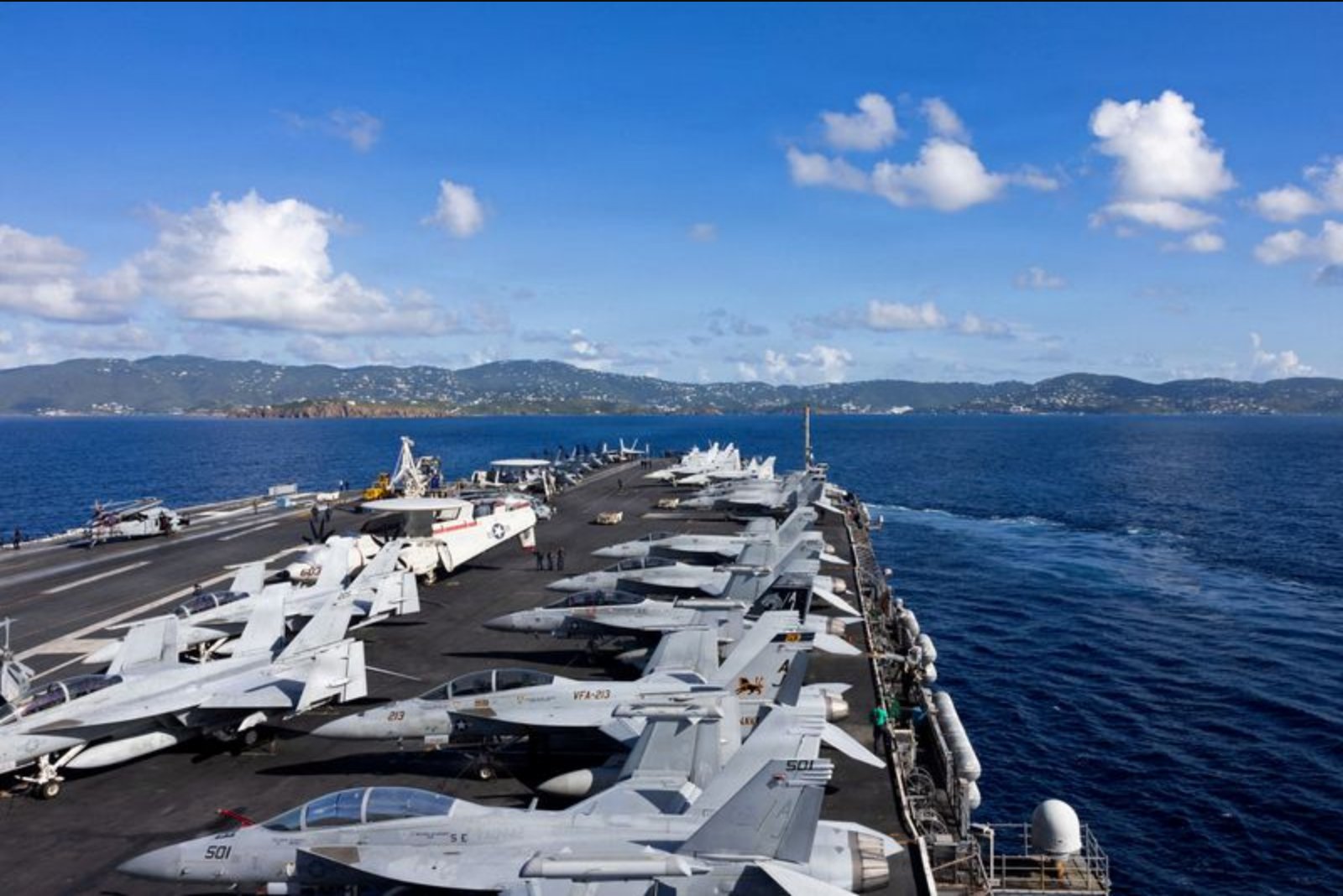
WASHINGTON, March 17 - The aircraft carrier Gerald R. Ford, the newest and largest in the U.S. fleet, is slated to make a temporary visit to port following a fire aboard the ship, U.S. officials said on Tuesday. The carrier, which is operating in the Red Sea as part of operations against Iran, is expected to go to Souda Bay on the Greek island of Crete for a temporary stop, the officials added.
The warship has been deployed for nine months, a stretch that included operations against Venezuela in the Caribbean before its arrival in the Middle East. The extended deployment has prompted questions about sailor morale and the overall operational readiness of the carrier, according to the officials who discussed the matter on the condition of anonymity.
Officials did not specify how long the Ford will remain in Crete. They reported that the fire began in the ship's main laundry area and took hours to bring under control. Nearly 200 sailors were treated for smoke-related injuries, and roughly 100 sleeping berths were affected by the blaze, one official said. One service member was flown off the ship for injuries, the official added.
The New York Times first reported the extent of the damage on board the warship. The Pentagon did not immediately respond to a request for comment.
After the fire initially broke out, U.S. military officials stated there was no damage to the carrier's propulsion plant and that the Gerald R. Ford remained fully operational. The incident nonetheless prompted the planned temporary port call.
The Ford is embarked with more than 5,000 sailors and carries in excess of 75 military aircraft, including fighter jets such as the F-18 Super Hornet. The carrier is equipped with advanced radar systems that support air traffic control and navigation.
It is operating with a group of supporting surface combatants that provide air defense, surface strike, and anti-submarine capabilities. Those escorting vessels include the Ticonderoga-class guided missile cruiser Normandy and Arleigh Burke-class guided missile destroyers Thomas Hudner, Ramage, Carney, and Roosevelt.
The U.S. has carried out strikes against more than 7,000 targets since operations began against Iran on February 28. The Ford's temporary port call comes on the 18th day of the conflict with Tehran, according to the timeline provided by officials.
Operational and logistical context
The decision to send the carrier to Souda Bay appears to be a short-term operational response to an onboard emergency that affected habitability and enlisted medical treatment for smoke exposure. Officials emphasized that propulsion systems were not damaged and that the ship remained capable of flight operations and other mission tasks. Still, the extended length of deployment and the smoke-related injuries have been cited as factors contributing to concern about morale and readiness.