
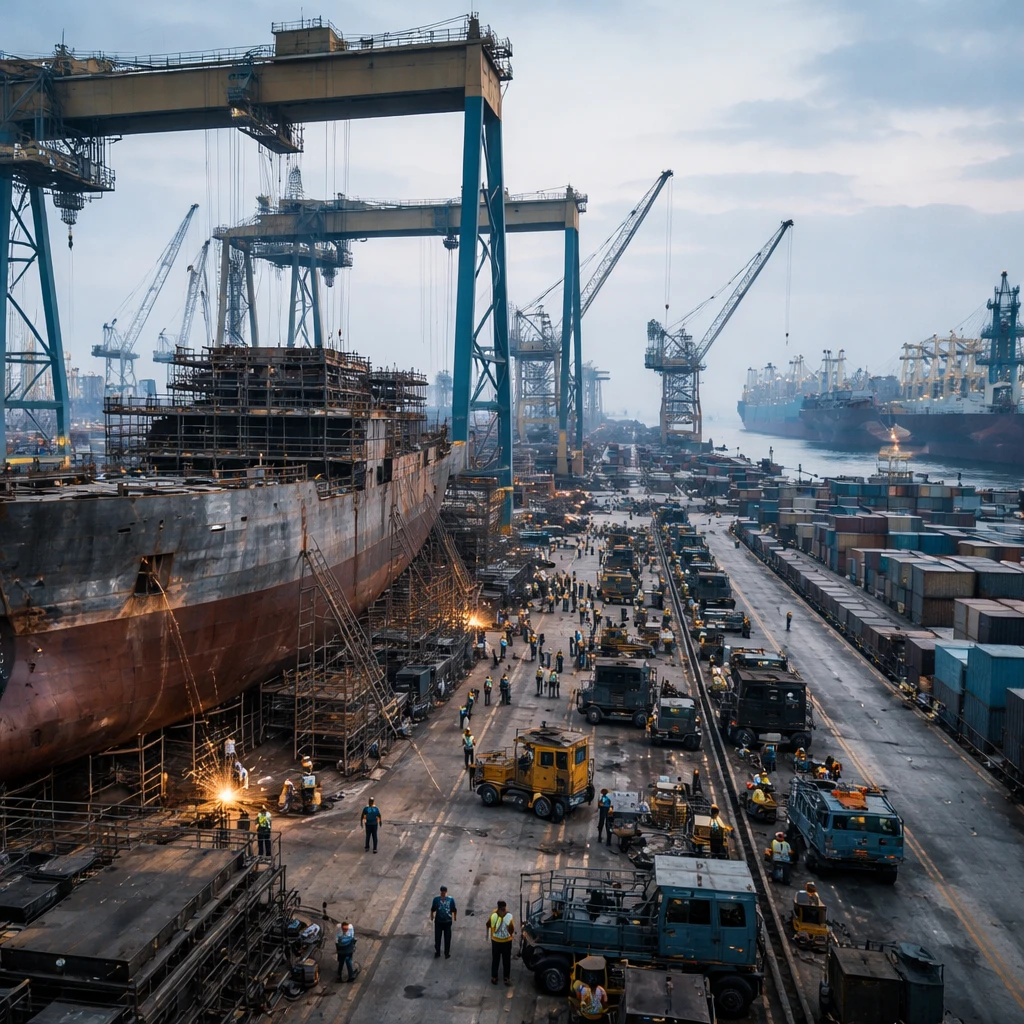
The administration on Friday published a Maritime Action Plan designed to restore U.S. shipbuilding and strengthen other domestic maritime businesses. The document, running to more than 30 pages, lays out a multi-pronged approach that includes new financing streams, workforce development, regulatory relief and measures to expand the fleet of U.S.-built and U.S.-flagged commercial vessels.
A key financing idea in the plan is to use proceeds from port fees applied to cargo delivered to the United States on ships constructed in China. Those levies, however, are subject to a pause that the United States and China agreed to for one year.
The plan recommends establishing "maritime prosperity zones" aimed at attracting private and public investment in coastal and shipyard communities. It also calls for reforms to workforce training and education to support the specialized skills needed for shipbuilding and ship maintenance. Other components include expanding the domestic commercial fleet and creating a dedicated funding vehicle - described as a Maritime Security Trust Fund - to underwrite maritime security and infrastructure projects. The plan also advocates reducing regulatory burdens that its authors say constrain industry expansion.
Shipyard owners and investors reacted positively to the release, and lawmakers who have sponsored bipartisan legislation to boost shipbuilding welcomed the details. Supporters said the plan aligns with goals in the Shipbuilding and Harbor Infrastructure for Prosperity and Security (SHIPS) for America Act, legislation that was reintroduced last year by U.S. Senator Todd Young of Indiana along with Democratic Senator Mark Kelly of Arizona and other lawmakers.
Senator Young emphasized the overlap between the administration's blueprint and the SHIPS Act, noting that the legislation would establish the Maritime Security Trust to reinvest port fee proceeds into maritime security and infrastructure projects, including shipyard revitalization. The SHIPS Act has backing from both Democratic and Republican lawmakers, but it has not moved quickly through the legislative process.
"The announcement today should serve as a wake-up call for Congress to act quickly on this bill in order to provide the legal authorities and resources necessary to make this plan a reality," Young said. "It’s time to make American ships again."
Observers noted the plan arrived later than some had expected, landing months later than hoped by industry and lawmakers who have pushed for clearer federal direction and funding to rebuild the domestic industrial base for ship construction.
The Maritime Action Plan outlines specific policy directions and funding concepts, but implementation will depend on congressional action and on how the temporary pause in China-related port fees is resolved. Proponents view the plan as a roadmap to rebuild capacity and jobs in U.S. shipyards and related maritime sectors, while the timing and legal authorities needed to realize the plan remain open questions.