
Hook & thesis
Tesla is no longer a story of pure promise; it is generating real cash and is starting to trade like it. The company reported free cash flow of $6.22 billion and sits atop a $1.55 trillion market capitalization, yet price action and a thinning short book suggest investor psychology is shifting. Technical indicators show improving momentum, and energy-storage market forecasts - where Tesla is a clear participant - provide a visible growth runway. For that combination, I am upgrading Tesla to a tactical buy and publishing an actionable trade with precise risk controls.
This is a measured trade, not a call to buy at any price. Tesla still carries high valuation multiples - P/S of 16.25 and a P/E in the high hundreds - so the trade is structured for mid-term upside while protecting capital on a defined stop.
What Tesla does and why the market should care
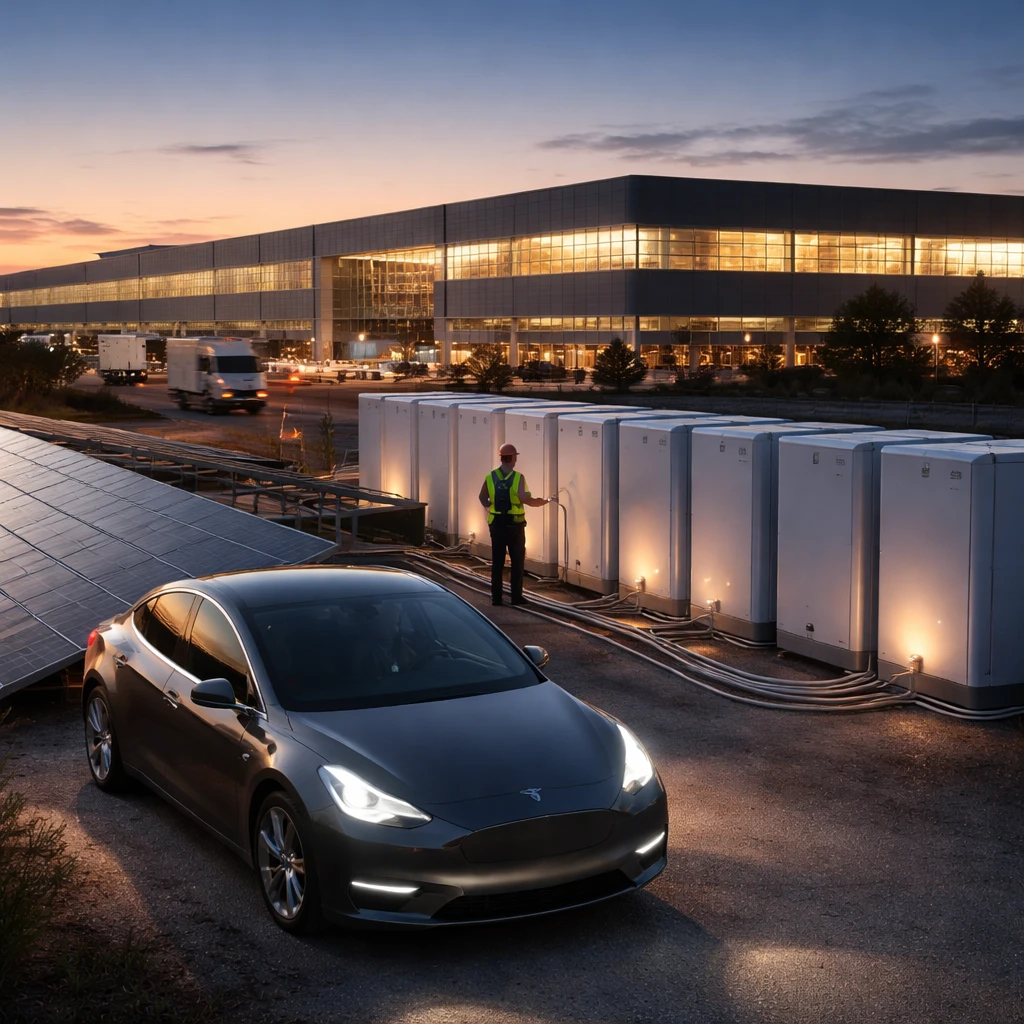
Tesla designs, manufactures, and sells electric vehicles and energy generation and storage products. The business runs two main segments: Automotive and Energy Generation & Storage. The market cares because Tesla is both a high-volume vehicle manufacturer and a leader in battery energy storage systems (BESS) - a market that is forecast to double to roughly $106 billion by 2030. That dual role means Tesla can grow vehicle unit economics while monetizing energy deployments (stationary storage, grid services) that carry better recurring-revenue characteristics.
Support for the thesis - the numbers
- Free cash flow: Tesla reported $6.22 billion of free cash flow, a concrete cash-generation figure that supports share buybacks, capital investment, and margin stabilization.
- Market capitalization and enterprise value: Market cap is about $1.558 trillion while enterprise value sits near $1.5327 trillion. That places the stock squarely in the top market-cap tier with valuation metrics that price in significant future growth.
- Valuation multiples: Price-to-sales is 16.25 and price-to-book is roughly 18.75, while EV-to-sales is 16.16 and EV/EBITDA is elevated at about 139.38. These are rich multiples, but FCF helps justify a path to multiple compression if growth and margin improvement continue.
- Balance sheet and returns: Debt-to-equity is low at ~0.10 and return on equity is modest at ~4.62%, indicating a conservatively levered balance sheet with room to invest for growth without financial strain.
- Technical setup: The stock sits around $415.34, above the 10-day SMA ($414.56) and near the 9-day EMA ($417.22) while the MACD histogram shows a bullish tilt. RSI at ~44.6 leaves room to run before entering overbought territory.
- Short interest dynamics: Days-to-cover is about 1 and recent short-volume snapshots show heavy activity but shorter covering cycles. That dynamic can amplify moves when momentum turns positive.
Valuation framing
At roughly $1.56 trillion market cap and EV near $1.53 trillion, investors are pricing Tesla as a long-duration growth firm. On one hand, multiples are high: EV-to-sales around 16 and EV/EBITDA north of 100 imply the market expects sustained high-margin growth or substantial new monetizable businesses (software, autonomy, energy services). On the other hand, the company is delivering real free cash flow and sits in a structurally growing BESS market that analysts peg to roughly $106 billion by 2030, which could shift revenue mix and raise normalized margins over time.
Put simply: valuation is lofty today, but expanding FCF plus credible energy and software monetization paths create a realistic scenario for multiple expansion from improved unit economics rather than pure expectation-based valuation. This trade bets on that narrative continuing to re-rate the stock over the mid-term while protecting downside with a defined stop.
Key catalysts (what could drive the move)
- Energy storage demand acceleration - the BESS market outlook indicates meaningful TAM expansion into 2030 and Tesla is a leading supplier for large-scale systems; positive deployment news or utility contracts would be a direct upside catalyst (report dated 02/16/2026).
- Continued free cash flow results - subsequent quarterly reports that sustain or grow FCF would reduce valuation risk and support multiple expansion.
- Option-market and institutional flows - products that create forced buying (option-related hedging, ETF flows) and shrinking short interest can intensify rallies.
- Technical breakout and momentum confirmation - a clean move above the 50-day SMA (~$442.44) would likely draw momentum traders and validate the bullish thesis.
Trade plan - actionable entry, target, stop, horizon
Entry: Buy TSLA at $415.34.
Stop loss: $375.00 - a level that sits below recent consolidation support and limits capital at risk if momentum fails.
Target: $480.00 - a mid-term target that captures a re-rate toward the upper half of the recent trading range and still sits below the 52-week high of $498.83, allowing for a sensible reward-to-risk profile.
Horizon: Mid term (45 trading days). I expect this trade to materialize within roughly two months as catalysts and FCF-driven reassessment influence multiple expansion. If the stock reaches the target early, scale out; if it slides toward the stop, reduce size and reassess fundamental developments.
Rationale: At the entry and stop above, the trade offers a favorable risk-reward given the current technical momentum and the potential for multiple expansion if Tesla's energy and software monetization narratives continue to gain credibility.
Counterargument(s)
One strong counterargument is valuation complacency: Tesla's P/S, P/E and EV/EBITDA all price in a lot of future growth. If the energy storage market grows slower than forecast or the company faces automotive margin pressure from competition and incentives, the valuation gap can re-open quickly and push the stock materially lower. Another counterpoint: autonomous vehicle monetization and FSD subscription gains may take longer to generate meaningful revenue than the market expects, leaving the company dependent on cyclical vehicle deliveries.
Risks - what could go wrong
- Valuation shock: High multiples leave limited margin for disappointment. Any negative surprise in deliveries, margins, or FCF could trigger sharp multiple compression.
- Execution risk: Manufacturing or supply-chain setbacks could compress margins and delay product ramps.
- Autonomy & regulatory risk: Autonomous-driving progress is subject to regulatory hurdles and technological uncertainty; delayed monetization would hurt the re-rating thesis.
- Demand cyclicality: Vehicle demand can turn quickly with macro weakness or incentive-driven competition, pressuring revenue and margins.
- Short squeezes and volatility: High short-volume days can produce transient volatility; while this can work in your favor on rallies, it also increases risk of violent price moves against your position during market stress.
What would change my mind
I would downgrade this trade if the next quarterly print shows a material drop in free cash flow (below $2-3 billion), a meaningful rise in net leverage, or fresh news that the BESS market growth is slowing materially. Conversely, sustained FCF growth, a visible increase in recurring revenue from software/FSD subscriptions, or major utility-scale contract wins would reinforce the bullish view and prompt a higher target.
Quick reference table - key metrics
| Metric | Value |
|---|---|
| Current price | $415.34 |
| Market cap | $1.558T |
| Free cash flow (most recent) | $6.22B |
| P/S | 16.25 |
| EV/EBITDA | ~139.4 |
| 10-day SMA / 50-day SMA | $414.56 / $442.44 |
Bottom line
Tesla has shifted from promise to performance in ways that matter for traders: meaningful free cash flow, a conservative balance sheet, and favorable market structure in energy storage combine with improving technical momentum. This trade offers a controlled way to participate: buy at $415.34, target $480.00 over a mid-term window of ~45 trading days, and limit downside with a $375.00 stop. The name still carries high multiples, so size positions accordingly and watch catalysts and earnings closely. If FCF weakens or BESS demand falters, I will reassess and likely step back from this stance.
Trade idea published 02/18/2026.