
Hook & thesis
Applied Digital has engineered one of the cleaner ways to monetize AI compute growth: sell long-term, high-dollar leases tied to physical megawatts and then build and operate the facilities. Two developments make the company tradeable here: (1) a large backlog of long-duration, non-cancellable leases that convert buildouts into predictable revenue streams; and (2) the structural acceleration in AI and HPC demand that favors providers who can deliver high power density capacity quickly.
Those tailwinds don't make APLD low-risk. The stock already trades at a premium to current sales metrics, the company is cash negative and levered, and a few operational missteps could be punishing. But for traders willing to accept execution risk, I see a defined-risk, mid-term trade that leans long the path to revenue recognition as new capacity goes live.
What the company does - and why the market should care
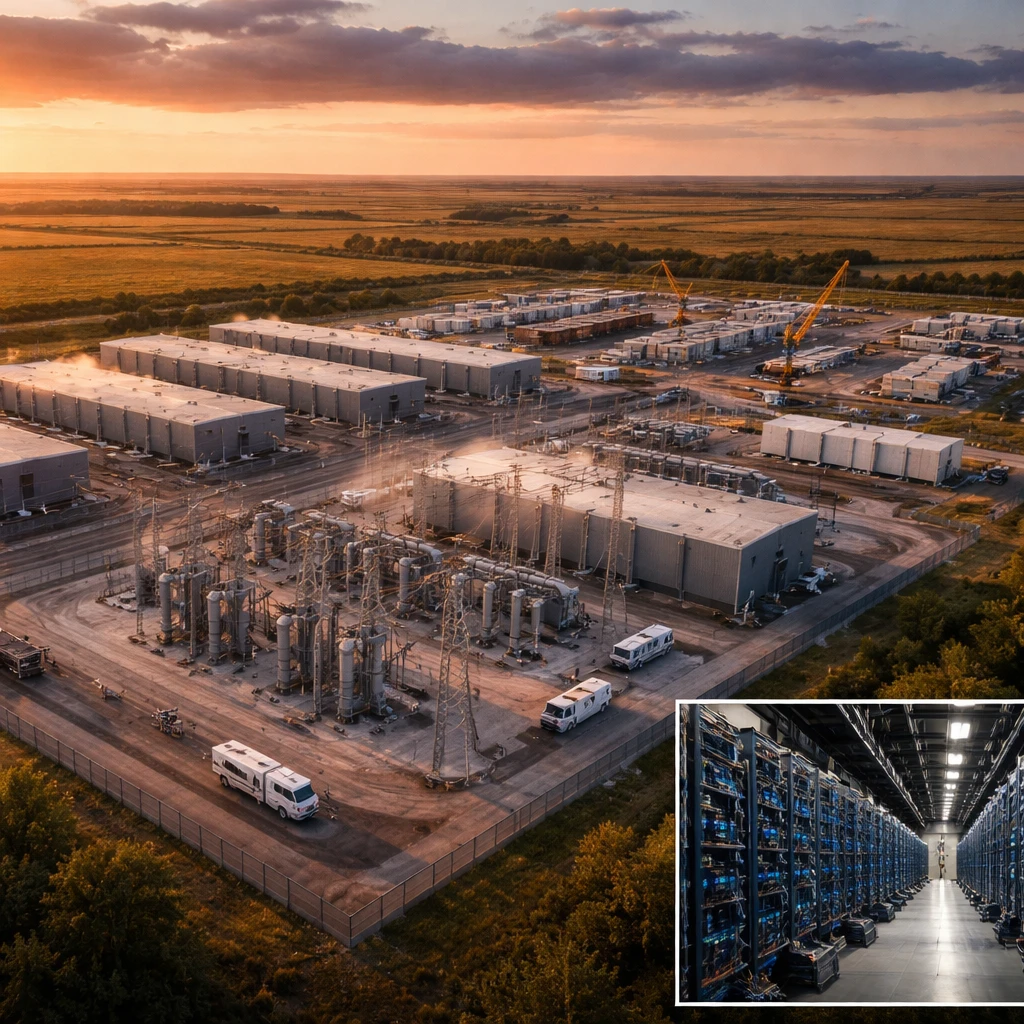
Applied Digital designs, builds and operates high-power data centers tailored to crypto miners and high-performance computing (HPC) / AI workloads. The business splits into a Data Center Hosting business (energized infrastructure for crypto mining customers) and an HPC Hosting business (facilities built for high power density AI and HPC customers).
The simple market logic is: AI and generative models require concentrated compute and power. Customers prefer long-term leases to secure dedicated capacity rather than building their own pods. Applied Digital's model is to sign long-term contracts and then build to those commitments, converting construction into predictable rental-like revenue once facilities go live.
The two tailwinds
- Large, long-duration contracted backlog: The company has publicly referenced $16 billion in non-cancellable 15-year lease contracts for about 600 MW. That kind of backlog — multi-billion dollars of contracted revenue with 15-year terms — materially de-risks topline visibility once capacity is energized.
- AI/HPC demand and power density premium: Applied Digital is building high-density campuses designed for AI compute. Newsflow indicates the company already has 700 MW operational and roughly 4.3 GW under development, which positions it to capture outsized demand as hyperscalers and AI-native cloud customers expand capacity.
Support from the numbers
The market currently values Applied Digital at roughly $9.85 billion market capitalization with an enterprise value near $10.56 billion. On current reported metrics, forward profitability isn't visible: earnings per share are negative and the company reported free cash flow of about -$1.34 billion. Price-to-sales sits at a lofty ~46.9 and EV-to-sales is ~50.2, reflecting a market that is pricing in significant future revenue growth.
Balance sheet and liquidity details matter here. The company shows a cash per share figure of roughly $4.76 (reported cash metric) while debt-to-equity is listed at about 1.8. That implies substantial leverage on the balance sheet and explains why execution and financing are live risks even as contracted revenue sits in the backlog.
Valuation framing
At a market cap near $9.85 billion and EV of $10.56 billion, Applied Digital trades like a growth company whose future leasing revenue will be the primary driver of cash flow. The market is assigning a very high multiple to current revenue: price-to-sales of ~46.9 assumes the company will convert its contracted megawatts into high-margin recurring cash flows over the next several years.
That valuation is logical only if: (a) the company executes builds on schedule, (b) customers take power as contracted, and (c) margins on those leases are healthy. Any slippage on those fronts would rapidly compress multiples. In short: upside is concentrated in execution and demand; downside is concentrated in leverage and concentration of customers.
Catalysts to watch (near to mid-term)
- Quarterly revenue beats driven by new capacity coming online (watch sequential revenue growth and bookings disclosure).
- Public confirmation of lease commencements and power-on dates for projects within the 4.3 GW pipeline.
- Debt refinancing or equity raises at favorable rates that reduce near-term interest burden and demonstrate financing optionality.
- New customers or expansions beyond the largest existing counterparties, which would dilute concentration risk.
- Improved free cash flow trajectory or better-than-expected margins on new leases.
Trade plan (actionable)
Thesis: Buy the expectation that a portion of the contracted backlog will convert into recognized revenue and raise investor confidence within the mid term (45 trading days). This is a defined-risk trade that attempts to capture a positive re-rating as the company shows sequential capacity ramps and possibly stabilizes financing costs.
| Entry | Target | Stop | Horizon | Direction |
|---|---|---|---|---|
| $35.26 | $52.00 | $29.00 | Mid term (45 trading days) | Long |
Entry price: I recommend entering at $35.26, which is the most recent trade level. The target of $52 reflects a ~48% upside and would imply investor willingness to price more of the $16 billion contracted backlog into near-term expectations or to re-rate on stronger revenue beats. The stop at $29 limits downside to about 18% if the market decides to re-price risk immediately — a level that would likely indicate renewed concerns about financing or major execution delays.
Why this makes sense tactically
Volume and short interest dynamics support the idea there is active positioning on both sides of the trade. Average volumes are elevated and short interest sits in the tens of millions of shares, so a positive sequence of operational updates or a visible reduction in financing risk can trigger a sharp move higher. Conversely, weak operational updates can produce quick downside, which is why the stop is close.
Risks & counterarguments
- Execution/delivery risk: Building high-power, high-density campuses at scale is complex. Construction delays or cost overruns could push out revenue recognition and give counterparties options to renegotiate or terminate. Several commentaries have highlighted this as a key vulnerability.
- Leverage and cash burn: Free cash flow was approximately -$1.34 billion and debt-to-equity is about 1.8. High interest and refinancing needs could force dilutive capital raises or refinancing at unfavorable rates.
- Customer concentration: A large portion of the disclosed backlog is tied to a few customers. If a major customer fails to expand or renegotiates terms, the revenue outlook weakens materially.
- Rich valuation: Price-to-sales of ~46.9 and EV-to-sales of ~50.2 price in a lot of growth. If the market downgrades growth expectations even marginally, the multiple compression could produce large downside.
- Macro / rates / capex cycle: Rising rates or a squeeze in capital markets would make it harder and more expensive to fund buildouts; it could also reduce demand from customers contemplating large incremental capital commitments.
Counterargument: The valuation already prices in much of the expected growth and the company is not yet profitable; patient investors concerned about execution and debt should wait for clearer evidence of positive free cash flow or materially lower leverage before taking a long-term position. In other words, you can argue the risk/reward is asymmetric to the downside today.
What would change my mind
I would become more bullish if the company posts sequentially accelerating revenue with positive guidance tied to specific megawatt activations, reduces net leverage materially through refinancing or equity-free deleveraging, or signs meaningful new customers that reduce its concentration risk. Conversely, I would become more bearish if major projects slip more than one quarter, if a large customer pauses capacity draws, or if the company announces expensive capital raises that dilute current equity materially.
Conclusion
Applied Digital offers a clear play on two real tailwinds: contracted long-duration leases that convert physical capacity into recurring revenue, and structural AI/HPC demand that rewards companies able to supply high-power density capacity quickly. That combination supports a mid-term, defined-risk long trade at $35.26 with a $52 target and a $29 stop — but this is a high-risk setup. The company must execute multiple operational and financing milestones to justify current multiples. Traders should size positions conservatively and respect the stop, because valuation and leverage leave little room for major execution missteps.
Trade specifics: Entry $35.26 / Target $52.00 / Stop $29.00 - Mid term (45 trading days).