
Hook & thesis
Tejon Ranch Co. is a unique hybrid: a landowner and developer whose primary asset is option-like exposure to California growth corridors rather than recurring rental cash flow. At a current price of $16.56 and a market capitalization just under $450M, the stock reads like a low-cost ticket on the company successfully converting entitlements and selling or leasing parcels across industrial, residential and resort horizons. If management continues to clear legal and entitlement hurdles and monetizes the Commerce Center and Centennial projects, shareholders stand to capture a meaningful rerating. That makes a long trade here compelling for patient, event-driven investors.
My base case is straightforward: ownership of raw land and near-term industrial leasing (via recent joint ventures) provide both upside optionality and downside protection through diversified non-development revenue streams (mineral leases, farming, ranch operations). The balance sheet is conservative - debt-to-equity stands at roughly 0.19 - giving the company runway to push entitlements and infrastructure while avoiding a major financing squeeze. In short: buy an optionality-rich real estate developer with limited leverage and clear catalysts.
What the business is and why the market should care
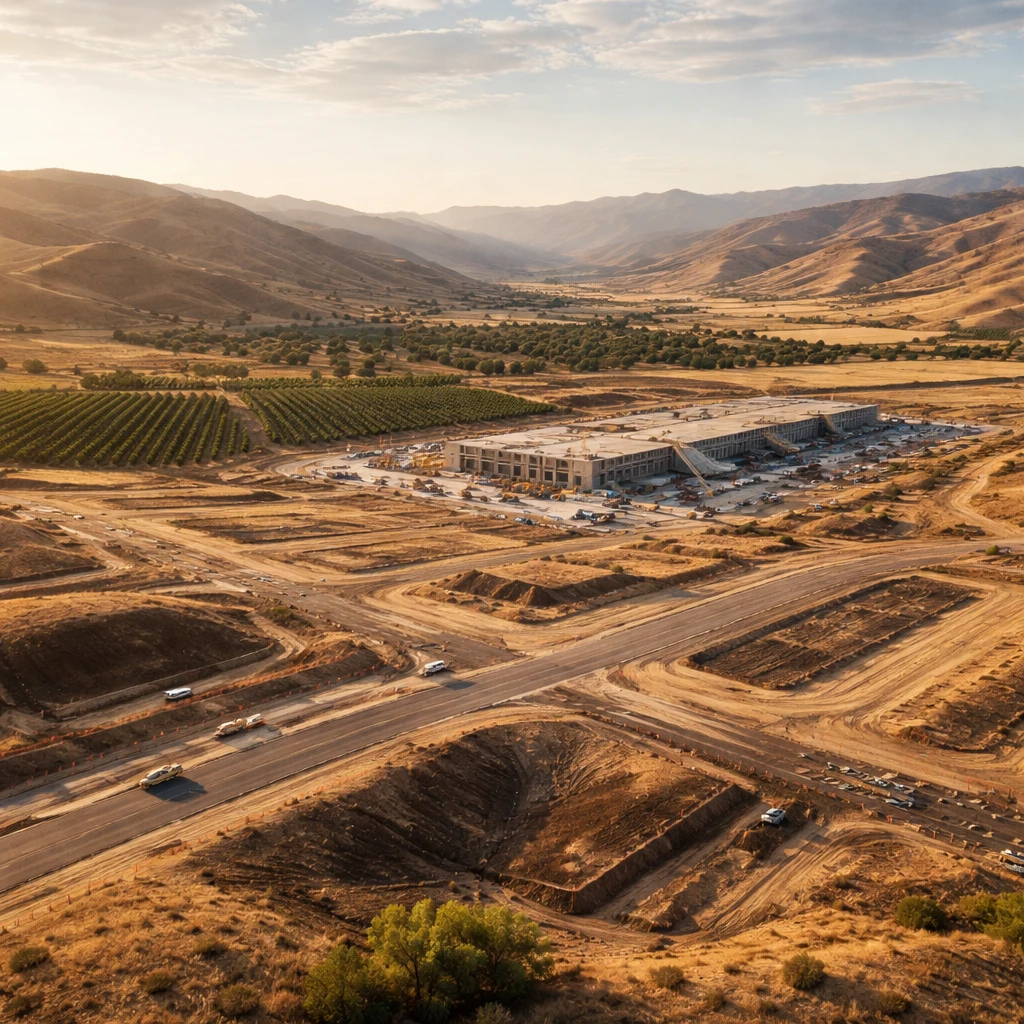
Tejon Ranch operates across five segments: Real Estate - Commercial and Industrial, Real Estate - Resort and Residential, Mineral Resources, Farming, and Ranch Operations. The core value driver for shareholders is the real estate pipeline: master-planned communities, industrial logistics space at the Tejon Ranch Commerce Center, and the Centennial residential project. Industrial demand in California continues to favor well-located logistics nodes; Tejon’s Commerce Center is positioned to capture that demand, and management has started to crystallize value through development partnerships.
The market cares for two reasons. First, California land that is appropriately entitled and ready for industrial or residential conversion is scarce; when projects clear entitlements and infrastructure is installed, value steps up materially. Second, Tejon produces non-real-estate cash from mineral royalties and farming, which helps offset carrying costs and reduces the need to aggressively lever land positions while waiting for sales or leases.
Concrete numbers to anchor the thesis
At the current price of $16.56, Tejon’s market cap is approximately $445M. Key snapshot metrics include:
| Metric | Value |
|---|---|
| Price | $16.56 |
| Market cap | $445,364,640 |
| P/E | ~149.5 (EPS $0.11) |
| P/B | ~0.94 |
| Enterprise value | $534,272,774 |
| Free cash flow (recent) | -$56,469,000 |
| Debt to equity | 0.19 |
| Shares outstanding | 26,894,000 |
Two numbers stand out. First, P/B is below 1.0, implying the market values equity at or below reported book value despite the company’s land-development optionality. Second, free cash flow was negative at roughly -$56.5M, which is consistent with a development company investing in entitlement, infrastructure and pre-construction work. The conservative debt footprint - debt-to-equity of 0.19 - is a structural positive: Tejon can continue development activity without forcing dilutive capital raises in the near term.
Technical and market context
Technicals are constructive: the current price sits above the 50-day average ($16.20) and near the 10- and 20-day averages; the RSI is moderate at ~59 and MACD shows bullish momentum. Short interest has shown some fluctuation but the most recent settlement indicates a decline relative to prior periods, consistent with reduced negative pressure. Average daily volume is modest (two-week average ~92k shares), so position sizing should respect liquidity.
Valuation framing
Valuing master-planned land developers requires both asset-level appraisal and a readability discount for entitlement risk. On one hand, P/B ~0.94 suggests the market is not assigning a premium for future developments - you are effectively buying land and ongoing operations near book value. On the other hand, P/E is high because current earnings are small relative to book value and because reported EPS includes non-operational swings; earnings will likely remain lumpy until major sales or leasing ramps. Given the asset nature of Tejon’s business, a sensible way to view valuation is: you own a sizable land bank and industrial pipeline with the option to monetize through sales, leases or JV structures while the company keeps leverage low. If even one major project (Commerce Center leases or Centennial entitlements) materially progresses, the market could re-price the equity above book.
Catalysts
- Industrial development monetization - continued progress on the 510,500-square-foot warehouse JV announced on 10/10/2024 and additional pre-leased buildings at the Commerce Center.
- Legal / entitlement clarity on Centennial - favorable appellate outcomes or settlements that remove uncertainty and allow parcel sales or infrastructure starts (court opinion referenced on 06/27/2025).
- Board and management stability - new board additions (11/05/2024) and shareholder support (05/19/2025 results) reduce governance overhang and accelerate execution on long-term plans.
- Land sales or large lot dispositions - any sizable parcel sale or master developer commitment would be an immediate value crystallizer for equity.
Trade plan
I recommend a long position with strict risk control for investors who can tolerate project timelines. Entry, stop and target:
- Entry price: 16.56
- Target price: 20.00
- Stop loss: 14.75
This is a long-term trade - plan to hold for long term (180 trading days). Rationale: entitlement resolution, industrial leasing and JV construction timelines play out over quarters; a 180-trading-day horizon gives time for visible project milestones (groundbreaking, pre-leasing announcements, JV closings) to move the stock. The stop at $14.75 protects against downside from an adverse court ruling, severe commodity shock, or a broader sentiment-driven re-pricing of development stocks. If the stock moves above $20 before 180 trading days, consider trimming into strength and raising the stop to breakeven.
Risks and counterarguments
- Regulatory and legal risk: Land development in California faces frequent litigation and political opposition. A materially adverse appellate or regulatory decision could delay projects and materially impair valuation.
- Execution and timing risk: Entitlement approvals and infrastructure buildouts are long, lumpy and expensive. Negative surprises in cost or timing could push out monetization horizons and pressure cash flow.
- Negative free cash flow: Recent free cash flow was roughly -$56.5M. Persistent negative FCF requires that the company either draws on liquidity or curtails activity; while debt levels are low now, that could change if development requires more capital than expected.
- Concentration risk: Tejon’s assets are concentrated in California; any regional economic weakness, restrictive policy change, or material shift in state-level housing and land policy would disproportionately impact results.
- Market / liquidity risk: Average daily volume is modest and the float is limited, so large blocks could move the stock and exits could be choppy if sentiment reverses.
Counterargument: The market may already be pricing in the best-case entitlements risk and the current P/B near 1.0 could mask limited upside if management cannot execute or if land values have already been depleted by prior write-downs. In this view, TRC is a prolonged value trap until tiles are sold or leased, and patient capital may be better deployed elsewhere.
What would change my mind
I will upgrade conviction if Tejon reports one or more of the following within the next 180 trading days: material pre-lease announcements at the Commerce Center, a binding master developer agreement for Centennial parcels, a favorable appellate outcome clearing a major entitlement pathway, or a sizable land sale that meaningfully reduces carrying costs. Conversely, I would abandon the trade if the company needs to raise significant dilutive equity to fund infrastructure, if a court ruling halts the Centennial project, or if management signals a material slowdown in the industrial development pipeline.
Conclusion
Tejon Ranch is not a turn-key income stock - it is a land-development and agribusiness hybrid where optionality and asset value dominate the investment case. At $16.56, investors can buy a relatively low-levered company with several near-term catalysts and the potential for outsized upside if entitlements and industrial leasing advance. The trade requires patience and respect for execution risk; use disciplined position sizing, keep the stop at $14.75, and treat the position as a long-term event-driven play over the next 180 trading days.