
Hook & thesis
O'Reilly Automotive (ORLY) is a classic defensive-growth retailer: steady same-store sales, recurring demand driven by an aging vehicle fleet, and predictable aftermarket margins. At $93.98 today, the shares trade comfortably beneath the 50-day average and well off the 52-week high of $108.72; momentum is soft, but fundamentals remain intact. For traders with a long-term horizon, this is a buy-on-dip opportunity backed by solid free cash flow and durable category dynamics.
My trade thesis: take a long position at $93.98 with a disciplined stop at $86.00 and a target of $115.00 over the next long term (180 trading days). The core justification is operational resilience and cash-generation that should support continued store growth, organic comps, and shareholder returns even if macro volatility persists.
What the company does and why the market should care
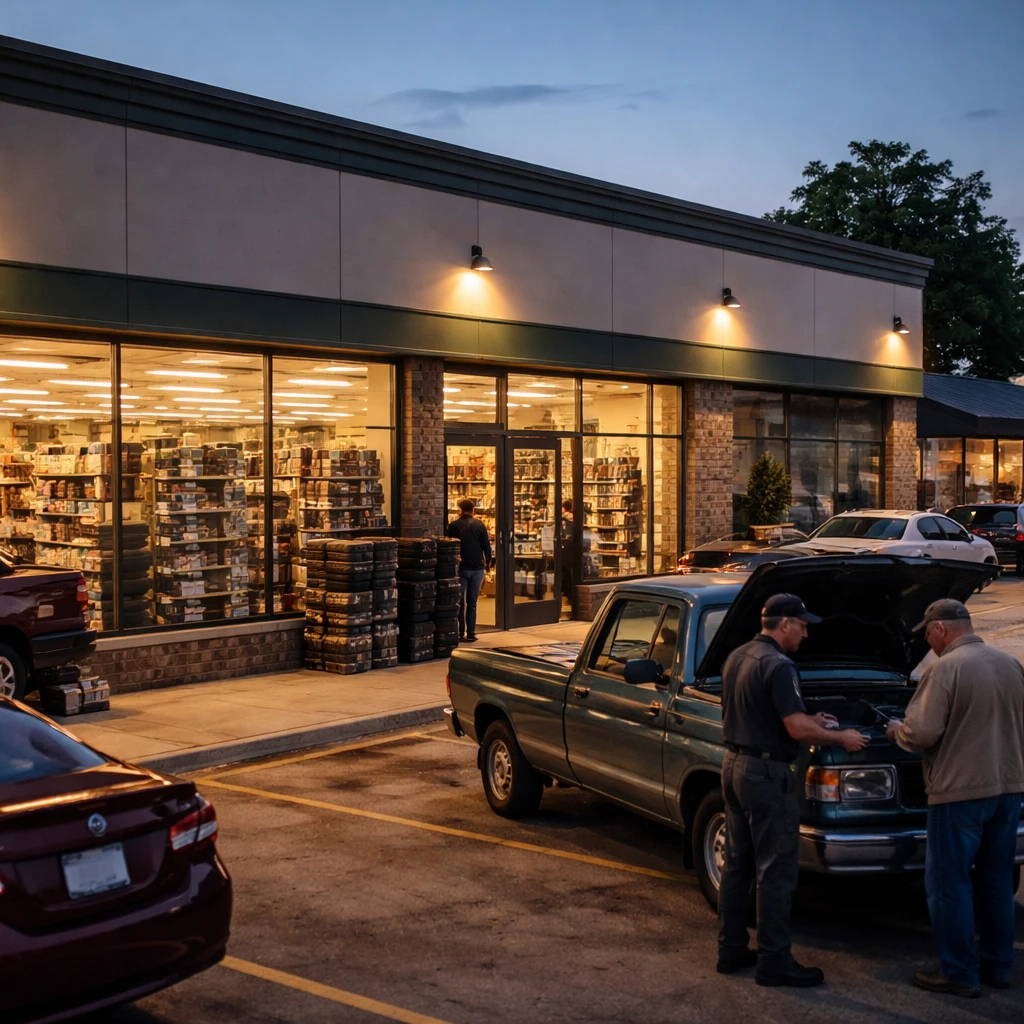
O'Reilly owns and operates retail outlets across the U.S., selling replacement parts, tools, supplies, equipment and accessories to both professional installers and do-it-yourself customers. The business benefits from recurring demand: vehicles require maintenance and repairs regardless of cycles, and the U.S. vehicle fleet is older today than a decade ago. That structural backdrop helps explain 32+ years of positive same-store sales growth mentioned in market commentary and underpins predictable cash flow.
Why investors care: O'Reilly converts its retail scale into consistent free cash flow and uses that cash for store openings, share repurchases, and balance-sheet flexibility. The company reported free cash flow of $1.56 billion in the latest snapshot, and an enterprise value near $87.6 billion supports a valuation profile that, while not cheap, is justified by stability and growth optionality.
Key data points that support the trade
- Current price: $93.98.
- Market cap (snapshot): approximately $78.4 billion.
- Price-to-earnings: about 32.6x trailing EPS of roughly $2.94.
- Free cash flow: $1.5627 billion.
- 52-week range: $85.55 (low) to $108.72 (high).
- Technicals: 10-day SMA $98.34, 50-day SMA $95.60; RSI is 37.8 (leans slightly oversold) and MACD shows bearish momentum.
- Average daily volume: roughly 6.13 million shares (2-week average).
Valuation framing
At a market cap around $78.4 billion and a P/E in the low 30s, O'Reilly sits at a premium to the broad market but not at a valuation that implies unrealistic growth. The company generated meaningful free cash flow - $1.56 billion - which supports capital allocation priorities (new store openings and buybacks). Given consistent same-store sales growth historically and management's plan for continued expansion (guidance in market commentary includes adding stores), the multiple is defensible for long-term holders. That said, the premium means short-term disappointment can compress the multiple quickly.
Trade plan (actionable)
| Action | Price | Horizon |
|---|---|---|
| Entry | $93.98 | Long term (180 trading days) - enough time to let comp trends, store openings and seasonal cadence play out. |
| Stop loss | $86.00 | |
| Target | $115.00 |
Rationale for horizon: The long-term (180 trading days) window gives O'Reilly time to report a couple of quarters, confirm the continuation of comp strength, and allow multiple expansion if growth remains steady. It also gives time for the company to benefit from store openings and continued buybacks cited by analysts in January commentary (e.g., 01/13/2026 and 01/02/2026 pieces highlighting growth and buybacks).
Catalysts to watch
- Same-store sales and margins - continued positive comps would be the primary fundamental catalyst for multiple expansion.
- New store cadence - management has outlined expansion; confirmation that openings are accretive will support upside.
- Free cash flow and buybacks - continued robust FCF and active repurchases reduce float and support EPS growth.
- Industry tailwinds - an aging fleet and higher new-vehicle financing costs are favorable to aftermarket demand.
- Any operational improvement at peers (or weakness at competitors) that widens O'Reilly's relative competitive position.
Risks and counterarguments
Here are the material risks you need to monitor before entering and while holding this trade. I list the most likely adverse scenarios and how I would react.
- Valuation compression: At ~32.6x trailing EPS, the stock carries an elevated multiple. If growth misses or macro sentiment shifts, the multiple can contract quickly and pressure the share price.
- Traffic and margin sensitivity: Consumer cutbacks on discretionary purchases or deflationary pressures on parts pricing could compress margins and hurt comps.
- Execution risk with new stores: Rapid rollouts that fail to hit productivity targets would burden SG&A and reduce return on invested capital.
- Inventory and supply-chain shocks: Parts shortages or cost inflation could both hurt gross margins and availability, especially for professional installers who drive higher-dollar transactions.
- Short-term technical risk: Momentum is bearish (MACD) and RSI is below 40; the stock can underperform into near-term earnings or macro-driven sell-offs. That’s why the stop at $86 is critical.
Counterargument to the thesis
One reasonable counterargument: O'Reilly's premium multiple assumes continued above-market growth and margin stability. If the broader economy softens and DIY demand collapses, the company can still be forced to cut prices or slow new-store investment. That scenario would likely produce a steeper drawdown than currently priced because much of the upside is already reflected in the valuation.
How I'll manage the trade
If the position falls to the stop at $86.00, I will exit to limit downside and reassess after the next earnings release. If the stock advances toward the target, I will scale out in pieces: sell one-third near $103-107, another third near $110-113, and hold the remainder toward $115, re-evaluating on fresh data. I would tighten the stop to breakeven once the stock clears $103 to protect capital.
What would change my mind
I would downgrade this trade if any of the following occur: a) a meaningful deterioration in same-store sales for two consecutive quarters, b) a sharp decline in free cash flow below the current run-rate (~$1.56 billion), or c) a strategic misstep on store openings that materially raises SG&A without corresponding revenue. Conversely, sustained comps above guidance, accelerated buybacks, or a meaningful margin beat would strengthen the bullish case and justify raising the target.
Bottom line
O'Reilly is a high-quality, cash-generative retailer exposed to resilient aftermarket demand. The current pullback offers a reasonable entry at $93.98 for traders willing to commit to a long-term (180 trading days) horizon. The trade balances upside from fundamental durability and share-repurchase support against valuation risk; use a strict stop at $86.00 and target $115.00 while monitoring comps, free cash flow, and store productivity as primary decision points.
Trade idea created with a pragmatic view: steady business, decent cash flow, and a price that needs patience rather than euphoria.