
Hook and thesis
Amcor (AMCR) is a mature global packaging company that trades like a dependable income stock while still offering mid-single-digit upside from here. At a market price of $48.17 and a market capitalization near $22.2 billion, the stock yields better than 5% and sits on a predictable free cash flow stream. Given ongoing structural demand for packaging driven by e-commerce, foodservice, and sustainability-driven material shifts, Amcor is a sensible buy for investors who want income with capital preservation as a priority.
My trade idea is straightforward: initiate a long position at $47.50, set a protective stop at $44.00, and target an exit at $55.00 over a long-term horizon (180 trading days). This plan balances an attractive cash return profile with modest upside while controlling for leverage and earnings cyclicality.
What Amcor does and why the market should care
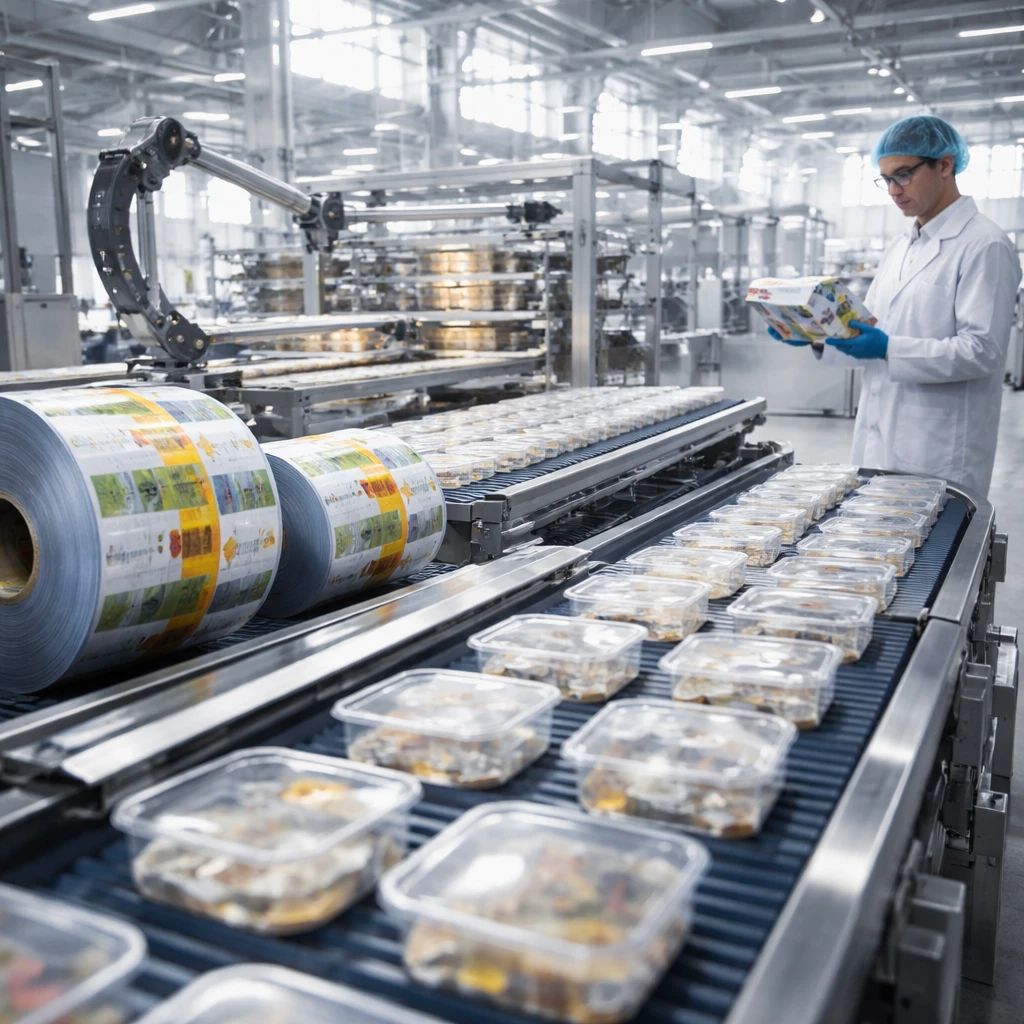
Amcor is a global packaging supplier operating in two main segments: flexibles and rigid plastics. The company supplies packaging to consumer goods, food, beverage, and healthcare companies. Packaging is not glamorous, but it is sticky: brands and manufacturers can be reluctant to change qualified suppliers because of regulatory, quality, and supply-chain considerations. That gives Amcor recurring revenue and pricing power during normal market cycles.
Market dynamics are favorable. Recent industry reports point to sustained growth in specialty cartons, polypropylene food containers, thermoformed trays, and caps and closures - all end markets where Amcor has exposure. Secular drivers include e-commerce expansion, demand for lightweight and recyclable materials, and regulatory pressure that favors recyclability and innovation in packaging materials. These trends support a steady top-line environment and justify a premium to cyclicals for companies that can deliver steady cash returns.
Key fundamentals and what they imply
- Market cap: approximately $22.2 billion.
- Current price: $48.17.
- Reported free cash flow: $805 million. That equates to roughly $1.74 of FCF per share on ~461.7 million shares outstanding.
- Dividend yield: roughly 5.3%, with the next ex-dividend date on 02/25/2026 and payable date on 03/17/2026.
- Trailing metrics: P/E in the high 30s (EPS ~ $1.29), P/B ~1.91, P/S ~1.14, EV/EBITDA ~12.95.
- Leverage and liquidity: debt-to-equity ~ 1.3, current ratio ~ 1.3, quick ratio ~ 0.77.
Put plainly: Amcor generates meaningful free cash flow, pays a high yield, and carries leverage that is material but not extreme for the packaging space. The company’s profitability metrics (return on equity low-single digits) reflect a capital-intensive, low-margin industry; upside therefore comes from steady cash conversion, modest multiple expansion, and a shrinking risk premium if leverage improves or growth accelerates.
Valuation framing
On headline multiples, the stock does not look bargain-basement cheap: P/E is in the high 30s and EV/EBITDA is near 13. However, those multiples are against earnings and EBITDA that already factor in an industry with lower margins and substantial reinvestment. A different frame is the cash return story: free cash flow of $805 million against a market cap of roughly $22.2 billion implies a free cash flow yield in the mid-3% range. Add a ~5.3% dividend and you get a combined cash yield profile that is compelling for income investors, especially relative to fixed income and lower-yielding defensive equities.
Why claim the stock sits below fair value? The trade thesis is not built on a dramatic multiple rerating; it rests on three measurable improvements that would narrow the gap between price and fair value: modest revenue growth from packaging tailwinds, disciplined working capital management that converts more revenue into free cash flow, and gradual reduction of net leverage. If Amcor sustains FCF growth and reduces leverage, investors are likely to apply a few points of multiple expansion to a business that already pays a high yield—enough to justify a target near $55 over the next 180 trading days.
Catalysts (what could drive the stock higher)
- Continued secular growth in e-commerce and foodservice packaging that translates into stable or improving revenue and operating margins.
- Better cash conversion from working capital programs or cost-saving initiatives that lift free cash flow above current run rates.
- Incremental debt reduction or a conservative buyback program that signals management confidence and reduces the valuation discount associated with leverage.
- Positive sustainability wins (contracts or product launches tied to recyclable materials) that attract ESG-focused buyers and broaden the shareholder base.
- Macro stabilization and a dovish central bank path that generally supports dividend stocks and narrows yield spreads versus bonds.
Trade plan (actionable and time-bound)
Here is the trade I am putting on.
- Direction: Long AMCR
- Entry price: $47.50
- Stop loss: $44.00 (cuts the position if the stock breaks meaningful short-term support and risk sentiment deteriorates)
- Target: $55.00 (primary target; represents ~15.8% upside from entry plus the dividend collected during the holding period)
- Horizon: long term (180 trading days). I expect this trade to play out over roughly six to eight months, allowing time for improving FCF, potential deleveraging, and at least one dividend payment to be captured. If catalysts accelerate (e.g., stronger-than-expected quarterly results), I will consider partial profit-taking earlier.
Why this trade makes sense
Income-focused investors get an above-market dividend yield while the stop and modest upside target limit downside. Technical backdrops are supportive: the shorter-term moving averages sit below the current price, momentum indicators show bullish bias, and short interest has come down over recent months. For investors comfortable owning a cyclical industrial with steady customers and recurring orders, the risk/reward is attractive at the proposed entry.
Risks and counterarguments
- Payout sustainability risk: The dividend yield is high relative to per-share free cash flow and reported earnings. If earnings or cash flow disappoint, management may be forced to trim the payout or pause buybacks, which would pressure the stock.
- Leverage sensitivity: Net debt is material and debt-to-equity sits around 1.3. A rise in interest rates or weaker cash flow could make leverage a bigger problem and reduce financial flexibility.
- Commodity and input-cost pressure: Packaging margins are sensitive to resin and energy prices. A spike in polymer costs or supply disruptions could compress margins faster than price can be recovered.
- Regulatory and sustainability headwinds: While sustainability is a tailwind in many cases, sudden regulatory shifts (e.g., restrictions on certain plastics without available substitutes) could create near-term costs and capital expenditures.
- Counterargument: Valuation looks rich on an earnings multiple basis. A P/E in the high 30s signals that the market is pricing in material improvement. If growth or margin expansion fails to materialize, the stock could trade lower even with the dividend intact.
What would change my mind
I would materially reduce conviction or close the trade if any of the following occur: (1) a clear cut in the dividend or a formal capital allocation shift away from shareholder returns; (2) a quarter with a sharp negative surprise in free cash flow that forces a multi-quarter cash-generation reset; (3) a sustained breakdown below the stop price of $44.00 on heavy volume; or (4) evidence that the structural demand drivers (e-commerce, food service, healthcare) are deteriorating faster than anticipated. Conversely, I would increase the position if management reports accelerating FCF conversion, announces credible deleveraging targets, or posts several quarters of positive organic revenue growth that lifts confidence in earnings durability.
Conclusion
Amcor is not a high-beta growth story; it is a capital-intensive packaging business that pays a rich yield and generates steady cash flow. The trade outlined here aims to capture income while looking for modest capital appreciation as leverage falls and cash conversion improves. Entry at $47.50 with a $44.00 stop and a $55.00 target gives an asymmetric profile that is appropriate for income-oriented investors who want downside protection. Be explicit about the payout and leverage risks: those are the items to watch while holding the position over the planned 180-trading-day horizon.
Key monitoring items while holding
- Quarterly free cash flow and working capital trends.
- Management commentary on capital allocation (debt reduction vs. dividends vs. buybacks).
- Raw-material input costs and whether price increases are being passed to customers.
- Volume and pricing in end-markets such as foodservice, healthcare, and consumer packaged goods.
For investors who need steady income and can tolerate moderate leverage and cyclical exposure, Amcor presents a defensible long trade with clearly defined risk controls.