
Hook & thesis
Brinker International (ticker: EAT) is serving evidence that the casual-dining recovery is not a fad. The company reported outsized same-store sales gains at Chili's, pushed annual sales past $5 billion and expanded restaurant operating margins materially in FY2025. The market has already re-rated the stock from its 52-week low of $100.30, but today's pullback to $162.54 looks like a tactical buying opportunity for a defined-risk swing trade.
Why now? Consumer spending rotated back toward value-focused casual-dining in 2025, and Brinker appears to be a beneficiary: top-line momentum and margin recovery combine with strong free cash flow to create a low-to-medium risk asymmetric setup into the next leg of recovery. That said, balance-sheet leverage and a high price-to-book multiple require a tight stop and a clear exit rule.
What Brinker does and why the market should care
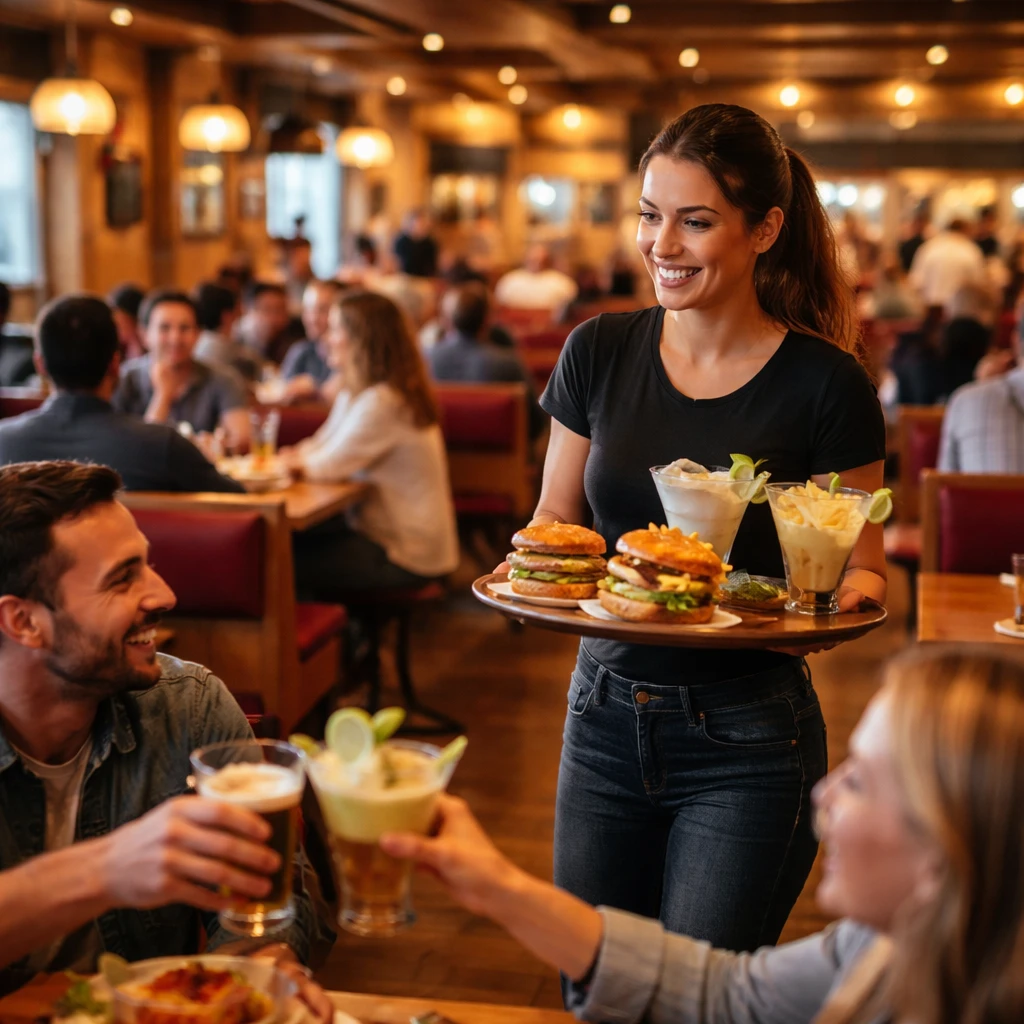
Brinker International owns and franchises Chili's Grill & Bar and Maggiano's Little Italy. Chili's is the primary earnings engine: company-owned U.S. and Canadian restaurants plus a growing franchise business domestically and abroad. The market cares because Brinker sits at the intersection of a consumer rotation toward value and an industry where traffic recovery materially improves operating leverage.
Two concrete drivers matter most: same-store sales/traffic and restaurant operating margins. Brinker reported Chili's same-store sales up in double digits during key quarters in 2025 and finished FY2025 with >$5 billion in revenue, while restaurant operating margins expanded from 11.9% to 17.6% according to company commentary. Those are the levers that can sustain earnings and cash flow growth without relying solely on multiple expansion.
Numbers you need to know
- Current price: $162.54 (close on 02/12/2026).
- Market cap: about $7.08 billion.
- Trailing EPS: $10.43; P/E: ~16.0.
- EV/EBITDA: 10.2; enterprise value: roughly $7.69 billion.
- Free cash flow: $455.9 million.
- 52-week range: $100.30 - $187.12.
- Return on assets: 16.52%; return on equity: 119.72% (reflecting strong returns on shareholder capital and buyback impact).
- Debt/equity: 1.19x; current ratio: 0.36 (lean working-capital position).
Valuation framing
At roughly $162.50 the stock trades at a trailing P/E near 16 and EV/EBITDA ~10. Those multiples are not expensive for a mid-cap restaurant operator that is delivering mid-to-high single-digit free cash flow yields and margin recovery. The stock has already retraced much of the post-earnings selloff from spring 2025; the move off the $100 low demonstrates the upside that momentum can generate. At the same time, price-to-book is elevated (~19.1x), which suggests the market is valuing the brand and future cash generation highly — a reminder that Brinker needs to keep delivering sales and margin improvement to justify the premium.
Technical & market structure context
Technically the shares are trading around the 20-day SMA ($162.03) and above the 50-day average ($154.71), with an RSI around 52.7 — neutral-to-favorable for a continuation move. Short interest has come down from mid-2025 highs: the most recent settlement shows about 4.21M shares short with a days-to-cover of ~2.7, and recent short-volume readings have been elevated (on 02/11 short volume was ~68% of total volume), signaling active two-way trading and potential for quick squeezes if momentum accelerates.
Catalysts to watch
- Ongoing same-store sales and traffic prints. Continued positive comps at Chili's would validate the rotation thesis (news note on 02/02/2026 highlighted a restaurant rotation toward casual dining).
- Margin progression and cost controls. Management reported restaurant operating margin improvement to 17.6% in FY2025; further progress would flow through to earnings.
- Franchise growth and international openings. More revenue-light franchising would lift returns and free cash flow conversion.
- Share buyback or capital allocation updates that increase EPS without incremental operating risk.
- Macro updates: consumer spending and wage/cost pressure data that affect nonessential dining behavior.
Trade plan (actionable)
Thesis: Buy the traffic-driven margin recovery but protect capital against macro or comp disappointments. This is a mid-duration swing trade.
| Action | Price | Horizon |
|---|---|---|
| Entry (limit or market if fills at market) | $162.54 | Mid term (45 trading days) — allow enough time for post-earnings momentum, same-store sales data releases or a catalyst-driven move. |
| Target | $175.00 | |
| Stop loss | $156.00 |
Why this horizon? Mid term (45 trading days) gives time for momentum to build from follow-on catalysts like sales prints or margin commentary while keeping the trade actionable and capital-efficient. If the stock pops quickly and volatility compresses, trim into strength. If the thesis is intact after the initial horizon, consider re-evaluating for a position trade.
Position sizing & risk management
Because debt/equity sits around 1.19x and the current ratio is relatively low (0.36), avoid overleveraging the position. Use a size that limits loss to no more than 1-2% of portfolio value should the stop at $156 trigger. If entering on a gap higher, tighten the stop to reduce downside exposure.
Risks and counterarguments
- Macro sensitivity: A deterioration in consumer discretionary spending or a renewed focus on affordability could blunt same-store sales. If consumers tighten budgets, casual dining can be cut from spending quickly.
- Leverage and liquidity: Debt/equity near 1.19x and a lean current ratio mean Brinker is more exposed to an adverse operating shock than a stronger-liquidity peer; margin pressure could quickly impact free cash flow.
- Reversion risk on comps: Much of the rerating depends on traffic holding; comparisons get tougher and a single weak comp quarter could reset expectations and multiple.
- High price-to-book multiple: A ~19x P/B suggests the market is pricing significant upside. If Brinker stumbles or fails to reaccelerate growth, multiple contraction could erase gains.
- Active shorting and volatility: Elevated short-volume days indicate active trading; this can amplify moves in both directions and increase short-term noise.
Counterargument to the thesis: One could argue the stock is already a momentum trade priced for perfection — valuation ratios are not cheap and much depends on sustained traffic improvement. If traffic normalizes rather than accelerates, earnings could disappoint and the stock could revert to lower multiples. That argument supports a cautious, smaller-sized entry or waiting for a clear breakout above $170 before adding.
Conclusion and what would change my mind
Buyers willing to accept a mid-term swing should consider initiating a long at $162.54 with a clear stop at $156 and a target at $175. The case is straightforward: tangible same-store sales momentum at Chili's, margin recovery that has already flowed to the bottom line, healthy free cash flow (~$456M), and a valuation that rewards execution but is not frothy relative to outcomes.
I would change my view if any of the following occur: (1) a meaningful miss in next same-store sales or margin commentary that forces guidance cuts; (2) a rapid macro rollback in consumer discretionary spend; (3) signs that franchise growth or unit economics are deteriorating; or (4) a sustained spike in leverage or working-capital strain. Conversely, accelerating unit-level margins, sustained double-digit comps for two consecutive quarters, or a buyback/return-of-capital program would make me more constructive and expand the target range upward.
Bottom line: The setup favors a tactical long with defined risk. Brinker looks like a high-probability trade if traffic and margins continue to improve; protect capital with the $156 stop and respect the balance-sheet constraints.