
Stock Markets February 23, 2026

World Bank Sets Sights on $6 Billion in Concessional Support for Mozambique

Institution plans mix of grant-heavy financing and private-sector mobilisation to back public investment over five years

By Ajmal Hussain
World Bank Sets Sights on $6 Billion in Concessional Support for Mozambique

The World Bank intends to provide Mozambique with $6 billion in principally concessional finance for public investment projects across the next five years, aiming to combine roughly $3 billion from its balance sheet with $3 billion mobilised externally. Officials also seek an additional $4 billion for private-sector activity while the country faces fiscal stress and climate-driven shocks.

Key Points

  • The World Bank plans $6 billion in mostly concessional financing for public investment in Mozambique over the next five years, combining roughly $3 billion from its balance sheet with $3 billion to be mobilised.
  • The lender is also seeking to mobilise about $4 billion for private-sector support, while developing a $921 million macro-fiscal support framework to help sustain economic recovery.
  • Mozambique faces fiscal stress highlighted by an IMF warning on worsening debt dynamics, compounded by climate-driven cyclones and floods that increase pressure on public finances and infrastructure.

The World Bank has announced plans to deliver $6 billion in largely concessional financing to Mozambique for public investment projects over the coming five years, a senior bank official said.

Fily Sissoko, the World Bank division director covering Mozambique, Madagascar, Mauritius, Seychelles and Comoros, told reporters the institution currently has about $3 billion available on the bank side and is seeking to mobilise an additional $3 billion. Sissoko characterised the package as very concessional, noting that the financing will be composed mostly of grants.

Separately, the lender is pursuing about $4 billion in mobilised resources aimed at supporting the private sector, according to the same briefing. Those funds are intended to complement the public investment financing the bank plans to provide.

Mozambique’s public finances are under strain. The International Monetary Fund, in an annual review last week, warned of worsening debt dynamics. Officials from the IMF and other institutions have pointed to challenges that include delayed debt servicing and enduring fiscal deficits.

On domestic policy support, Finance Minister Carla Louveira said the World Bank is preparing a $921 million macro-fiscal support framework. Louveira described the framework as focused on achieving macro-fiscal consolidation in order to sustain the country’s economic recovery.

There is also guarded optimism around the resumption of a major liquefied natural gas project led by French energy company TotalEnergies (EPA:TTEF). The potential restart of that project is noted alongside the broader financing and fiscal discussions.

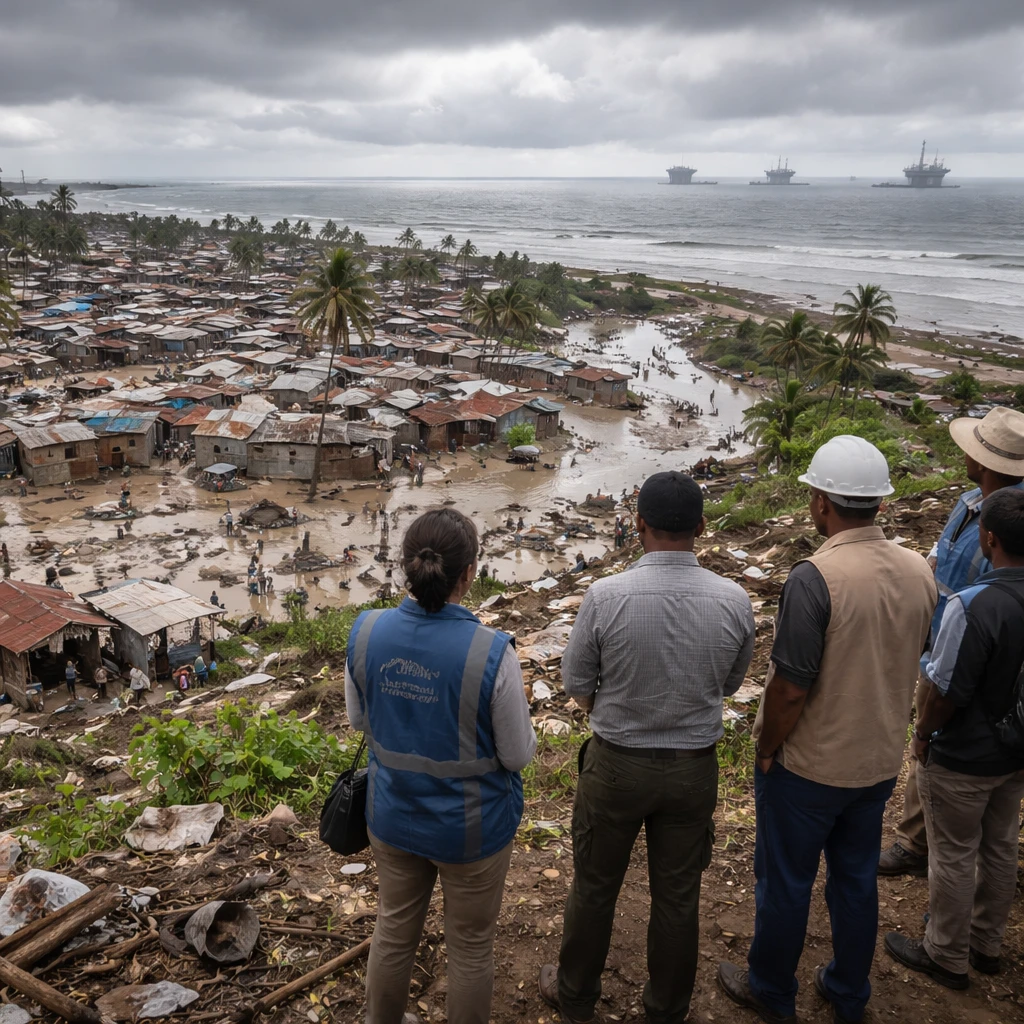
Mozambique has additionally been affected by frequent cyclones and floods. Scientists cited in the briefing say those extreme weather events have been exacerbated by climate change, adding to the country’s fiscal and development pressures.


Contextual notes

  • The World Bank intends to split a $6 billion public finance package roughly between $3 billion from its balance sheet and $3 billion to be mobilised.
  • The institution aims to mobilise an additional $4 billion to support private-sector financing.
  • The World Bank’s financing is described as very concessional and predominantly grant-based.

Risks

  • Worsening debt dynamics - The IMF warned of deteriorating debt conditions, which could complicate fiscal consolidation efforts and affect sovereign borrowing costs; this primarily impacts government finances and the debt markets.
  • Debt-service delays and persistent fiscal deficits - Reported delays in servicing debt and ongoing large fiscal deficits present uncertainty for macroeconomic stability and public investment effectiveness, affecting the broader economy and investor confidence.
  • Climate-related shocks - Frequent cyclones and floods, said to be worsened by climate change, increase the risk of damage to infrastructure and public assets, stressing reconstruction financing needs and disaster response spending.

More from Stock Markets

Helsinki benchmark slips as tech, health and oil & gas drag markets lower Feb 23, 2026 Affirm and Block Cut Losses After PayPal Takeover Speculation Eases Sell-Off Feb 23, 2026 Internal Survey Shows Nearly 1 in 5 Young Teens Report Seeing Unwanted Sexual Content on Instagram Feb 23, 2026 AST SpaceMobile Gains After $30M U.S. Defense Contract to Test BlueBird Constellation Feb 23, 2026 PayPal Shares Spike After Report of Buyer Interest Feb 23, 2026