
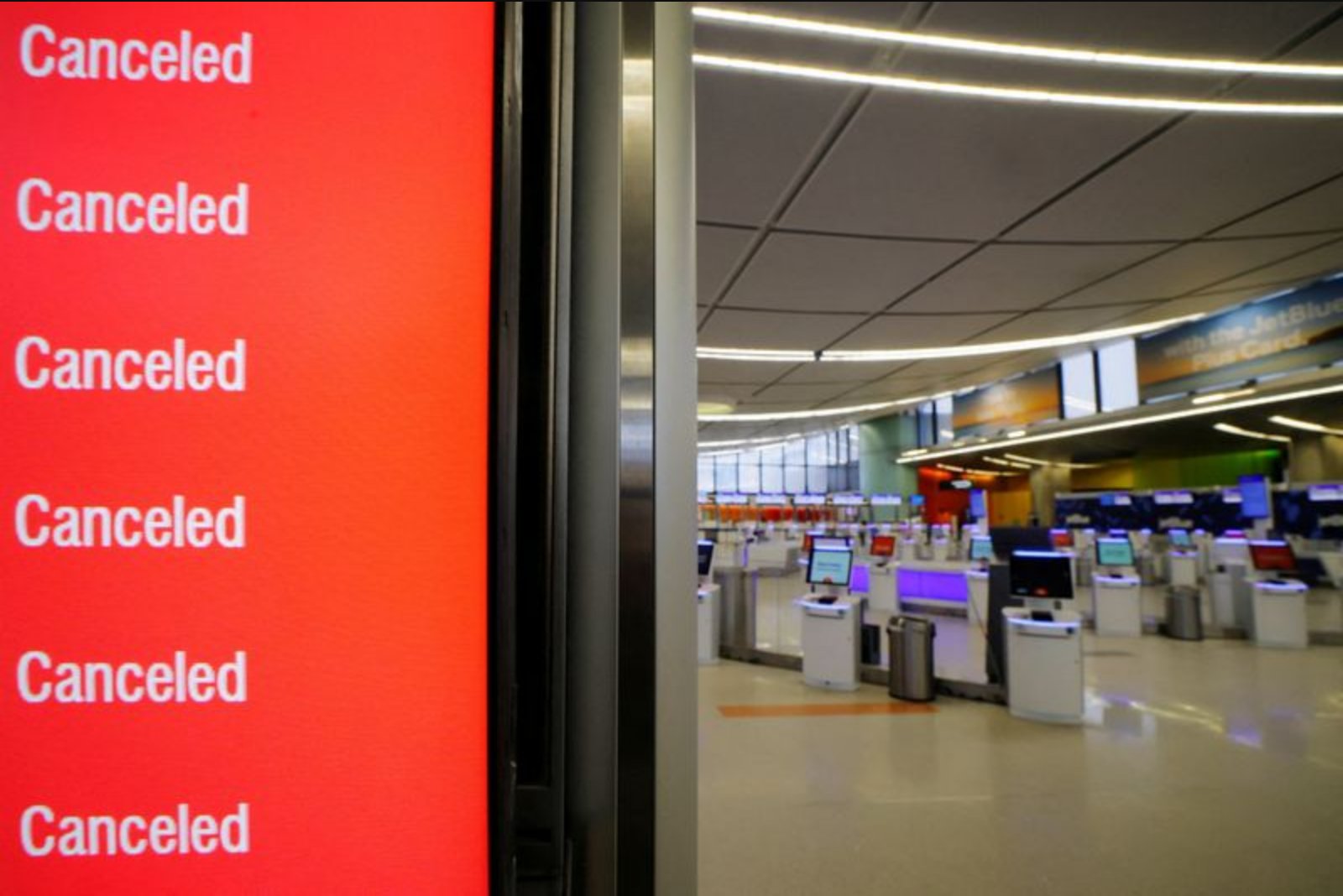
Summary: A fast-moving winter system that disrupted travel across the U.S. Northeast produced over 2,000 flight cancellations on Tuesday and hundreds of delays, though the level of disruption eased from Monday's totals. Weather authorities expected the storm to depart the continental United States on Tuesday, while strong winds were forecast to continue through the morning hours.
Key facts and figures
- FlightAware reported more than 2,000 cancellations and roughly 600 delays as of 06:00 a.m. ET on Tuesday.
- Monday saw far greater disruption, with nearly 6,000 flights canceled and about 4,000 delayed.
- Among major carriers, JetBlue experienced the most significant share of cancellations, with nearly 41% of its scheduled Tuesday flights scrubbed, according to FlightAware data.
The storm, described as powerful, affected multiple airports across the Northeast region and led carriers to cancel a large number of flights as a precaution and in response to operational constraints. While the number of cancellations on Tuesday was markedly lower than Monday's totals, travel conditions remained unsettled early in the day.
The National Weather Service indicated that the storm system was expected to move away from the country on Tuesday. Despite that forecast, the agency cautioned that strong winds could continue through the morning hours, a factor that can complicate airport ground operations and aircraft handling even after heavier precipitation has moved on.
Operational impacts were not uniform across carriers. FlightAware data identified JetBlue as having the highest cancellation rate among major airlines for Tuesday, with nearly 41% of its scheduled flights canceled. Other carriers also reported cancellations and delays, but FlightAware's early-morning snapshot highlighted the scale of disruption concentrated in certain networks and hubs.
Travelers and market participants monitoring airline operations should note the reduction in cancellations compared with Monday, while recognizing that wind-driven disruptions can persist even after the main weather system departs. Airports and airlines typically continue recovery and rebooking efforts as conditions improve and as crews and aircraft are repositioned.
Key points
- Travel disruption eased on Tuesday compared with Monday, but significant cancellations remained in place early in the day.
- JetBlue bore the largest proportion of Tuesday cancellations, illustrating uneven operational exposure across carriers.
- Sectors affected include passenger airlines, airport ground operations, and travel-dependent service providers.
Risks and uncertainties
- Lingering strong winds could continue to hamper airport operations and aircraft movements through the morning hours - this affects airline schedules and turnaround times.
- Residual operational disruptions may prolong recovery efforts even after the storm moves away, maintaining pressure on airline capacity and customer rebooking processes.
- Uneven cancellation rates across carriers create concentrated operational and financial strain for the worst-affected airlines and the airports that serve as their hubs.