
Stock Markets February 23, 2026

Winter Storm Cripples Northeast Travel, Sends Airline and Booking Stocks Lower

Major hubs from Philadelphia to Boston see massive cancellations as blizzard warnings and power outages ripple through the region

By Marcus Reed JBLU
Winter Storm Cripples Northeast Travel, Sends Airline and Booking Stocks Lower
JBLU

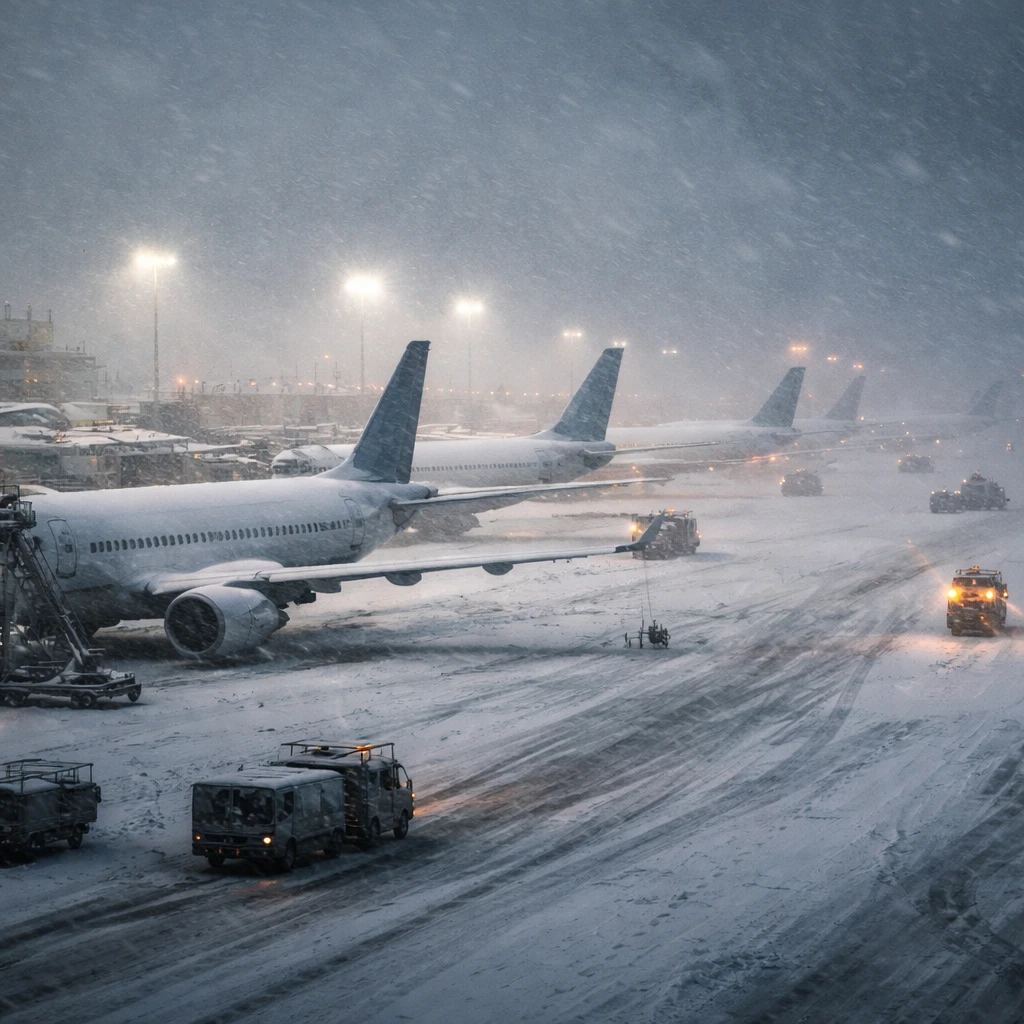
A significant winter storm that prompted blizzard warnings across the U.S. Northeast forced widespread flight cancellations and contributed to notable declines in airline and travel-related stocks, while leaving hundreds of thousands without power in several states, according to flight-tracking data and weather service alerts.

Key Points

  • Major winter storm triggered blizzard warnings across the U.S. Northeast, creating hazardous travel conditions and prompting local travel restrictions.
  • More than 10,000 flights were canceled through Tuesday, with flight operations largely suspended from Philadelphia north to Boston and major hubs in Boston, New York and Philadelphia bearing the brunt of cancellations.
  • Travel and airline equities fell sharply on Monday: Booking Holdings -6.8%, Airbnb -6.0%, American Airlines -4.5%, United Airlines -4.9%, Delta Air Lines -3.6%, JetBlue -3.7%, Southwest -2.9%.

Shares of airlines and travel platforms dropped on Monday as a large winter storm swept through the U.S. Northeast, disrupting operations and prompting thousands of canceled flights. Market moves reflected investor reaction to the operational paralysis affecting major airport hubs and travel booking businesses.

Market moves

Among travel and lodging platforms, Booking Holdings posted a 6.8% decline and Airbnb shares fell 6.0%. Major airlines recorded declines as well: American Airlines down 4.5%, United Airlines down 4.9%, Delta Air Lines off 3.6%, JetBlue Airways down 3.7%, and Southwest Airlines slid 2.9%.

Operational impact

The National Weather Service issued blizzard warnings across the Northeast on Monday as the storm produced heavy snowfall and strong winds. Forecasters cautioned that travel conditions would be extremely hazardous in the hardest-hit areas, and some local authorities implemented travel restrictions in response.

Flight tracking service FlightAware reported that more than 10,000 flights had been canceled through Tuesday. Flight operations were described as essentially suspended from Philadelphia north to Boston, with the bulk of cancellations concentrated at major hubs in Boston, New York and Philadelphia. Airports in Baltimore and Ronald Reagan Washington National Airport in Virginia also experienced a significant number of canceled flights.

Wider disruptions

The storm’s effects extended beyond air travel. Widespread power outages were reported, leaving more than half a million customers without electricity across Massachusetts, New Jersey, Delaware and Rhode Island. Those outages compounded challenges for affected communities and travel infrastructure.

Summary perspective

The market selloff in travel-related equities on Monday correlated with the immediate operational disruptions caused by the storm. The combination of suspended flight operations across a core Northeast corridor, thousands of flight cancellations through Tuesday, blizzard warnings and substantial utility outages created a rapid and broad-reaching disturbance to passenger travel and related services.


Context and limitations

All figures and descriptions above reflect reporting and tracking data available through the period in question. The account does not speculate on subsequent developments beyond the stated cancellations, stock moves and reported outages.

Risks

  • Continued flight cancellations and suspended operations at major Northeast hubs could further depress revenues for airlines and travel booking platforms - impacts concentrated in the airline and travel sectors.
  • Extensive power outages affecting more than half a million customers in Massachusetts, New Jersey, Delaware and Rhode Island could amplify logistical and operational challenges for airports, ground transportation and service providers - risks for utilities and regional infrastructure.
  • Travel restrictions and extremely hazardous road conditions in hardest-hit areas increase uncertainty for passenger mobility and related service demand - risk to regional transportation and hospitality sectors.

More from Stock Markets

Lagarde Says Eurozone Inflation and Rate Policy Remain 'In Good Place' at Washington Conference Feb 23, 2026 C.H. Robinson CEO Calls AI-Driven Stock Drop a Short-Term Reaction, Predicts Industry Consolidation Feb 23, 2026 Anthropic Says Three Chinese Firms Used Claude to Extract Capabilities for Their Own Models Feb 23, 2026 Abits Group Shares Plunge After $2.1M Registered Direct Offering Announcement Feb 23, 2026 Adial Shares Climb After FDA Signals Flexibility on Pivotal Trial Requirements Feb 23, 2026