
Stock Markets February 18, 2026

Williams Trading Cuts Crocs to Sell, Cites Weak U.S. Demand and Risk From Store Expansion

Broker warns North American wholesale declines and growing store footprint could pressure margins despite buybacks lifting EPS

By Avery Klein CROX
Williams Trading Cuts Crocs to Sell, Cites Weak U.S. Demand and Risk From Store Expansion
CROX

Williams Trading downgraded Crocs to Sell from Hold, pointing to ongoing weakness in U.S. demand for both the Crocs brand and HEYDUDE and expressing concern that expanding company-owned stores may not revive growth. The firm raised its price target to $84 from $75 and increased estimates for accounting reasons, but said fundamentals remain soft and fiscal 2026 revenue and margins are likely to miss company guidance.

Key Points

  • Williams Trading downgraded Crocs to Sell from Hold, citing weakening U.S. demand for both Crocs and HEYDUDE.
  • The brokerage raised its price target to $84 from $75 and increased estimates, but said these moves reflect financial adjustments rather than better fundamentals.
  • Planned 2026 wholesale reductions in the U.S. are expected to be high single digits to mid-teens for Crocs and mid-teens for HEYDUDE; international sales remain stronger but could be at risk.
  • Company-owned Crocs stores rose to 439 at the end of 2025 from 340 in 2022; direct-to-consumer revenue growth has been modest while total EBIT margin fell from 27.7% in 2023 to 22.3% in 2025.

Williams Trading has lowered its recommendation on Crocs to Sell from Hold, citing persistent softening in U.S. demand for the core Crocs line and for HEYDUDE. The brokerage has simultaneously lifted its price target to $84 from $75 and revised its estimates higher, but emphasized that those changes reflect financial adjustments rather than stronger underlying business momentum.

The research note highlighted checks with U.S. wholesale partners that point to planned reductions in Crocs-related business in 2026. Williams Trading said those reductions are expected to be in the high single digits to the mid-teens for Crocs overall, while HEYDUDE is forecast to decline by the mid-teens. The firm noted there has been no indication that those planned cuts will reverse in the second half of the year.

While international sales are holding up better than North American volumes and direct-to-consumer channels are outpacing wholesale, Williams Trading warned that demand overseas could also be at risk of softening. The brokerage disagreed with management's view that a cleanup in the North American marketplace will translate into wholesale growth in the second half of fiscal 2026, arguing that reduced orders mainly reflect weaker demand from wholesale partners rather than excess inventory alone.

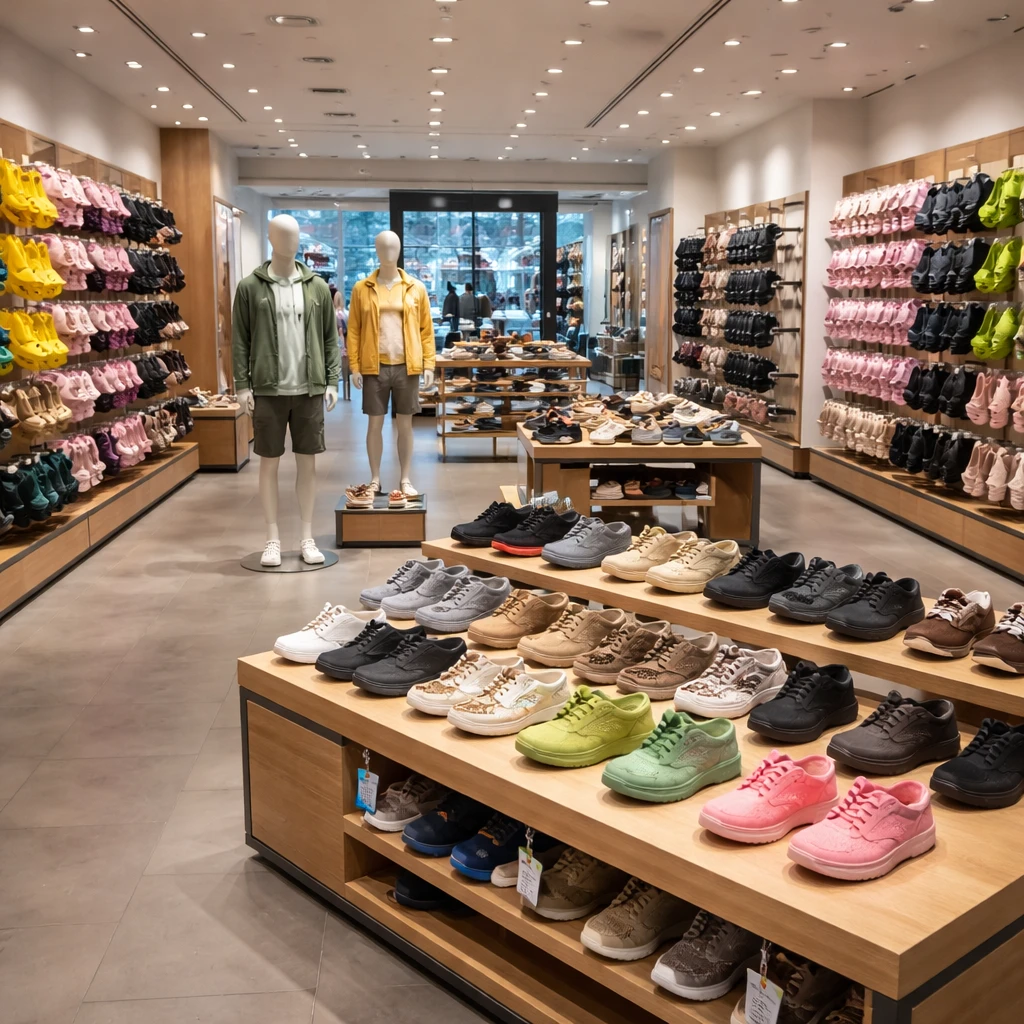
The note also raised a caution about the company's shift toward more company-owned store openings to support direct sales. Crocs' company-owned store count grew to 439 at the end of 2025 from 340 in 2022, and HEYDUDE's store base expanded sharply over the same period. Despite the store expansion, direct-to-consumer revenue growth has been described as modest, and total EBIT margin has declined from 27.7% in 2023 to 22.3% in 2025.

Williams Trading pointed to historical periods when rapid store growth initially aided revenue but later coincided with slowing sales and margin pressure. The firm flagged increasing discounting, inconsistent pricing and frequent collaborations as additional factors that could weaken brand strength and compress margins.

On earnings, Williams Trading said fiscal 2026 revenue and margin levels are likely to fall short of company guidance. It allowed that earnings per share could still land within guidance ranges if share buybacks continue to reduce the share count, but the brokerage treated that as a financial engineering effect rather than an improvement in operating performance.


Sector impact - consumer discretionary, retail and apparel supply chains that feed wholesale and direct-to-consumer channels.

Risks

  • Wholesale demand deterioration - reductions by U.S. wholesale partners could continue to pressure revenue and inventories, affecting the retail and wholesale segments of consumer discretionary.
  • Store expansion risk - a potential step-up in company-owned store openings may increase costs and, based on past patterns, could be followed by slower sales and margin compression in direct-to-consumer operations.
  • Brand dilution and margin pressure - increased discounting, inconsistent pricing and frequent collaborations may erode brand strength and compress profit margins in the apparel and footwear sector.

More from Stock Markets

UBS Sees Continued Execution at Walmart After Strong Q4; Digital and High-Margin Layers Drive Outlook Feb 21, 2026 Failed $4B Financing for Lancaster Data Center Tied to CoreWeave’s B+ Credit Score Feb 20, 2026 Raymond James Says JFrog Sell-Off Overstates Threat from Anthropic’s New Security Tool Feb 20, 2026 FERC Clears Path for Blackstone-TXNM Energy Deal, Removing Major Federal Hurdle Feb 20, 2026 Vanda Gains FDA Nod for BYSANTI, Shares Spike as Company Secures Second Approval in Weeks Feb 20, 2026