
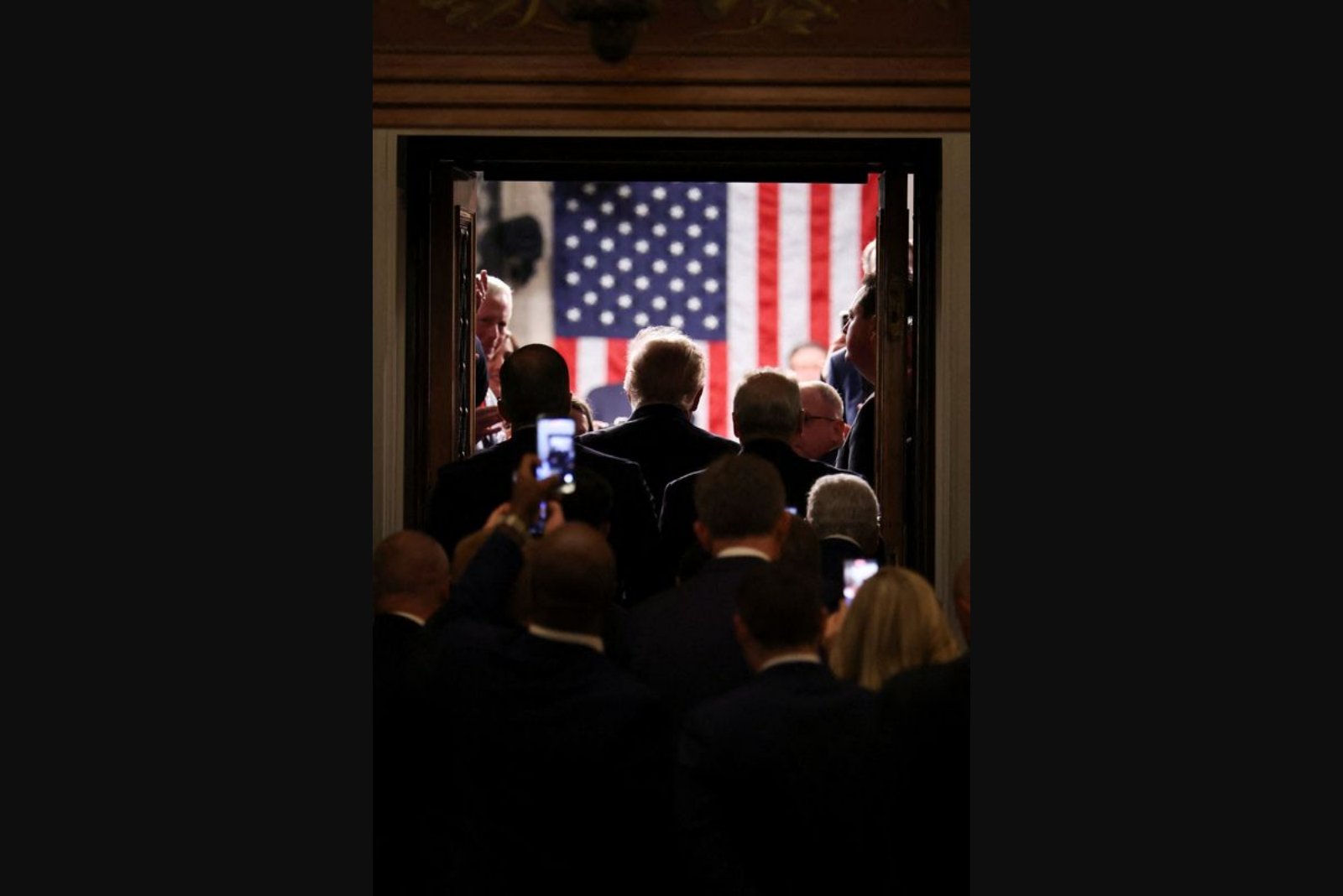
President Donald Trump stated during his State of the Union address that his administration has instructed major technology firms to take responsibility for powering their own data centers by building on-site generation. He framed the measure as a consumer protection intended to prevent increasing electricity costs for households.
"Tonight, I’m pleased to announce that I have negotiated the new rate payer protection pledge. You know what that is? We’re telling the major tech companies that they have the obligation to provide for their own power needs," he said. "We have an old grid. It could never handle the kind of numbers, the amount of electricity that’s needed. So I’m telling them, they can build their own plant. They’re going to produce their own electricity. It will ensure the company’s ability to get electricity, while at the same time, lowering prices of electricity for you," he added during the address.
The president did not identify specific companies nor outline the mechanisms by which the plan would be executed or enforced. Sources familiar with the plan indicated that the White House plans to meet with companies in early March to formalize the initiative.
The announcement comes against a backdrop of escalating local opposition to data center projects across the country. Those facilities have been cited by critics for driving a surge in electricity demand that has coincided with higher consumer power bills.
PJM Interconnection, the largest grid operator in the United States, recently proposed a framework under which large new power users would either add their own generation to the grid or curtail usage when system capacity is constrained. In parallel, some technology companies have voluntarily adopted measures intended to limit the effect of data centers on consumer energy prices. The article notes that companies such as Anthropic and Microsoft have announced initiatives along those lines.
Context and market considerations
The administration links the policy to broader efforts to accelerate artificial intelligence development in competition with China, while also identifying the rapid growth of AI data centers and their power consumption as a potential political vulnerability for Republicans ahead of the November midterm elections.
Specifics about legal authority, regulatory changes, cost allocation, timelines, or technical specifications for on-site generation were not provided in the remarks. The lack of detail leaves open how the obligation would interact with existing grid planning, permitting, and commercial arrangements.
Observers will be watching the scheduled White House meetings in early March for any formal agreements or further guidance from administration officials and participating companies.