
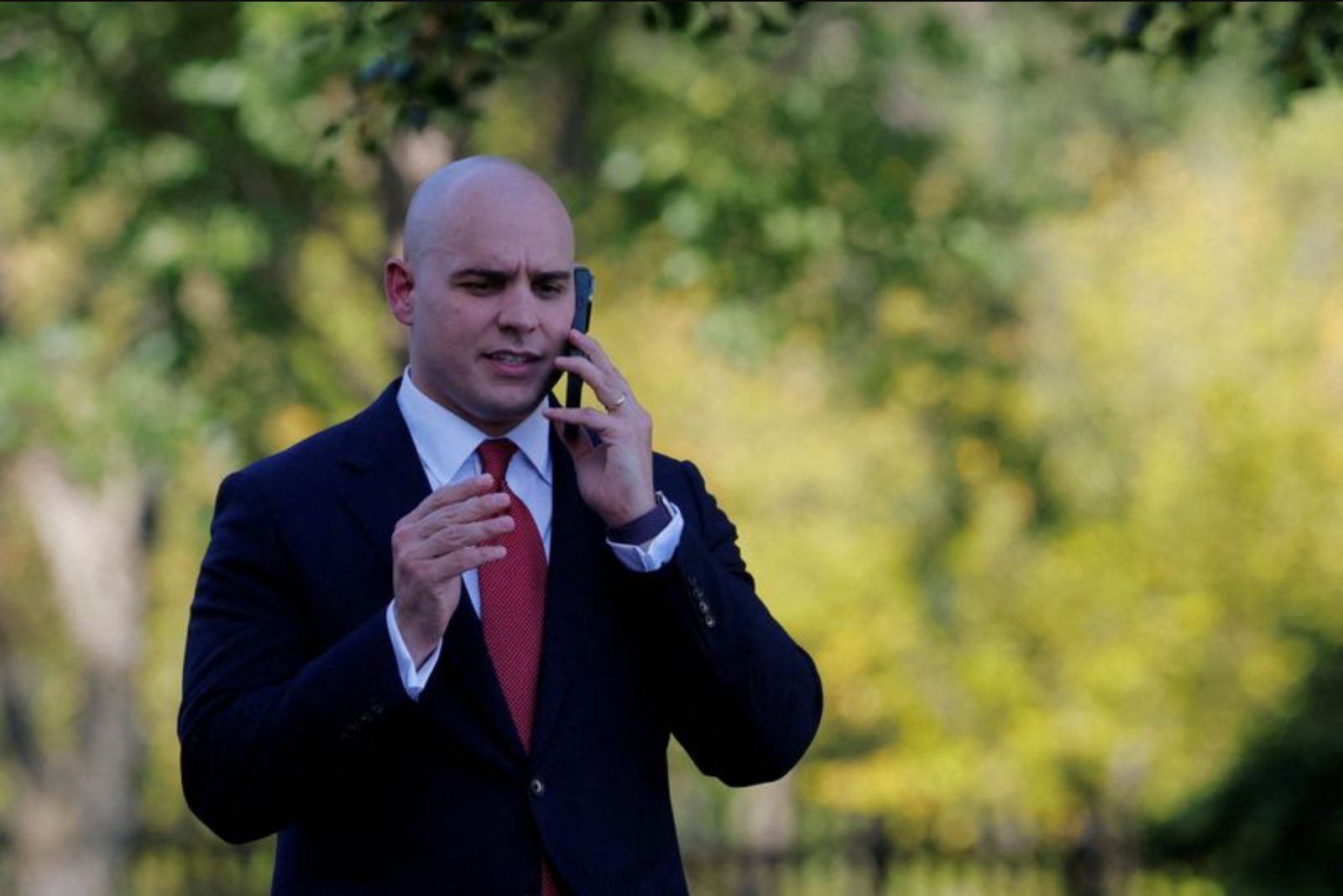
Deputy White House Chief of Staff James Blair announced on Thursday that he will take a "new interest" in the U.S. airline industry after experiencing two consecutive personal travel disruptions involving American Airlines.
Blair described the incidents in posts on X, saying one of his own flights was delayed by 2.5 hours because "someone failed to notice empty hydraulic fluid before it was time to go down the runway." He added that his wife was affected the previous day when her flight apparently did not have a pilot assigned: "Yesterday, they apparently forgot to BOOK A PILOT for my wife’s flight," he wrote. He concluded those posts with the declaration: "I’m going to take a new interest in the airline industry."
The White House and American Airlines did not immediately provide comments on Blair’s remarks.
American Airlines has attracted heightened attention after a late-January winter storm produced widespread cancellations that challenged the carrier’s recovery systems. Industry analytics cited in public reporting show American lagged several of its peers in January on reliability metrics. Data from aviation analytics firm OAG indicated American trailed Southwest Airlines, Alaska Airlines, United Airlines and Delta Air Lines in on-time performance, and recorded the highest cancellation rate among that group of carriers.
Actions taken by the current Transportation Department under the Trump administration have also shifted the regulatory landscape for carriers. Regulators have moved to reverse or soften a number of Biden-era consumer-focused proposals and enforcement actions.
- In December, the Transportation Department reversed some penalties placed on airlines during the prior administration, including waiving $16.7 million in fines imposed on American Airlines in 2024 as part of a settlement addressing the carrier’s treatment of disabled passengers.
- The department also waived the remaining $11 million of a fine levied against Southwest Airlines, tied to a broader $140 million settlement related to operational failures that stranded more than 2 million travelers during the December 2022 holiday period.
- In November, the department withdrew a Biden-era proposal that would have required airlines to provide cash compensation to passengers when carriers were responsible for U.S. flight disruptions.
- Most recently, Transportation proposed revising its guidance to place less emphasis on civil fines for violations of consumer protection rules and to remove Biden-era policies that had strengthened enforcement.
Blair’s personal account and stated intention to increase scrutiny arrive amid these regulatory changes and ongoing questions about airline operational resilience. The combination of recent weather-related disruption, data showing relative underperformance by American, and regulatory rollback of tougher enforcement measures frames the context for his announced focus on the industry.
At this time, no additional details were available about what form Blair’s "new interest" might take or whether it will translate into policy proposals, formal inquiries, or public advocacy. For now, his public comments underscore individual-level frustration and point to continuing scrutiny of airline operations and federal enforcement approaches.