
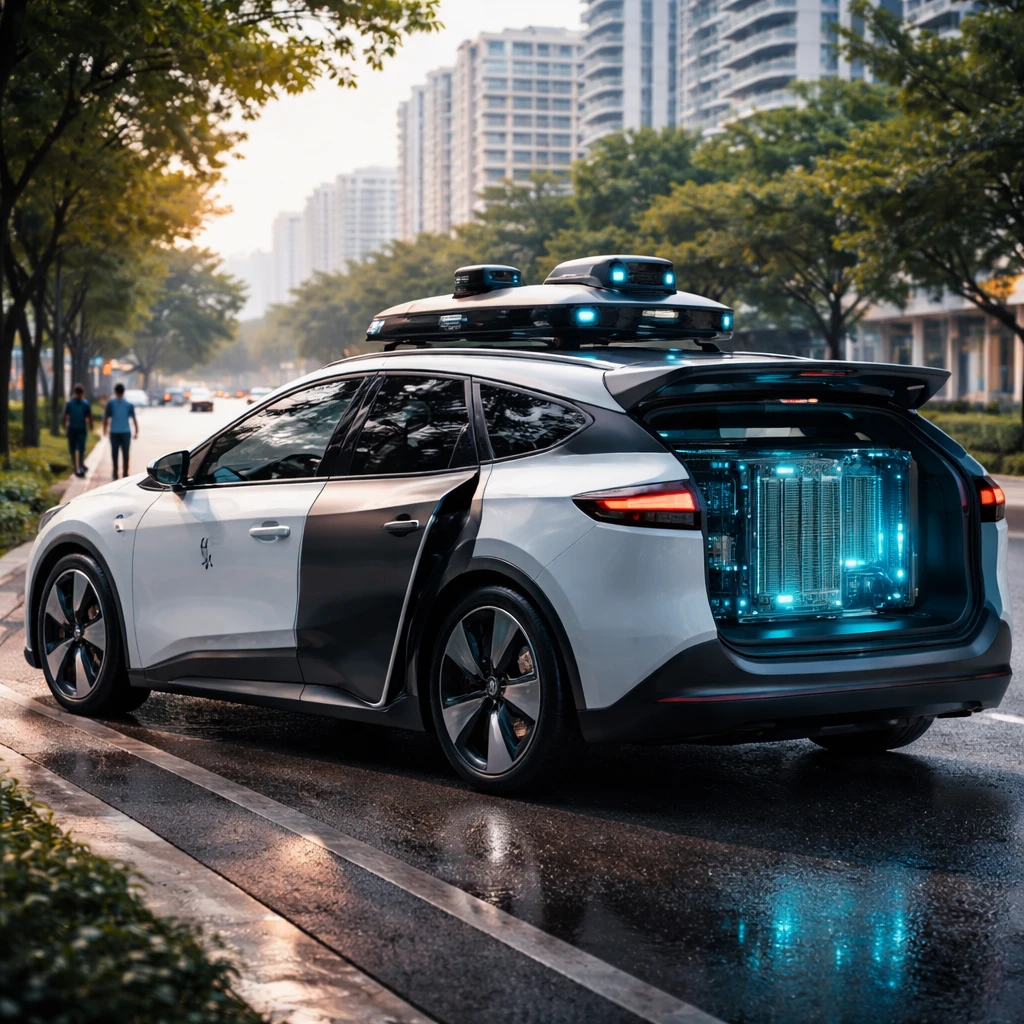
WeRide, the autonomous driving developer listed in Hong Kong (0800.HK), has introduced its next-generation Robotaxi GXR, leveraging Nvidia's (NVDA) DRIVE Hyperion architecture and the DRIVE AGX Thor system-on-chip, according to remarks at the company's developer conference and Nvidia's GTC 2026 event in San Jose.
The company described the Robotaxi GXR as an integrated stack that combines high-performance computing, a sensor suite and safety systems intended for fleet operations. WeRide said this integration is designed to speed deployment timelines and to reduce fleet operating expenses.
Central to the announcement is WeRide's new high-performance computing unit, named HPC 3.0. The company provided specific cost-reduction estimates for the HPC 3.0 platform, saying it should reduce autonomous driving system costs by about 50% and lower total cost of ownership by 84%.
WeRide also detailed its market rollout plan for the Robotaxi GXR in Southeast Asia, deploying the vehicle through a partnership with ride-hailing platform Grab Holdings (GRAB), which is also an investor in WeRide. The two companies have commenced autonomous vehicle trials in Singapore's Punggol district, and WeRide said it expects public robotaxi services to begin on April 1.
On longer-term fleet targets, WeRide set out an ambition to expand its active robotaxi count to more than 2,600 vehicles globally by 2026, and to scale that number to tens of thousands by 2030.
The announcement highlights a convergence of compute, sensor and chassis integration aimed at fleet economics. WeRide framed the Nvidia technology - DRIVE Hyperion and DRIVE AGX Thor - as the foundation for its next-generation vehicle strategy, and positioned HPC 3.0 as a material driver of per-unit and fleet-level cost declines.
Key points
- WeRide unveiled the Robotaxi GXR built on Nvidia's DRIVE Hyperion and DRIVE AGX Thor platforms, targeting faster deployment and lower operating costs for fleets.
- HPC 3.0 is projected by WeRide to cut autonomous driving system costs by about 50% and to reduce total cost of ownership by 84%, according to the company.
- Commercial rollout in Southeast Asia will proceed via a partnership with Grab; trials are underway in Singapore's Punggol district with public services expected to start April 1. Sectors impacted include semiconductors, autonomous vehicle technology, ride-hailing and mobility services.
Risks and uncertainties
- The realization of the cited cost reductions for HPC 3.0 depends on deployment and scale, which remain contingent on successful trials and commercial operations - affecting fleet economics and capital allocation in mobility services and autonomous systems.
- Timelines for public service launch and fleet scale-up are subject to operational and regulatory variables; any delays would affect projected fleet counts and the pace of market expansion in Southeast Asia and beyond.