
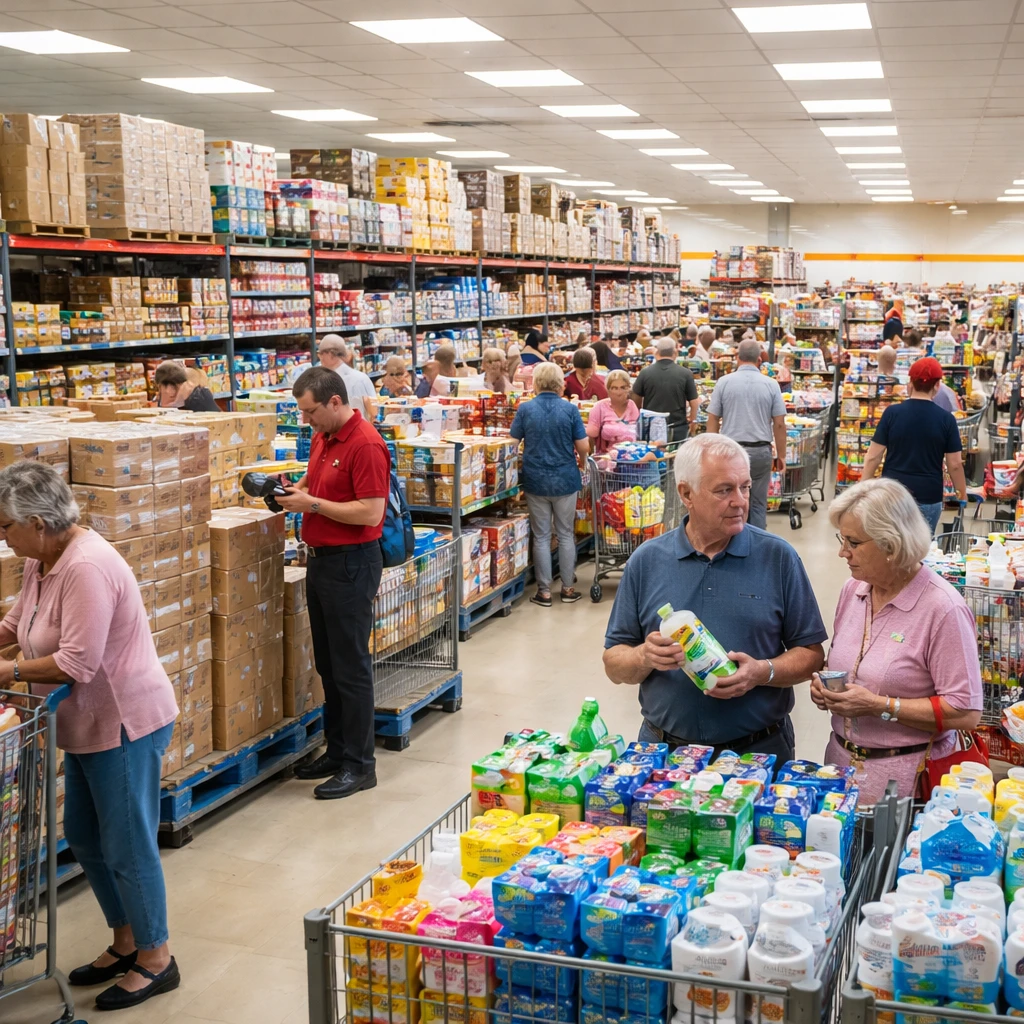
Wells Fargo has upgraded Ollie's Bargain Outlet Holdings Inc to Overweight from Equal Weight and raised its price target to $130 from $120, saying the recent pullback in the stock makes it a more appealing entry opportunity. Shares of the discount retailer were trading roughly 25% below their 52-week high, while the S&P 500 and the SPDR S&P Retail ETF were down about 2% and 12%, respectively.
The bank said management's commentary following fourth-quarter results increased its confidence in the company's multi-year growth trajectory. In its 2026 outlook, Ollie's set a comparable sales forecast of about 2%, a touch above the company's customary 1% to 2% range, and reiterated a long-term earnings framework that targets roughly 15% annual EPS growth.
Wells Fargo highlighted several financial and operational elements underpinning its upgrade. The bank noted that Ollie's is accelerating its share repurchase activity, backed by strong free cash flow and an absence of debt. Those attributes, in Wells Fargo's view, support capital returns and shareholder value as the retailer executes its expansion plan.
The analyst team also cited demographic and policy-related demand drivers. Ollie's customer base skews older, and Wells Fargo said that could translate into incremental spending tied to higher tax deductions for seniors and cost-of-living adjustments to Social Security payments. The bank added that the retailer's value-focused assortment positions it to capture purchases linked to tax refunds and to benefit if shoppers continue to trade down to lower-priced merchandise.
While some market participants have expressed concern that comparable sales could soften later in 2026, Wells Fargo suggested those worries may be overstated. The bank pointed to merchandising adjustments designed to boost productivity, including reallocating store space away from lower-performing categories and expanding vendor partnerships to improve inventory consistency. Management has also indicated that close-out buying opportunities remain robust, which can help maintain merchandise flow and margin support.
Store growth remains the central pillar of Ollie's expansion strategy. The company opened a record 86 stores in 2025, representing roughly 15% growth, and plans to add 75 locations in 2026, about 11.5% growth. Management has said it believes a steady state near 10% annual store growth is achievable over time. Wells Fargo said that this pace of openings underpins a path to double-digit earnings growth, a rate the bank described as increasingly uncommon in the retail sector.
On valuation, Wells Fargo noted that the stock was trading at about 24 times its 2026 earnings estimate and roughly 21 times its 2027 forecast. The bank argued that those multiples do not fully reflect the earnings upside supported by continued store expansion and the other operational levers cited above.
Separately, an AI-driven stock selection product referenced in the original coverage assesses OLLI across a broad set of financial metrics to identify risk-reward opportunities. That tool evaluates fundamentals, momentum and valuation and cited past examples of notable winners, including Super Micro Computer (+185%) and AppLovin (+157%), while stating it has no bias and focuses on current data to generate ideas.
Key points
- Wells Fargo upgraded Ollie's to Overweight and raised its price target to $130 from $120, citing a more favorable setup for 2026 driven by store openings and demand for value-priced goods.
- Management's 2026 outlook includes a comparable sales forecast of about 2% and a long-term earnings model targeting roughly 15% annual EPS growth; the company is also increasing share repurchases supported by strong free cash flow and no debt.
- Store expansion is central to growth - 86 stores opened in 2025 (~15% growth) and 75 planned for 2026 (~11.5% growth) - with a longer-term aim to sustain near 10% annual growth.
Risks and uncertainties
- Comparable sales could weaken later in 2026, a possibility the bank believes may be overstated; this risk impacts retail sector revenue and margin outlooks.
- Execution risks tied to merchandising changes, vendor partnerships and inventory consistency could affect sales productivity and customer experience in the discount retail space.
- Valuation sensitivity - the stock trades at about 24 times 2026 earnings and 21 times 2027 earnings, and should actual results fall short of the bank's expectations, multiples could reprice, affecting equity market performance in retail and consumer discretionary segments.