
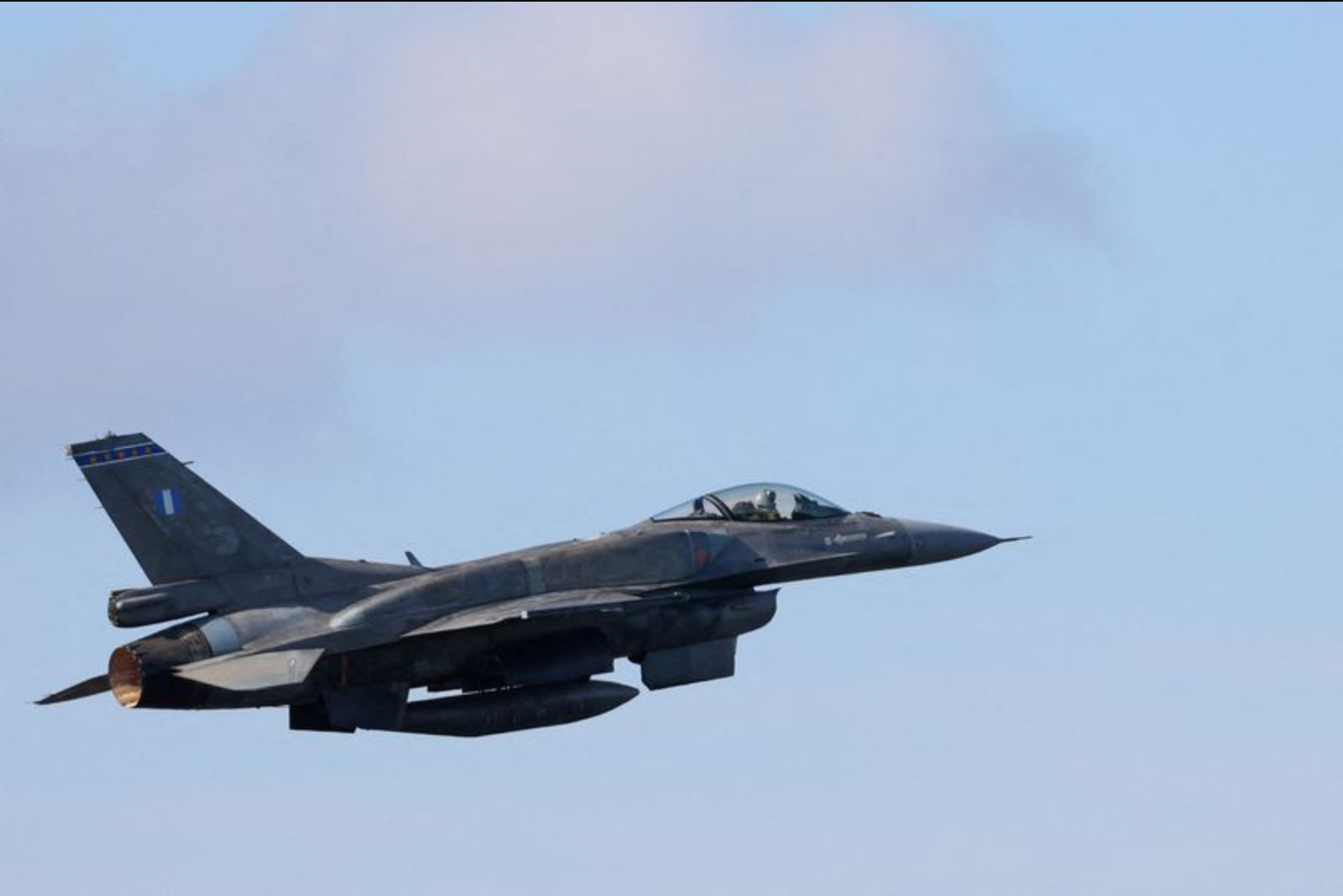
Ukraine’s newly operational F-16 fighters faced a critical shortfall of U.S.-manufactured air-to-air missiles for a period exceeding three weeks from late November to mid-December, three sources with direct knowledge of the matter told the author. The shortage occurred as Russian forces were assembling a significant winter air campaign and highlighted the extent to which Kyiv’s aerial defence depends on allied stocks of missiles and interceptors.
The three sources said that when missile deliveries halted, the entire complement of F-16s in Ukrainian service had only a very small number of AIM-9 "Sidewinder" missiles available. During that window, pilots often flew daytime interceptor sorties and attempted to neutralize incoming Russian drones and cruise missiles using the aircrafts’ rotary cannons or by trying to refurbish missiles that had previously failed to fire on earlier missions.
Because partners’ stocks had run dry, one source explicitly described the situation as having effectively nothing to load on the jets for almost a month. All three requested anonymity when discussing the operational vulnerabilities caused by interruptions to weapon flows. The precise reasons for the stoppage - whether the result of supply limits within the United States, European partners, or logistical delays - could not be established from available accounts.
Operational improvisation and risk
With U.S.-made air-to-air missiles in short supply, pilots adopted riskier tactics. A second source said crews flew sorties in daylight and attempted to engage low-cost Russian attack drones with the F-16s’ rotary cannons; night operations were generally considered too hazardous under those conditions despite many drone attacks occurring at night. In some cases, maintenance crews inspected and repaired missiles that had previously misfired; a number of these refurbished munitions then functioned successfully on subsequent missions.
The shortages were particularly acute for the older AIM-9 variants known as Limas and Mikes, produced in the 1970s and 1980s, which Ukrainian F-16 pilots had relied on heavily. Despite their age, those Sidewinder variants offered a relatively inexpensive option for intercepting Russian drones and cruise missiles, sources said.
Tactical impact and scale
One of the sources noted that the spike in missile scarcity did not coincide with the largest Russian attacks of the winter, though the supply gap occurred just ahead of a major assault. The shortfall was alleviated in December when allied partners delivered additional AIM-9 missiles, according to the three sources; the supplying country or countries were not named for security reasons.
Ukraine’s F-16s form part of the broader airborne element of the country’s layered air-defence network, which also includes helicopters, other fixed-wing aircraft, ground-based interceptors and electronic warfare systems. A second source said F-16s have intercepted some 2,000 drones and missiles while operating in air-defence roles. That same source described the number of F-16s currently fighting as being in "the dozens," without providing a more specific figure.
Allied contributions, PURL mechanism and public statements
Separate accounts indicate NATO members have supplied Sidewinder missiles to Ukraine in recent months. A fourth source referenced contributions from Germany and Canada and confirmed there had been "a bit of a dip" in supplies before the December replenishment, though that source declined to specify the cause. Germany’s defence ministry declined to comment on specific deliveries or weapons for security reasons.
Canada’s Department of National Defence acknowledged it was in the process of donating AIM-9M-8 missiles from Canadian Armed Forces stocks. The Canadian ministry stated that this donation would complement earlier shipments of hundreds of AIM missiles and related components that are already in use by Ukrainian forces for air defence.
Under the administration that introduced the system, the United States has been providing weapons to Ukraine via a mechanism in which Washington sells materiel to NATO allies for onward delivery to Kyiv. One U.S. official, responding to inquiries, reiterated Washington’s commitment to ending the war and described U.S. support as taking the form of selling weapons through NATO channels. The official added that the administration had made "tremendous progress" towards a negotiated peace deal between the parties, while not offering technical details about specific transfers.
Missile economics and cross-system impacts
The AIM-120 missile family - a more advanced beyond-visual-range air-to-air weapon produced by Raytheon, a unit of U.S. defence company RTX Corp - was described by two of the three primary sources as costing well above one million dollars apiece. Because of that expense, those interceptors are not typically expended widely against low-cost Russian attack drones. The AIM-120s are also employed by Norway-produced NASAMS surface-to-air systems, which meant that during the supply squeeze NASAMS operations were constrained, one source said.
Sources also reported a shortage of U.S.-made RIM-7 missiles that have been adapted for use in modified Soviet-era air-defence systems since the 2022 invasion. The Norwegian defence ministry said its government had delivered a "substantial number" of interceptors for NASAMS earlier in the winter, intended to ensure the system could continue to protect Ukrainian civilians from deadly air strikes.
Context within Ukraine’s air-defence needs
Ukraine’s sprawling air-defence network faces continuous demand pressure. Russian forces typically launch several hundred attack drones and missiles during large-scale strikes. Ukrainian defenders counter with a mix of techniques and assets: gunfire from mobile platforms, electronic jamming, interceptor drones, as well as manned aircraft and surface-to-air missile systems.
President Volodymyr Zelenskiy issued a public appeal in January highlighting shortages of ammunition, particularly for the U.S.-made Patriot system on which Ukraine depends to intercept ballistic threats such as Iskander missiles. The shortage of air-to-air and surface-to-air interceptors adds to the strain on the systems that defend critical civilian infrastructure and energy networks, which have been repeatedly targeted and damaged through the winter, leaving many Ukrainians without heating, electricity and running water amid severe cold.
Limitations and unanswered questions
The accounts behind these findings are drawn from multiple sources with direct knowledge, and several parties involved in provision or use of the weapons declined to provide comment for security reasons. Governmental defence ministries and Ukraine’s own defence institutions did not offer public explanations for the interruption of missile deliveries. As a result, it remains unclear from the available reporting whether the temporary lapse stemmed from internal allied inventory constraints, political decision-making, transportation and logistical hurdles, or other causes.
While the December deliveries restored missile stocks for F-16 operations, the episode underscores an enduring operational dependency: Kyiv’s aerial defence continues to rely heavily on replenishments from partner nations for both air-launched and surface-launched interceptors.
Implications for military supply chains
Although these accounts do not quantify every operational consequence of the temporary shortfall, they illustrate how interruptions in missile supply can force changes in tactics and put additional pressure on alternative defensive measures. The financial cost of high-end interceptors, and their dual use across manned fighters and ground-based systems, creates competition for a limited set of munitions at a time of heightened demand across multiple theatres.
Which partners provided the December replenishment was kept confidential by sources. Nonetheless, recent confirmations of deliveries from countries such as Germany and Canada indicate a multinational effort to sustain Ukraine’s air-defence capabilities. Whether allied production and stockpiles are sufficient to meet ongoing attrition rates in the months ahead remains an open question for planners and policymakers.