
Overview
Waymo is moving out of the demonstration phase and into an aggressive growth chapter. The Alphabet-backed autonomous driving company says its immediate objective is to scale the business to more than one million paid rides each week by the end of 2026. That target signals a move from proving the technology to proving it can operate at commercial scale.
Funding and strategic significance
The company recently closed a $16 billion funding round that places its valuation at $126 billion. While Alphabet will supply most of the capital, new investors including Sequoia, DST, and Dragon have joined the cap table. Company leadership frames the raise not as a trophy but as validation of both the autonomous driving technology and the team executing on commercialization.
Recent growth and operational footprint
Waymo says it finished the prior year after quadrupling the trips it provided. The platform delivered 15 million rides in a single year and has exceeded 20 million lifetime rides. Its paid service is active in six U.S. cities and currently handles roughly 400,000 paid trips each week. Miami is the most recent city added to the footprint, and the company is preparing to enter more than 20 additional cities over the course of the current year.
What is driving demand
According to Waymo leadership, two measures are central to persuading investors, regulators and local officials: consumer adoption and safety performance. The company reports that across 127 million miles of driving it has recorded 90 percent fewer serious injury-causing crashes than human drivers and 82 percent fewer airbag deployments. Those statistics form a core element of Waymo’s argument to municipalities and states that have been cautious about fully driverless operations.
Regulatory environment and market access
Scaling a robotaxi service depends heavily on regulatory access. Key transport hubs remain closed to driverless services, with New York City singled out as an example. Waymo has permits for supervised autonomous testing in New York State and believes it could ultimately be the first company to introduce a fully autonomous service there. City regulations, however, still mandate a human operator inside the vehicle - a restriction that has not yet been lifted.
Company executives describe market access as a process of gradual persuasion: collecting and presenting safety data, building local confidence, and gaining public support. In some cities where Waymo is not yet operating, residents have organized campaigns calling for the service. The company has also cited demand from families, noting that parents sometimes view robotaxis as a safer mobility option for children who may never learn to drive.
Allocation of capital and fleet development
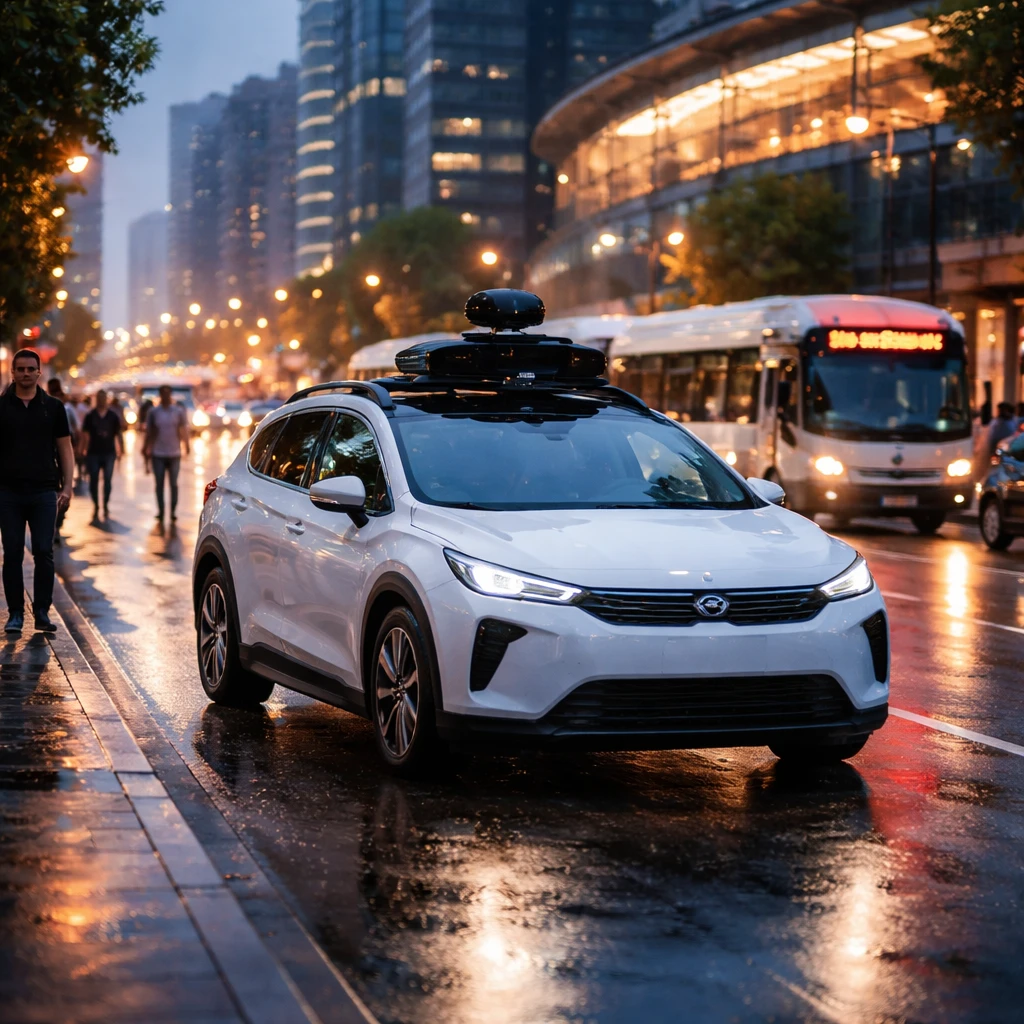
Waymo intends to split the newly raised capital between fleet expansion and continued technological development. The priorities for the coming year include operational execution in new cities, reducing hardware costs, and improving unit economics. The fleet already includes fully electric Jaguar I-PACE vehicles and is being supplemented by newer models such as the Zeekr and the Hyundai Ioniq 5.
Consumer use cases and cultural integration
Public events and routine trips have both been used to demonstrate that the service is beyond novelty. During Super Bowl weekend in the Bay Area, visitors used Waymo vehicles to move among airports, hotels, and Levi’s Stadium. Company leadership points to more mundane trips as further evidence of adoption: doctor appointments, errands, school pickups, weddings, and even hospital runs with newborns are now part of the rider mix.
International rollouts
Waymo is preparing outward expansion with London and Tokyo flagged as initial major international markets. The company expects London to be its first large European launch, noting that UK regulators have been receptive to exploring how autonomous vehicles might reduce road fatalities. In Tokyo, Waymo plans to work with established taxi partners, integrating autonomy into an existing and trusted local system rather than immediately displacing drivers.
Safety investigations and company response
Federal authorities are reviewing two recent incidents involving Waymo vehicles: a low-speed collision with a child in Santa Monica and interactions with parked school buses. The company says it welcomes these investigations, has rolled out software updates in response, and is collaborating with school districts to analyze additional data. Waymo emphasizes transparency and cooperation as essential elements of maintaining long-term trust.
Technical approach and operating record
Waymo’s system uses a redundant sensor suite comprised of cameras, lidar, and radar rather than relying solely on vision-based approaches. Company leadership declines public debating of technical philosophies and instead highlights operational outcomes. Waymo removed human drivers from its service in 2020 and today operates the only twenty-four-seven fully autonomous ride service at scale in the United States. The company references nearly 200 million autonomous miles driven as evidence that its approach has been validated.
Short-term success metrics
Asked about concrete measures of progress, the company sets two closely linked goals: rapid growth toward more than one million paid trips per week by the end of 2026 and preservation of the safety culture that undergirds its operations. Leadership stresses that scale without trust does not constitute success.
Note: This article presents the company’s stated targets, operational data, and responses to safety inquiries as reported. It does not introduce additional facts beyond those provided by Waymo’s statements and the company’s public disclosures.