
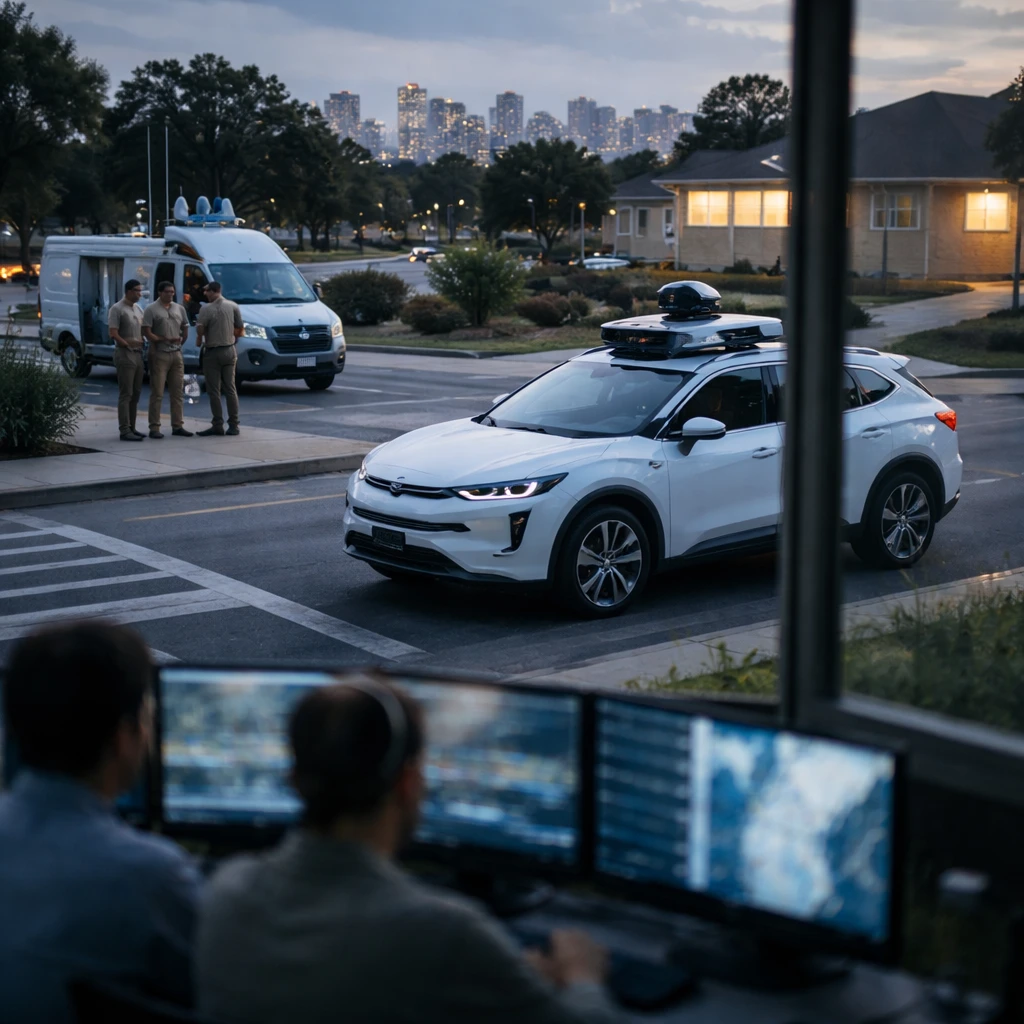
Waymo, Alphabet's self-driving unit, has said remote staff are not used to directly operate its robotaxis in U.S. service, responding to heightened scrutiny over the use of overseas personnel.
In a blog post and a written response to Senator Edward Markey, Waymo clarified the role of its remote workforce. The company said it keeps roughly 70 "remote assistance agents" on duty worldwide at any given time. These agents are certified to perform tasks such as coordinating with emergency responders, and are positioned to advise and support the Waymo Driver rather than to take direct control of vehicles.
Waymo wrote that agents "provide advice and support to the Waymo Driver but do not directly control, steer, or drive the vehicle."
The company acknowledged that in rare circumstances remote staff could intervene to move vehicles for short distances, but added that such an intervention had not occurred outside of training scenarios. For more complex or emergent issues, Waymo said it maintains a dedicated Event Response Team that is based exclusively in the United States.
Waymo operates four support locations to back its fleet - two in the United States, in Arizona and Michigan, and two in the Philippines - and said those sites together are used to support vehicle operations.
The disclosures followed concerns raised by Senator Markey, who in a February 3 letter asked for more detail after saying the company had provided limited information on its policies for remote personnel. Representative Buddy Carter also expressed worries about the use of overseas workers and requested that the Department of Transportation investigate Waymo's remote staffing.
The company is the largest robotaxi operator in the United States, with a fleet of over 2,500 driverless vehicles deployed in several major cities. Waymo has faced intensified attention after one of its taxis struck a child outside an elementary school in Santa Monica, California in late-January, an incident that has driven additional questions about safety and oversight.
The company emphasized that its remote agents are certified for advisory roles and emergency coordination, that rare remote movement of vehicles has not occurred outside training, and that the Event Response Team handling more complex issues operates from within the U.S. The firm also noted the geographic footprint of its support operations across Arizona, Michigan and two Philippine cities.
Context and next steps
Lawmakers have sought clearer information about remote staffing policies and safeguards. Waymo's statements aim to delineate the line between advisory remote assistance and direct vehicle control while underscoring the U.S.-based composition of teams handling complex incidents. The Department of Transportation inquiry requested by Representative Carter could lead to further review of those practices.