
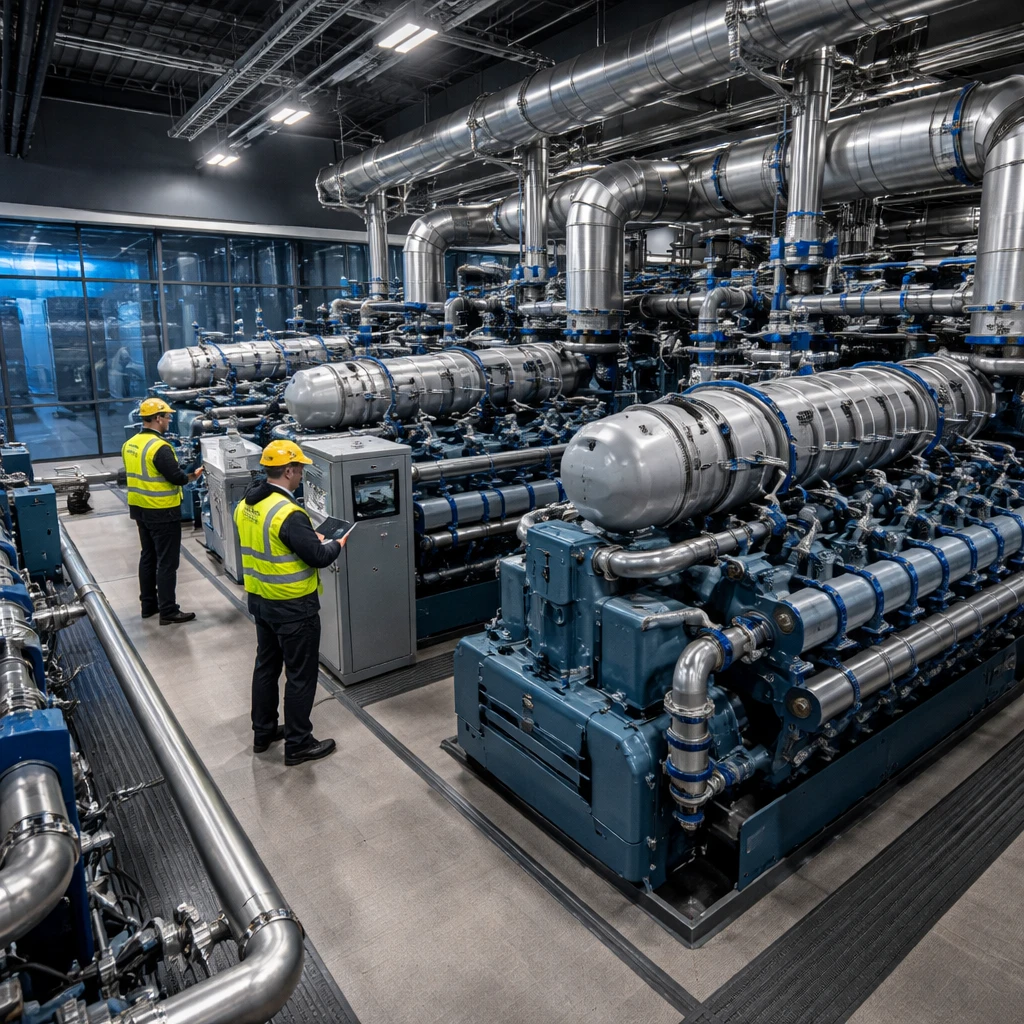
Wartsila anticipates that recent U.S. attention on datacentre power sourcing will provide a meaningful lift to demand for its lower-emission, lower-water-use engine technologies, the Finnish energy equipment and services group said.
The White House has scheduled a March 4 meeting with major technology companies including Microsoft, Amazon and Meta to develop a plan aimed at protecting consumers from rising electricity costs that can arise as datacentres rapidly scale computing capacity for artificial intelligence and related workloads. The administration's initiative is part of a broader political focus on the environmental and resource implications of datacentres ahead of this year's U.S. mid-term elections.
Hakan Agnevall, Wartsila's CEO, told Reuters the U.S. push toward onsite power generation at datacentres would reinforce demand for the company's products and services. He said Wartsila has so far contracted roughly 1.2 gigawatts of power for datacentre applications and recalled a case where the buyer's choice of technology was driven by such considerations.
Datacentre operators commonly deploy gas or diesel generators as backup sources to avoid overloading the electrical grid. But some backup configurations can consume substantial quantities of fuel and water, particularly when large cooling loads are required. Wartsila highlights that its engine platform, when paired with a closed-loop cooling system, uses up to 2,000 times less water than comparable gas turbine solutions, while also delivering lower emissions and potential fuel cost reductions in the range of 20% to 35%, according to the company.
Demand for Wartsila's datacentre engines was already strong, the CEO said, and the firm is planning to raise its delivery capacity for those engines by about 80% by 2028. Earlier in February, Wartsila—also a supplier to the marine sector and other markets—reported fourth-quarter orders that missed forecasts but noted that datacentres represented a bright spot amid that softer backdrop.
Services remain a significant part of the company's business model. Agnevall said roughly half of Wartsila's revenues currently derive from servicing engines after installation. In the United States, the company employs around 1,000 staff and expects U.S.-based servicing headcount to grow by a double-digit percentage over the next two years to support expanding installations.
To secure the necessary workforce, Agnevall called for expanded vocational training in the U.S., saying that demand for technicians with the relevant skills is high but supply has been tight. "Everybody's looking for that type of talent," he said, adding that more vocational pathways are needed to meet the hiring challenge.
The U.S. market hosts roughly half of the world's datacentres and is projected to see substantial expansion as companies race to scale compute capacity. That expansion in turn is increasing competition for workers and putting pressure on operators and suppliers to deliver more efficient power and cooling solutions.
Context and company positioning
Wartsila's mix of product features and service revenue exposure means the company is positioned to benefit if datacentre operators prioritize onsite power systems that limit grid strain, reduce fuel consumption and lower water use. The firm’s stated plans to scale delivery capacity and expand service personnel are consistent with management's expectation of sustained customer demand in the datacentre segment.