
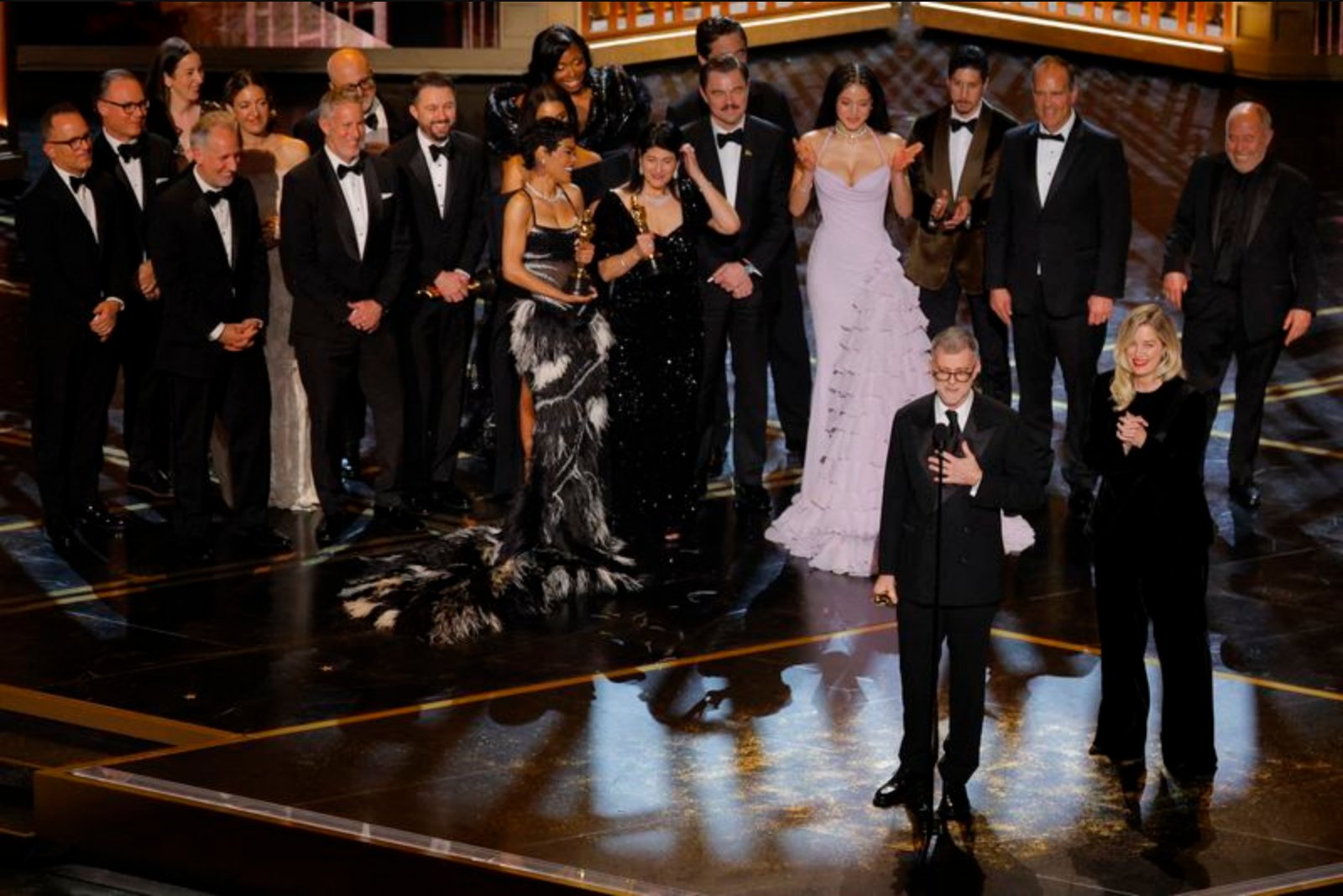
Warner Bros emerged as the most decorated studio at the Academy Awards on Sunday, earning 11 Oscars across multiple films, but the achievements were overshadowed by a pending $110 billion takeover that will merge the studio into Paramount Skydance.
The studio’s biggest winner was One Battle After Another, a story of violent resistance set in a dystopian United States, which received six Academy Awards, including best picture, best director and best supporting actor. Another Warner Bros title, Sinners, a genre-blending fantasia set during the Jim Crow era, received four Oscars, among them the award for lead actor.
Accepting the best actor prize, Michael B. Jordan thanked Warner Bros directly. "I want to thank Warner Bros," he said, praising the studio for "betting on original ideas and artistry."
Warner Bros has been at the center of an extended bidding contest involving Paramount Skydance and Netflix for the corporate parent, Warner Bros Discovery. Paramount CEO David Ellison prevailed with a higher offer, backed by his father, Oracle co-founder Larry Ellison.
The planned acquisition will combine two long-standing Hollywood studios, effectively reducing the number of major standalone film companies at a moment when the sector is experiencing consolidation and several structural stresses. Industry observers note the deal comes amid intensifying competition from streaming services, ongoing labor unrest and rising costs.
"It will be impossible to ignore that we will be celebrating the achievements of filmmaking with one less studio on the horizon," said veteran Hollywood marketing executive Terry Press. "It’s gut-wrenching."
Those tensions have been compounded by a protracted industry strike and concerns around new technologies displacing jobs. The prospect of consolidation has contributed to unease across the business, especially as Paramount has identified $6 billion in potential cost savings tied to the transaction.
As part of the strategic plan announced with the bid, Ellison has pledged to deliver a total of 30 films per year, to be divided evenly between Paramount and Warner Bros. Warner Bros’ recent commercial performance was noted in the deal narrative, with last year’s box-office successes cited, including Superman and A Minecraft Movie.
Streaming service Netflix also had a prominent night, taking seven Academy Awards. Guillermo del Toro’s adaptation of Mary Shelley’s Frankenstein led Netflix’s haul, winning three trophies in hair and makeup, production design and costume design. Netflix additionally won the Oscar for best animated feature for KPop Demon Hunters and secured the best song award for the same film.
NBCUniversal earned 13 nominations across three films from its Focus Features unit, along with a separate nomination for Universal Pictures’ Jurassic World Rebirth. Focus Features captured an Academy Award for lead actress for Jessie Buckley’s performance as Agnes in Hamnet.
Independent studio A24 saw its film Marty Supreme, a story centered on an unlikely table-tennis champion, receive nine nominations including best picture, director and lead actor, but the film did not translate nominations into wins at the ceremony.
Walt Disney’s 20th Century Studios took home a single Oscar in visual effects for Avatar: Fire and Ash, after a total of five nominations. Apple received an Academy Award for best sound.
The evening underscored both artistic recognition and a shifting corporate landscape. While Warner Bros’ creative achievements were dominant in awards terms, the company’s immediate corporate future is defined by a transformative deal that will combine it with another major studio and which includes clear ambitions for cost reductions and an increased, explicit production cadence.
For stakeholders in film production, distribution and exhibition, the conjunction of high-profile creative wins and major corporate consolidation will be closely watched for how it affects content pipelines, studio output and the competitive dynamics across traditional and streaming platforms.
In sum, the Academy Awards highlighted a dual narrative: a studio at the peak of artistic recognition at the same time that its ownership and operational contours are about to change significantly.