
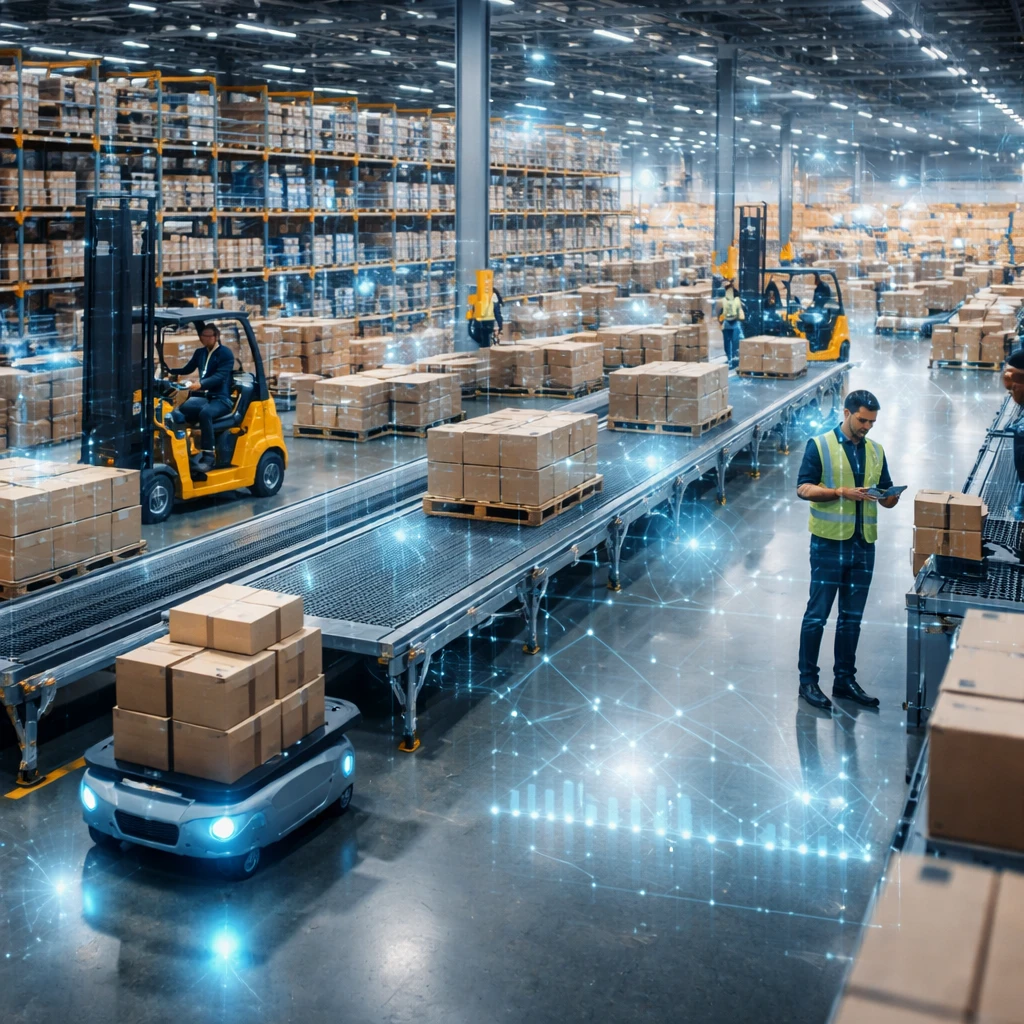
Generative AI is reshaping operational practices across the U.S. retail industry, with its earliest and clearest impact showing up in the back-end functions that underpin store shelves and e-commerce fulfillment. A new sector report from Jefferies finds that retailers are realizing tangible margin benefits from AI-driven efficiencies in logistics and inventory management, even as differences in preparedness between large chains and specialty retailers widen.
Operational margin focus
Jefferies notes that current deployments of AI in retail are prioritizing measurable operational gains over novel consumer-facing features. The immediate benefits are being realized in distribution center automation, refined inventory forecasting, and more efficient labor scheduling. These changes are producing SG&A leverage as companies streamline processes that historically consumed significant overhead.
Among U.S. retailers, Walmart Inc (NASDAQ:WMT) stands out as the most advanced adopter, using its scale to embed AI-driven automation more deeply across its supply chain than many competitors. This depth of integration is presented in the report as a source of competitive advantage when it comes to back-end cost structures.
Disclosure and readiness gaps across subsectors
Jefferies highlights a noticeable variation in how openly different retail subsectors are communicating their AI strategies. Large-format and discount operators, such as Target Corporation (NYSE:TGT) and Dollar General Corporation (NYSE:DG), have publicly outlined AI roadmaps. By contrast, off-price and certain specialty retailers - with examples including TJX Companies Inc (NYSE:TJX), Ross Stores Inc (NASDAQ:ROST), and Urban Outfitters Inc (NASDAQ:URBN) - have been more reserved in their public commentary.
The report points to a potential vulnerability tied to this so-called "disclosure gap." If AI begins to play a dominant role in how shoppers discover products, firms that are less transparent or slower to build sophisticated digital discovery interfaces may cede market share to those with stronger digital capabilities.
Discovery dynamics and competitive implications
Jefferies frames AI as having two related effects for retailers. On the operational side, targeted marketing and improved conversion can materially boost ROI for early adopters. On the consumer-facing side, AI-driven discovery could change how products surface to shoppers. Retailers that fail to prepare their data and digital ecosystems for AI-based discovery risk being deprioritized in search and recommendation systems, which in turn could shift sales toward more digitally mature competitors.
The report argues that the transition will be uneven across the sector, ultimately favoring players that convert operational enhancements into durable cost advantages rather than one-off improvements.
Labor and automation observations
Despite widespread automation efforts in distribution centers, Jefferies finds limited evidence to date that AI is broadly eliminating retail jobs. Instead, companies appear focused on using AI to raise labor productivity and refine scheduling accuracy, which supports operating efficiency without large-scale workforce replacement at this stage.
Investor implications
For investors, the key takeaway is that AI is already contributing to margin improvement across many retailers, primarily through operational channels. However, the report underscores that long-term winners will be those able to manage the evolution of AI from an operational efficiency tool into a strategic driver of consumer demand. That requires both robust internal execution in logistics and supply chain, and a digital posture that supports AI-driven product discovery.
Supplementary note included in the source material
The original report text also included a segment asking whether investors should buy ROST and describing an AI-based stock selection tool called ProPicks AI, which evaluates companies using a broad set of financial metrics. That segment referenced prior winners identified by the tool but did not change the sector analysis presented by Jefferies.