
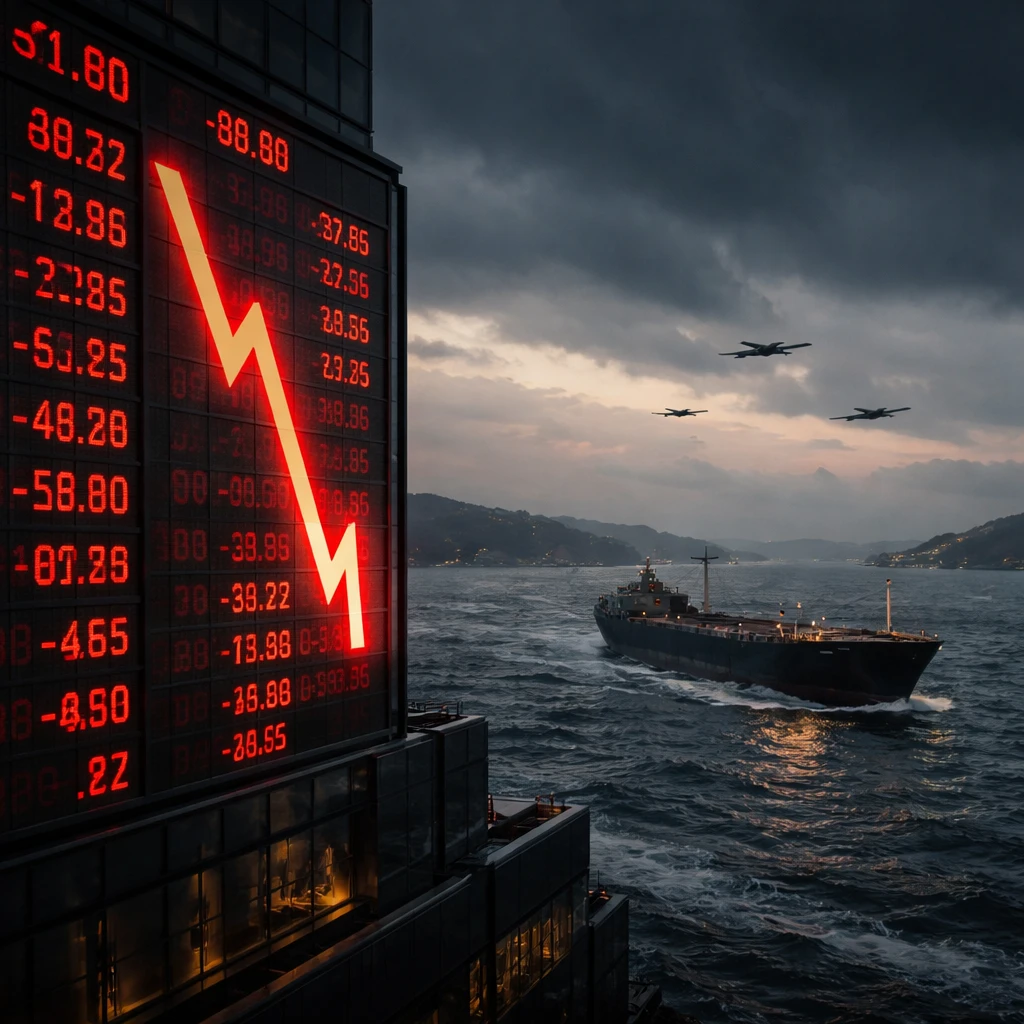
Wall Street futures dropped decisively on Sunday evening after a weekend of military strikes involving the U.S., Israel and Iran, prompting a jump in oil prices and a broader retreat from risk-sensitive assets. The pullback followed a negative finish on Friday, when a combination of concerns tied to artificial intelligence developments and signs of sticky inflation increased investor caution.
By 19:05 ET (00:05 GMT), S&P 500 Futures were trading down nearly 1.1% at 6,815.75 points. Nasdaq 100 Futures declined about 1% to 24,737.50 points, while Dow Jones Futures fell roughly 1.1% to 48,447.0 points.
US-Iran strikes batter risk appetite
Over the weekend, the U.S. and Israel carried out a series of strikes against Iran that reportedly killed hundreds in the country, including Supreme Leader Ayatollah Ali Khamenei. Iran responded by launching attacks on Israel and several other Middle Eastern nations, including Bahrain, Qatar, and the United Arab Emirates. Market participants viewed the sequence as a significant escalation in tensions between Washington and Tehran, particularly after recent negotiations over Iran's nuclear enrichment activities produced largely inconclusive results.
President Donald Trump said on Sunday evening that operations against Iran will continue until all "objectives are achieved," and he warned of additional American casualties following the reported deaths of three service members. Traders and investors reacted to growing fears of a broader regional conflict as Iran vowed further retaliation for the strikes.
The geopolitical shock lifted oil prices, with the conflict threatening to disrupt a major shipping channel - the Strait of Hormuz - which accounts for roughly 20% of the world's oil consumption. The prospect of constrained crude flows added to the risk-off tone in markets.
Wall Street grapples with AI and rate uncertainty
Geopolitical risk compounded existing headwinds for equities after a difficult February for U.S. markets. Concerns about AI-related disruptions and persistent inflation weighed on investor sentiment and contributed to outflows from higher-risk assets.
Technology stocks were particularly affected: the NASDAQ Composite logged an over 3% decline last month. The S&P 500 gave up 0.9% over the same period, while the Dow Jones Industrial Average finished essentially flat for February. Market participants cited fears that spending on nascent AI technologies could be overstretched, which, alongside worries about software-related disruption, has pressured tech valuations.
At the same time, a series of sticky inflation readings and robust labour market data stoked concerns that the Federal Reserve may need to keep interest rates unchanged for a longer period. Uncertainty around President Trump's tariff agenda also weighed on sentiment after the Supreme Court ruled that a bulk of his duties were illegal, adding another layer of policy unpredictability.
Summary
Futures fell more than 1% on the back of weekend military strikes between the U.S., Israel and Iran, pushing oil prices higher and intensifying a shift out of risk assets. Those developments compounded pre-existing worries about AI disruption, sticky inflation, and policy uncertainty, leaving major U.S. indices lower heading into the new week.