
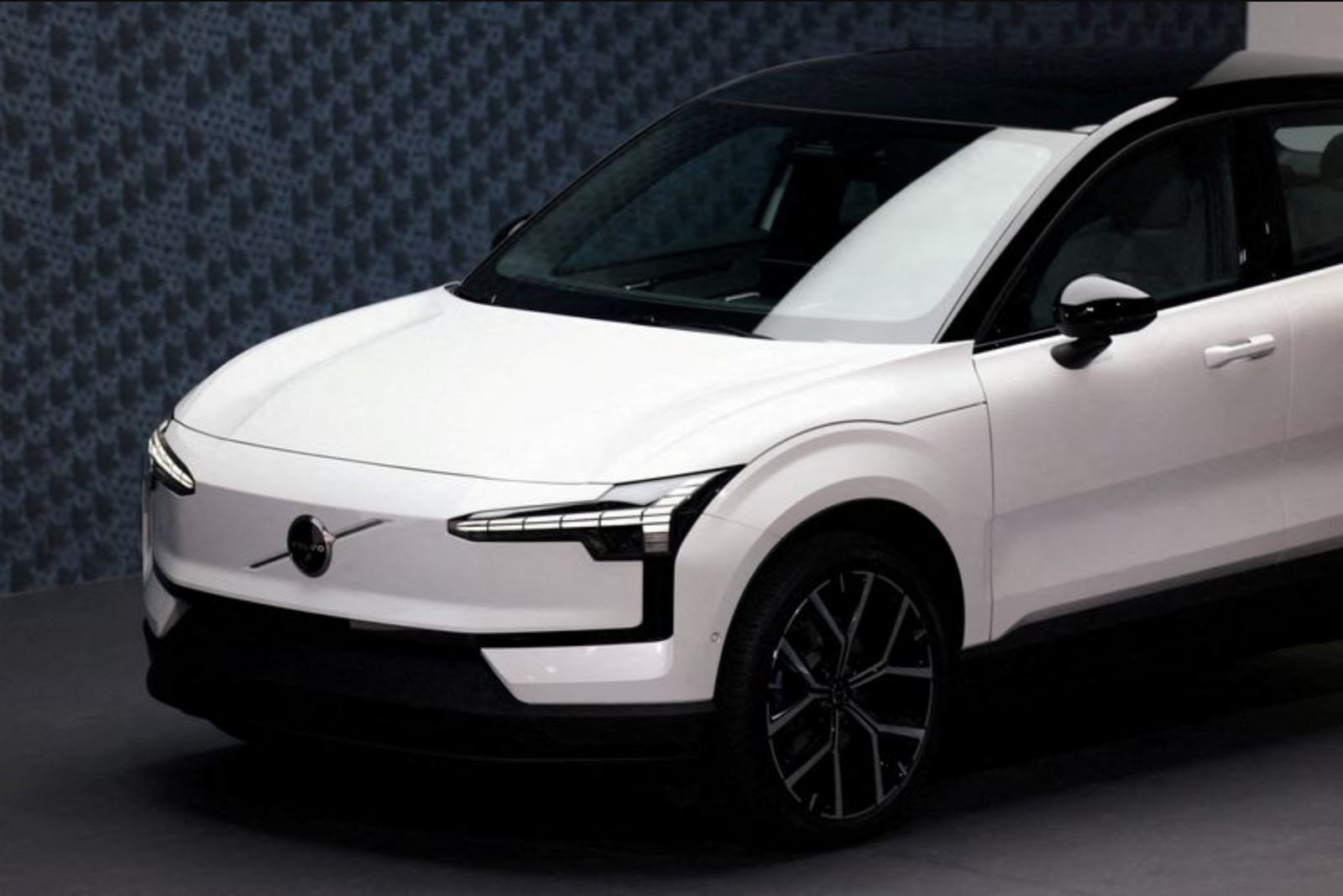
Volvo Cars said on March 16 that it will discontinue U.S. sales of its compact electric SUV, the EX30, and the EX30 Cross Country later this year. The company indicated the models will remain available in other markets in North America, but they will no longer be sold in the United States after the 2026 model year.
A company spokesperson provided the update in a written statement. The spokesperson confirmed that while the U.S. market will stop receiving the two EX30 variations after the 2026 model year, the EX30 will continue to be offered in neighboring markets including Canada and Mexico.
Volvo's sales data for 2025 show the EX30 represented a modest portion of its U.S. volume. The automaker sold nearly 5,400 units of the EX30 in the United States during 2025, which amounted to about 4.4% of Volvo's total U.S. sales that year.
The company has been navigating a challenging sales environment. Volvo Cars reported that sales volumes fell 10% in the three months through February, a decline the firm attributed to trade tariffs and other market headwinds. At the same time, deliveries of fully electric cars increased during the same period.
Global electric vehicle sales also experienced a downturn in February, the company noted, with weakness driven in part by a large sales drop in China. That slowdown was described as the largest sales fall there since the onset of the COVID-19 pandemic in early 2020, and broader policy shifts in multiple countries have reduced the pace of incentives that previously encouraged EV purchases.
The EX30 was introduced in 2023 amid a broader industry effort to develop more affordable electric vehicles. At launch, the model was positioned as a compact SUV that maintained core elements of Volvo's design and engineering approach.
Separately, the article included an investor-focused marketing segment discussing the ticker VOLCARb. That segment described an AI product called ProPicks AI that evaluates VOLCARb alongside many other companies using a large set of financial metrics. It said the AI looks at fundamentals, momentum, and valuation to identify stocks that may offer attractive risk-reward profiles, and referenced past winners identified by that system. The marketing text framed the tool as a way for investors to see whether VOLCARb appears in any AI-driven strategies or whether other opportunities exist in the same sector.
Context and implications
Volvo's choice to remove the EX30 and EX30 Cross Country from the U.S. lineup will reduce the variety of compact electric SUVs available from the brand in that market. The EX30's remaining presence in Canada and Mexico indicates Volvo is narrowing its U.S. offer while maintaining regional availability across North America.