
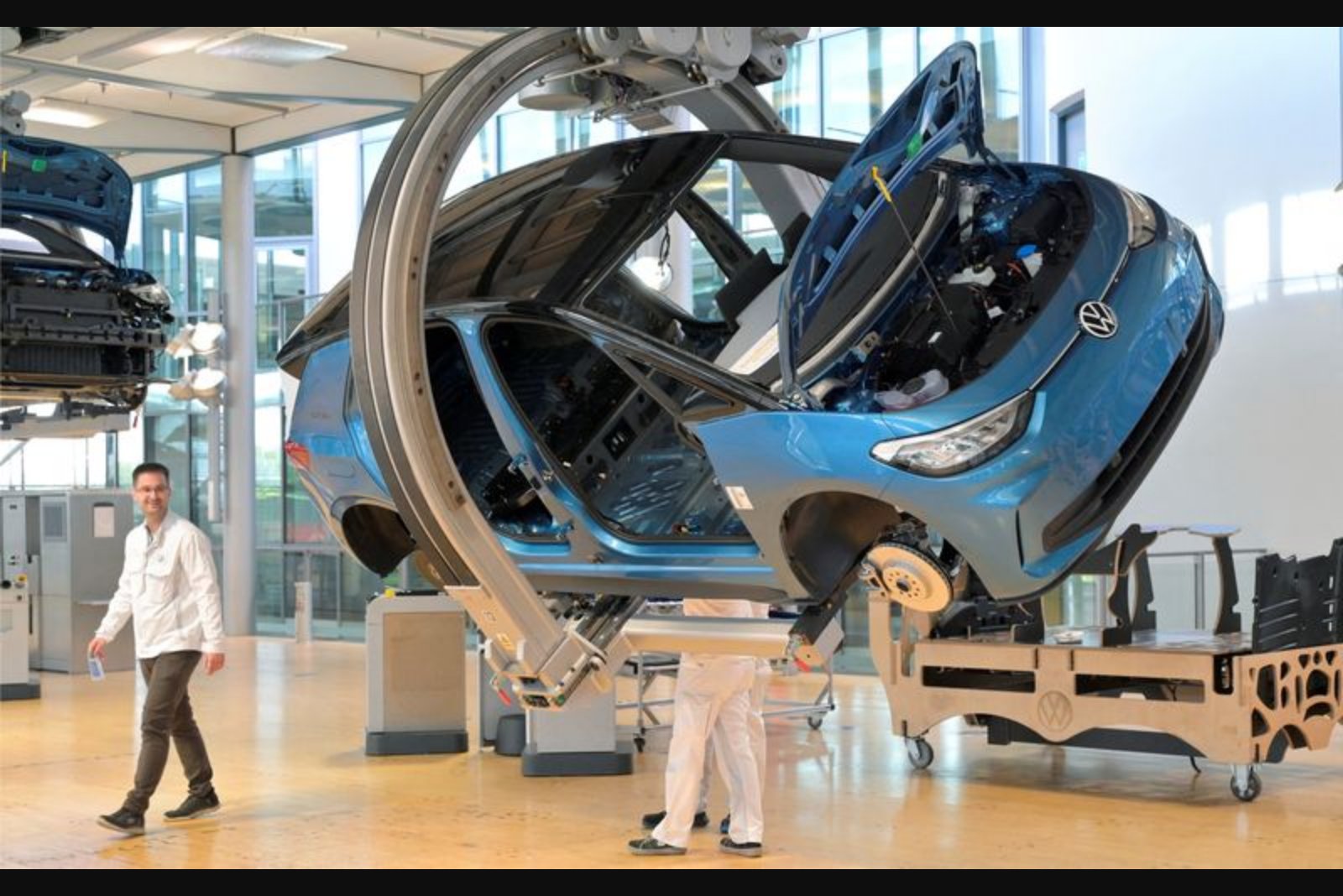
The European Commission's recent authorization of a tariff exemption for Volkswagen's Cupra Tavascan has intensified interest among major Chinese automakers in pursuing similar arrangements for models they intend to export to Europe. The exemption, which substitutes tariff charges with an agreed minimum price and a sales quota for the Tavascan, is the first of its kind since the EU imposed new duties on China-based electric vehicle (EV) makers in 2024.
Under EU rules, individual electric models imported from China can be the subject of negotiated exemptions replacing tariffs. Volkswagen's request for the Tavascan's exclusion from import levies was approved after protracted negotiations, according to industry participants and analysts. The Commission did not disclose the specific terms of the quota or the minimum price, citing confidentiality. It did, however, note that Volkswagen agreed to commitments connected to EV investment projects in the EU as part of its bid to secure the concession.
For Volkswagen's SEAT/Cupra division the tariff relief was particularly consequential. The all-electric Tavascan had faced an additional 20.7% tariff following the EU's 2024 duties, on top of a pre-existing 10% levy. Those higher charges severely squeezed the unit's profitability, almost erasing operating profit in the first nine months of the prior year, according to company results referenced by industry observers.
Chinese automakers are now examining whether to file for comparable exemptions on individual EV models they plan to ship to the European market. The China Chamber of Commerce to the EU said several manufacturers have been discussing the prospect of applying. Sources with knowledge of the talks said many firms are interested but that some remain cautious because of the required disclosures and administrative paperwork associated with formal exemption requests.
Eugene Hsiao, head of China equity strategy at Macquarie Capital, described the Volkswagen outcome as positive for both Chinese and foreign EV producers operating in China, noting that it allows companies to leverage a locally efficient cost structure. He also cautioned that the approval process is likely to be protracted, since approvals appear to be considered on a model-by-model basis.
Analysts say the shift toward minimum pricing and quotas is revealing about how manufacturers have coped with the EU tariffs. Julian Litzinger, an automotive analyst at Dataforce, observed that Chinese carmakers have adapted by accepting thinner profit margins and by selling more internal combustion and hybrid vehicles, which are not covered by the EV tariffs. He added that the new minimum pricing mechanism should reduce the price advantage of Chinese EVs by aligning their retail prices with comparable European models, and that the arrangement is advantageous for European brands that produce cars in China.
Europe represents an increasingly important export destination for Chinese manufacturers, many of which face a domestic market oversupplied after an extended price war. China-based EV makers currently have very limited access to the United States and India, the world's second- and third-largest auto markets respectively, and account for only small sales volumes in Japan. That constrained global access increases the appeal of the European market as an outlet for excess production.
Trade tensions over the EU tariffs - which can reach up to 35.3% on some EVs - are a significant source of bilateral friction. Brussels maintains the measures to shield the European auto industry from a flood of low-priced imports, while Beijing has pushed for a collective agreement between its automakers and EU authorities. The deal secured by Volkswagen, however, appears to be bilateral, suggesting to some observers that a broad, China-wide settlement involving all manufacturers may be unlikely.
The China Chamber of Commerce to the EU reportedly convened a meeting with automakers late last month to discuss negotiation strategies around minimum pricing commitments. Separately, the European Commission issued guidance the previous month outlining the conditions under which China-based EV manufacturers could substitute tariffs with pledges to sell at minimum prices; the Commission said it would factor Chinese EV investments within the EU when assessing such proposals. Sources say Volkswagen's direct negotiation with EU officials prompted the Commission's price undertaking scheme.
Industry participants said Volkswagen initiated proposals to the EU well before the Commission's January guidelines were published. Macquarie's Hsiao noted that Volkswagen has lost market share in China in recent years but has intensified efforts to localize EV design and manufacturing there. The ability to export China-built electric models to Europe could therefore represent an additional outlet for vehicles produced by Volkswagen's China operations.
Automakers contemplating similar moves face several practical considerations. Companies will need to weigh the potential market access benefits against the transparency obligations and the paperwork required by the EU review process. Approvals are expected to be handled separately for each model, which could prolong the time before any wider wave of exemptions is granted.
The longer-term implications of model-specific exemptions remain uncertain. While the minimum pricing approach aims to curb aggressive pricing by aligning retail prices across comparable models, the economic and strategic outcomes will depend on how many automakers pursue and secure similar deals, and on the precise terms - including the confidentiality-bound quotas and price floors - agreed with EU authorities.
Key points
- Volkswagen's Cupra Tavascan won the EU's first tariff exemption since 2024 by agreeing to a minimum price, sales quota and commitments on EV investment in the EU - details withheld for confidentiality.
- Chinese automakers are exploring similar model-specific exemption requests but some are hesitant due to disclosure and administrative burdens; approvals are likely to be considered on a model-by-model basis.
- Sectors affected include automotive manufacturing, international trade policy and investment planning for EV-related projects in the EU.
Risks and uncertainties
- Approval timing and scope - Exemptions appear to be handled on a model-by-model basis, which could make the process lengthy and limit how quickly manufacturers can expand exports to Europe. This impacts manufacturers planning export strategies and EU auto market competition.
- Disclosure and administrative burden - Some automakers may be deterred from applying because of the required paperwork and transparency, which could restrict the number of successful applications and maintain trade frictions. This affects corporate compliance functions and legal exposure.
- Uncertain collective resolution - The bilateral nature of Volkswagen's agreement suggests that a collective China-EU deal is unlikely, leaving the trade policy landscape fragmented and subject to case-by-case negotiation. This creates uncertainty for broader industry planning and investment decisions.