
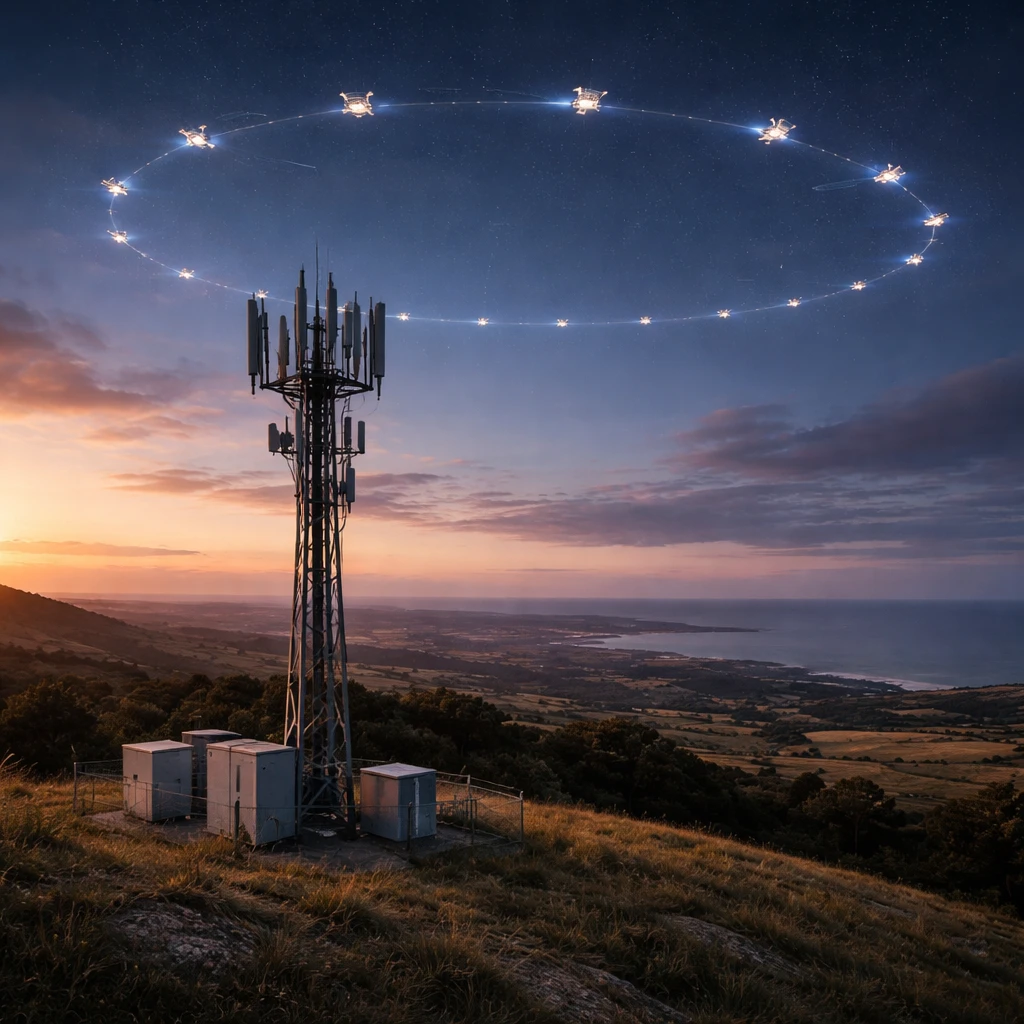
Vodafone Group has entered into an agreement with Amazon Leo to link 4G and 5G mobile sites in remote parts of Europe and Africa using Amazon’s low Earth orbit (LEO) satellite broadband network. The arrangement will enable Vodafone to connect mobile base stations without the need to install extended fibre-based or fixed wireless connections back to its core network.
According to the terms of the partnership, Amazon Leo will provide satellite-based backhaul that supports download speeds up to 1 Gbps and upload speeds up to 400 Mbps. Built on a constellation described as numbering in the thousands of satellites, Amazon Leo offers high-speed cell site backhaul intended to help telecommunications providers expand network infrastructure where ground links are impractical.
Initially, Vodafone will use the service to connect mobile sites back to its core networks in Germany and other European countries. The companies said the capability will later be extended across Africa under Vodacom, Vodafone’s regional operator. The partners expect the first mobile sites to be actively connected in 2026.
Vodafone highlighted an additional operational benefit: the satellite link can bolster network resilience for emergency and critical online services in situations where fibre connections feeding mobile masts are broken or affected by flooding. Using satellite connectivity as an alternative backhaul path means sites can stay connected even when terrestrial infrastructure is compromised.
Executives from the companies framed the deal as a step toward broader connectivity. Vodafone Group’s chief executive said the company is looking to space as a means to connect more base stations to its core network and to strengthen resilience in challenging environments. Amazon Devices & Services’ senior vice president described the partnership with Vodafone and Vodacom as an important step toward connecting millions more people across Europe and Africa. Vodacom’s chief executive said the collaboration will allow the operator to deploy mobile connectivity in isolated areas and extend its reach to more customers across the continent.
The agreement also supports Vodafone’s objective of expanding 5G services across Europe and aligns with Vodacom’s Vision 2030 targets, which include reaching 260 million customers, expanding financial services and raising smartphone penetration to 75% by 2030. Amazon Leo has more than 200 satellites already in orbit, with hundreds more built and ready for launch. The service entered a preview phase for enterprise customers in November 2025. Vodafone currently serves over 360 million mobile and broadband customers and operates networks in 15 countries.
Summary
Vodafone and Amazon Leo will use LEO satellite broadband to provide backhaul for 4G and 5G mobile sites in remote locations, avoiding the need for long terrestrial links and improving resilience for critical services. Initial deployments will target Germany and other European countries, with a wider rollout across Africa through Vodacom and the first sites expected to come online in 2026.
Key points
- Amazon Leo will deliver satellite backhaul capable of up to 1 Gbps download and 400 Mbps upload to connect mobile base stations where terrestrial links are impractical - impacting telecom infrastructure and network operators.
- Vodafone will deploy the service in Germany and other European markets first, then extend availability across Africa via Vodacom - relevant to regional telecom markets and mobile services demand.
- The satellite link is meant to boost resilience for emergency and critical online services should fibre links be broken or disrupted by events such as flooding - relevant to public safety communications and critical infrastructure.
Risks and uncertainties
- Execution timeline: the companies expect the first mobile sites to be connected in 2026, which is an anticipated date rather than a guarantee and could affect rollout planning for operators and suppliers in the telecom sector.
- Operational dependence on satellite capacity and deployment: while the service is designed to provide resilient backhaul, the success of the approach depends on the availability and performance of Amazon Leo’s constellation - a consideration for network reliability and service providers.
- Vulnerability of terrestrial links: the stated benefit includes resilience where fibre links are broken or impacted by flooding, underscoring existing risks to ground infrastructure that remain relevant for mobile operators and emergency services.
This report is based solely on the companies' announced agreement and the details provided by the parties.