
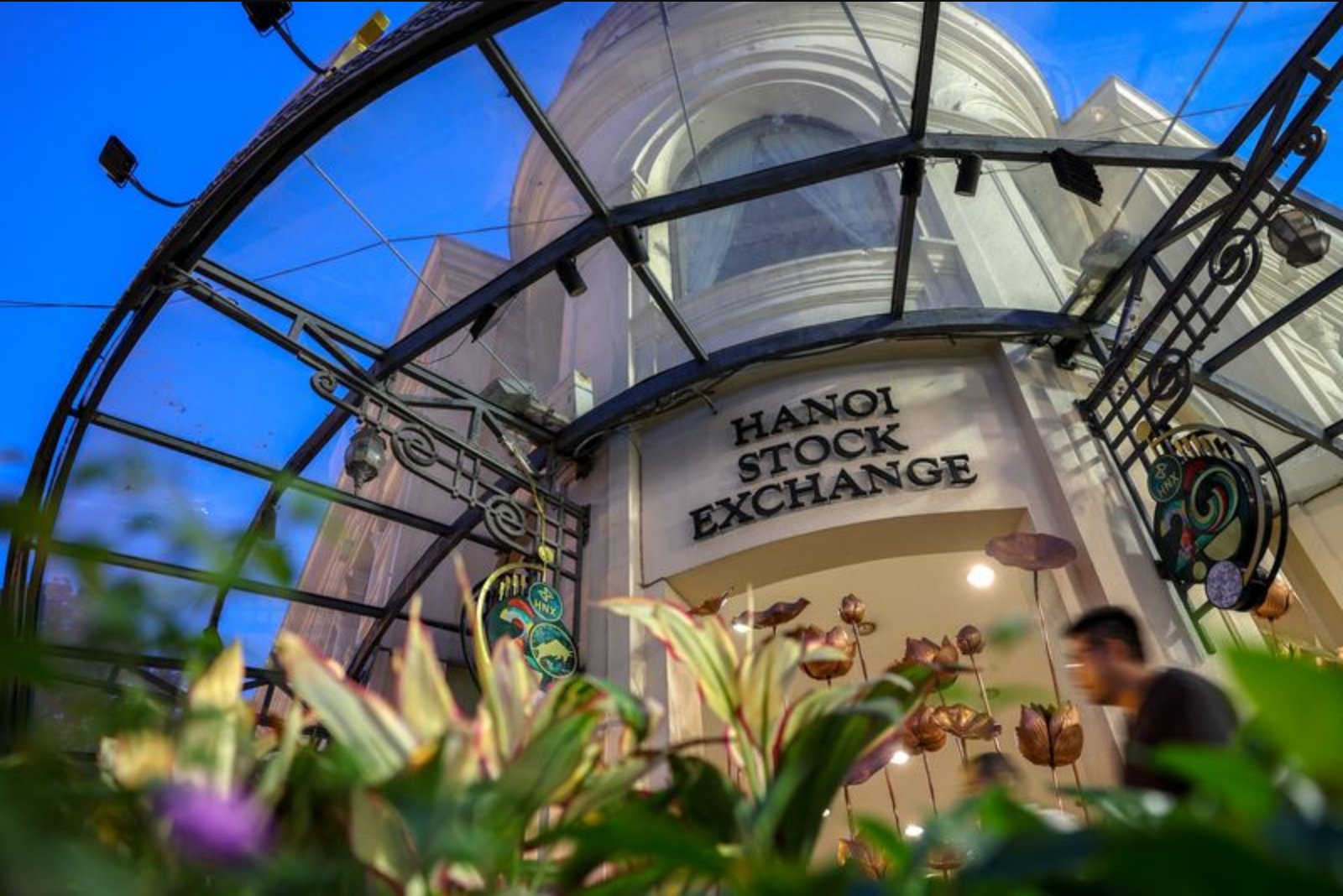
Vietnam’s stock market posted one of its most dramatic rallies in recent memory in 2025, but international investors have been moving money out even as index providers consider upgrading the market’s classification.
The country’s benchmark index rose 41% in 2025, its largest annual increase in eight years, at the same time the economy expanded by 8%. That performance has prompted FTSE Russell to signal an impending reclassification of Vietnam from frontier to secondary emerging market status, with the change likely to take effect in September if confirmed. FTSE’s formal review of regulatory progress could provide confirmation in March or April. Separately, MSCI could place Vietnam on a watchlist, a step J.P. Morgan has said might occur as early as June, although MSCI is not expected to complete an upgrade before the end of the decade.
Despite those prospective milestones, foreign investors have been net sellers. LSEG data show net equity outflows reached a record $5.1 billion in 2025 and continued into January and February. Government figures indicate foreigners now own roughly 14.5% of shares outstanding in a market valued at about $332 billion.
Asset managers and brokers contacted by market participants point to several deterrents. Concerns over exposure to shifting U.S. trade policy have made some institutions cautious. "Foreign investors were cautious on Vietnam heading into the Trump presidency due to concerns around potential tariffs," said Sean Taylor, chief investment officer at Matthews Asia.
Investors also point to structural frictions that complicate adding Vietnamese equities to global portfolios: limits on foreign ownership, tighter liquidity compared with other markets in the region, and a market structure dominated by a small set of names. Those constraints can push locally listed shares to trade at 20% to 30% premiums for international buyers because of caps on foreign holdings, reducing the appeal of moving quickly into the market.
Liquidity challenges were laid bare at London-listed Vietnam Enterprise Investments Limited, the flagship closed-end fund managed by Dragon Capital. Facing a rush of redemptions, more than two-thirds of shareholders voted to participate in a tender offer to cash out some holdings. The fund has historically traded at a discount to its net asset value, reflecting the illiquidity of the domestic market and the difficulty some international investors face in exiting positions. The fund’s investor base includes the Gates Foundation Trust and hedge fund manager Boaz Weinstein.
Vietnam’s market regulator told Reuters that "several of the world’s largest global investment institutions ... have actively prepared to invest in Vietnam," but did not identify specific firms.
Index concentration and a single-stock phenomenon
The market rally has made an imbalanced benchmark even more concentrated. Banks and property developers already represented large shares of the index, but Vingroup became the dominant force in 2025 after its stock climbed 736% over the year. Vingroup, Vietnam’s largest company by market value, and its subsidiaries now account for more than 20% of the benchmark.
For funds that prioritize diversification and liquidity, the weight of Vingroup complicates portfolio construction. "For foreign funds that care about diversification and liquidity, that makes it harder to add exposure without taking on too much single-stock risk," said Tran Thi Mong Tuyen, a researcher at the Pacific Forum.
Vingroup’s rise was fueled in part by government support and overtures from the ruling Communist Party promising "preferential policies" for private domestic firms. The group, founded in 1993 by Pham Nhat Vuong, who earlier built his first fortune selling instant noodles in Ukraine, has expanded from residential real estate into a broad conglomerate that includes railways, steel, energy, entertainment and space ventures.
Vingroup’s stock performance last year was a central driver of the broader market. Company filings and public comments show its net profit doubled year-on-year in 2025. Yet the scale of the share-price move has pushed valuation metrics to levels many fundamental investors find hard to reconcile with underlying cash-flow timing. The group’s price-to-earnings multiple sits near 96, a level that, in the view of some managers, is difficult to justify given uncertainties about the timing of future cash flows from its multiple projects.
"That valuation is quite challenging for a fundamental investor like ourselves to get comfortable with at the present moment, when there remain significant uncertainties about the timing of the future cash flows from the many projects it is involved with," said Craig Martin, chairman of Dynam Capital, which manages a London-listed Vietnam fund.
Some brokers and fund managers either advised clients against buying Vingroup stock or declined to comment publicly, with a number citing concerns about potential reprisals. The company’s expansion includes VinFast, an electric vehicle unit floated on the Nasdaq in 2023 that was loss-making at the time of that listing.
Access reforms and investor workarounds
Vietnam has taken steps to ease funding and trading rules, facilitating somewhat easier access for international investors and advancing regulatory changes that underpin the FTSE review. Nonetheless, many global managers are adopting indirect approaches to capture Vietnamese growth, buying companies listed outside Vietnam that do substantial business in the country rather than local listings themselves.
Market participants say that while prices of locally listed firms sometimes trade at premiums for international buyers — because of foreign-ownership restrictions — this does not yet justify a broad rush of new money into Vietnam’s onshore markets for many institutions. "A lot of managers have mentioned stocks have potential, but the liquidity needs to be there," said Hunter Beaudoin from research firm Morningstar. "Foreign ownership limits are creating some constraints."
Fund flows, market mechanics and investor sentiment
The swing in investor flows juxtaposes a clear growth story for the economy with persistent structural frictions in the equity market. Flows of overseas capital can help lower funding costs for Vietnamese companies and support economic growth and the currency, but net outflows in 2025 and into early 2026 have left foreign participation subdued relative to the market’s overall size.
Vietnam’s recent market performance has attracted attention and will be closely watched as FTSE’s review approaches and as any potential MSCI watchlist move draws scrutiny. Yet until the market’s structural issues - including ownership caps, liquidity constraints and index concentration around a single, highly valued stock - are resolved or mitigated in investors’ views, many global allocators are likely to proceed cautiously.
Supplementary note
For individual investors evaluating whether to buy Vingroup stock on local exchanges, automated tools and screening platforms are available that analyze multiples of companies including VIC. One such platform, ProPicks AI, states it evaluates VIC alongside thousands of other names using more than 100 financial metrics and applies machine learning to rank ideas based on fundamentals, momentum and valuation. The platform cites previous successful picks such as Super Micro Computer (+185%) and AppLovin (+157%), while emphasizing its model-driven, data-based approach. The service offers users the ability to see whether VIC appears in its strategies compared with alternatives.