
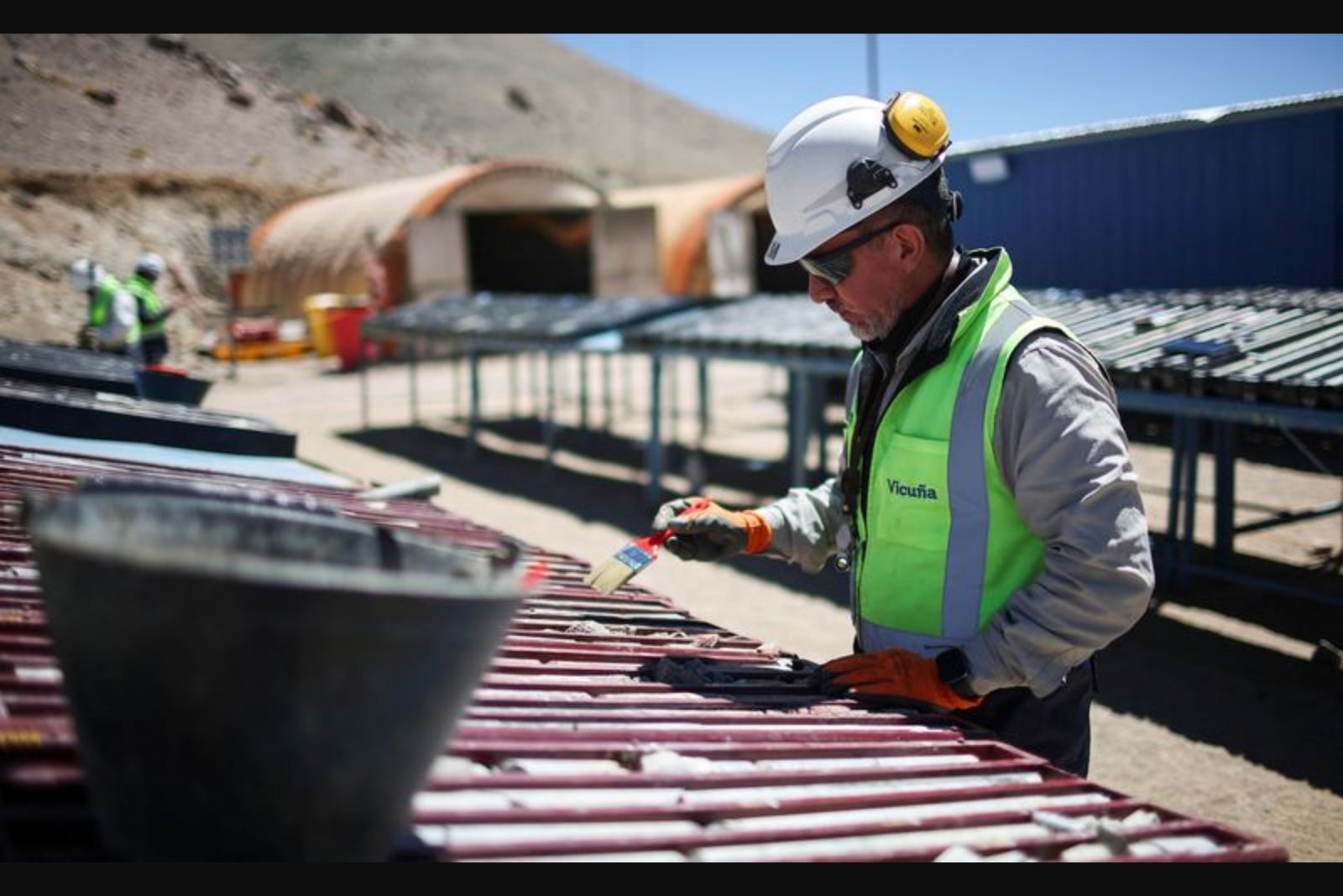
High in the Andes, more than 4,200 meters above sea level on the Argentina-Chile border, Vicuña Corp. is preparing to scale up spending on two of the largest copper opportunities currently being developed, company officials said during a visit to the Batidero camp.
Vicuña Corp. - the joint venture formed by Australia’s BHP and Canada’s Lundin Mining - could invest about $800 million this year in the Filo del Sol and Josemaría projects, according to communications director Caterina Dzugala. She said the company invested almost $400 million in 2025 and "we aspire to double that figure this year."
The two deposits make up what the company calls the Vicuña District, described by Vicuña as one of the world’s largest undeveloped concentrations of copper, gold and silver. Vicuña has estimated total capital spending for the district at $5 billion, while local officials and industry sources have placed potential costs as high as $15 billion. The company declined to confirm a final cumulative figure ahead of an integrated technical report due later in the first quarter.
On a clear summer afternoon in February, work at the Batidero operational base illustrated the logistical and human challenges of building an operation at such altitude. The camp, situated on a stark landscape inhabited by foxes and free-roaming vicuñas, is self-contained and built to house more than 1,000 workers. Visitors to the site must undergo medical screenings before traveling there, reflecting the thin air and risk of sudden weather shifts at those elevations.
Geologists at the site were seen sorting freshly extracted samples as crews pushed equipment and personnel along rough mountain roads toward the camp. Vicuña expects the projects to begin production in 2030, with both mines sending concentrate to a central processing plant at Josemaría. That plant is estimated to have a 25-year operating life.
Argentina has not been a copper producer since the Alumbrera mine closed in 2018. The country is seeking to re-enter the global copper market as governments and automakers warn of looming shortages of the metal that is critical to electrification.
Argentina’s policy environment is also shifting as President Javier Milei pursues incentives aimed at drawing foreign capital into mining. Vicuña has applied to be included in the government’s Large Investment Incentive Regime (RIGI), which provides tax and legal benefits to qualifying major export projects.
The company’s resource statements indicate the deposits contain 13 million metric tons of measured copper and 25 million metric tons inferred, along with substantial gold and silver. For Vicuña’s geology manager, Juan Arrieta, the district’s potential remains a core attraction. "The Filo del Sol area is four times larger than that of Josemaría," Arrieta said, adding that the district "has been described as the greatest discovery of the last 30 years worldwide in terms of resources."
Despite the scale of the resources, significant technical and infrastructure hurdles remain. Building roads and extending power lines in the high Andes pose major engineering and financing questions, and there is ongoing debate about whether those burdens should be carried by the state or by private companies involved in the development.
Separately, readers interested in BHP as an investment were invited to consider a model promoted alongside the reporting. The piece referenced a service called ProPicks AI, which evaluates companies each month using more than 100 financial metrics and generates stock ideas. The model is described as systematizing fundamentals, momentum and valuation to identify potential opportunities; the promotional text cited past winners including Super Micro Computer (+185%) and AppLovin (+157%). The AI-based offering claims to be unbiased and to screen for attractive risk-reward profiles among thousands of stocks, and it suggests users check whether BHP appears in any of its strategies or whether there are alternative opportunities in the same sector.
Key points
- Vicuña Corp., a joint venture of BHP and Lundin Mining, could invest about $800 million this year in the Filo del Sol and Josemaría projects - roughly double 2025 spending.
- The Filo del Sol and Josemaría mines form the Vicuña District, which the company values at $5 billion while some local sources estimate costs up to $15 billion; an integrated technical report is due later in the first quarter.
- The projects are expected to begin production in 2030 and feed a central Josemaría plant with an estimated 25-year life, as Argentina seeks to rejoin the copper market it left after Alumbrera closed in 2018.
Risks and uncertainties
- Final capital requirements remain unclear - Vicuña estimates $5 billion while other local and industry sources suggest up to $15 billion, and the company has not confirmed a total pending its integrated technical report. This affects project financing and mining sector investment flows.
- Infrastructure challenges - building mountain roads and extending power lines at more than 4,200 meters elevation present logistical, engineering and cost risks for the projects and could shift burdens between public and private sectors, impacting construction and energy markets.
- High-altitude operational constraints - thin air, sudden weather changes and necessary medical screenings illustrate health and safety constraints that can slow development and raise operating costs in the mining sector.