
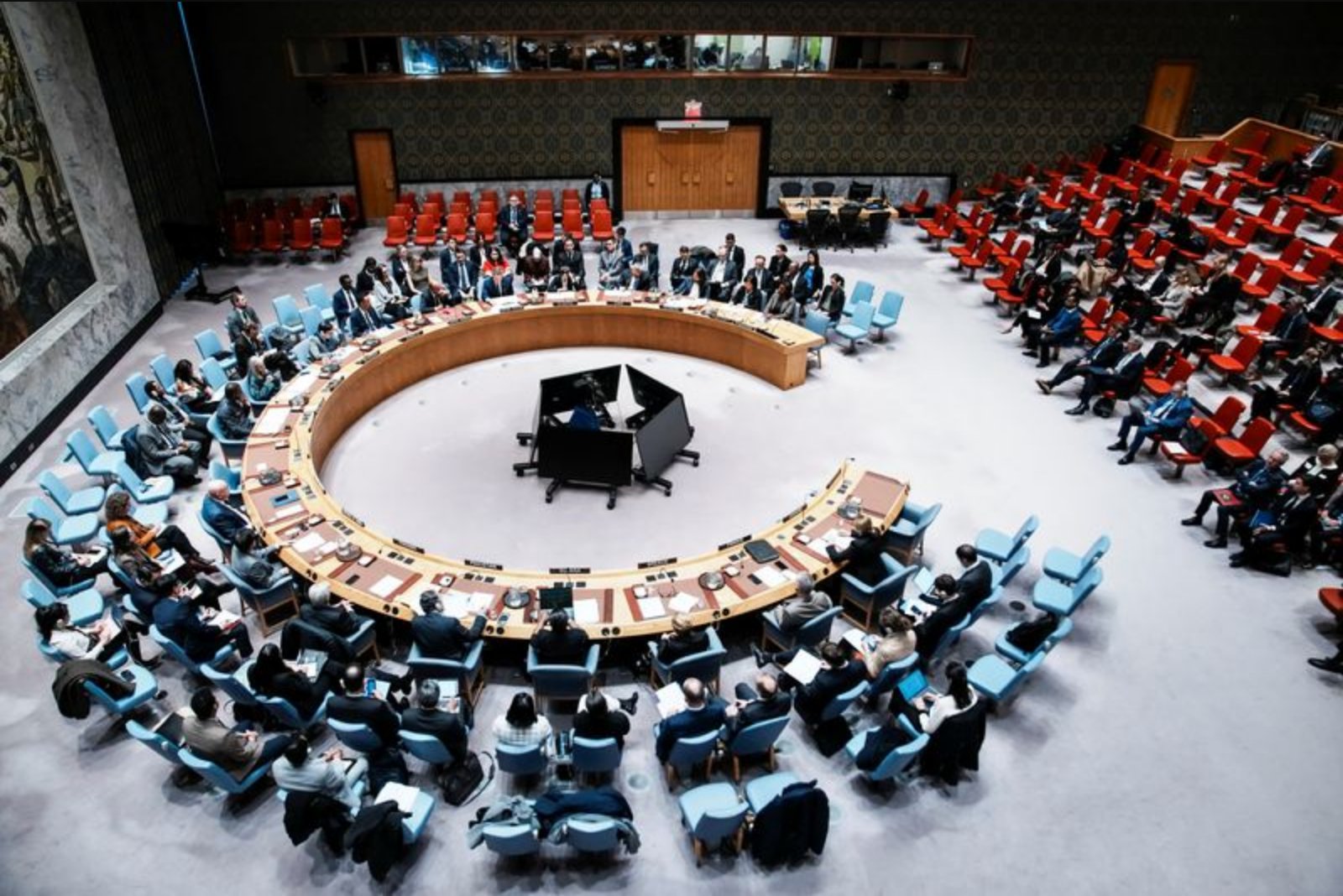
The United States plans to make an initial payment toward the multibillion-dollar arrears it owes the United Nations within a matter of weeks, the U.S. ambassador to the U.N. told Reuters, underscoring Washington's insistence that the world body also pursue additional reforms.
The envoy spoke by telephone after U.N. Secretary-General Antonio Guterres sounded the alarm about the organization’s finances in a January 28 letter to member states, warning that the 193-country body faces the prospect of "imminent financial collapse" as unpaid fees have mounted, with the United States responsible for the majority of those shortfalls.
"You’ll certainly see an initial tranche of money very shortly," the ambassador said. "It’ll be a significant ... down payment on our annual dues ... I don’t believe that the ultimate figure is decided, but it’ll be in a matter of weeks."
U.N. figures cited by the envoy and officials show that more than 95 percent of what is owed to the regular U.N. budget is attributable to the United States - totaling $2.19 billion by the start of February. In addition to that regular-budget shortfall, the United States is recorded as owing roughly $2.4 billion for current and past peacekeeping missions and $43.6 million for U.N. tribunals.
On December 30, the U.N. General Assembly approved a $3.45 billion regular budget for 2026 after protracted negotiations. That budget underpins the organization’s day-to-day operations worldwide - from maintaining offices and headquarters, to staff salaries, meetings and its development and human rights activities.
The U.N. funding crunch has unfolded amid a broader rollback of U.S. engagement with multilateral institutions under President Donald Trump, a period during which American arrears to the United Nations rose substantially. U.N. officials note that the United States did not contribute to the regular budget last year and carries a $827 million unpaid amount for that period, along with $767 million assessed for 2026.
Earlier this week, President Trump signed a congressional spending bill that includes $3.1 billion for U.S. dues to the U.N. and other international organizations. When asked whether the anticipated U.S. payment would be applied to last year’s outstanding assessments, the 2026 obligations, or both, the ambassador responded that it would be applied "just in general, towards the arrears, and also in recognition of some of the reforms that we’ve seen."
Beyond mandatory assessments, the United States has also sharply reduced voluntary contributions to U.N. agencies that run their own budgets, and it has moved to withdraw from certain organizations, including the World Health Organization. These shifts have compounded the broader budgetary stresses at the world body.
On reforms, the ambassador said the U.S. government strongly supports Secretary-General Guterres’ "UN80" initiative as an initial step toward streamlining the organization, while urging deeper measures. "It doesn’t go far enough, but it’s an important step. I wish the secretary-general had made it in year one or two of his tenure, not year nine," he said.
He framed the U.S. posture as focusing on core functions. "We’re very focused ... on getting back to basics, on peace and security. And ... the president is rightly asking, how can we get the UN back to realizing its full potential?" the ambassador added. "All of those conversations are currently being had and are in play, and we expect to see more reforms coming."
Describing the approach as "some tough love," the envoy emphasized that the existing model is unsustainable for many member states and called for a return to a narrower, more mission-focused U.N. He cited duplication across agencies as an area ripe for consolidation, noting an example in which seven U.N. agencies list climate change as a primary mission. "Now, regardless of the climate change debate, we don’t need seven," he said, also voicing support for consolidation of logistics and back-office functions at humanitarian agencies to drive efficiency.
Guterres introduced UN80 reforms last year with the stated aim of cutting costs and improving efficiency. The regular 2026 budget that member states approved is roughly $200 million higher than the secretary-general had proposed, but still about 7 percent lower than the approved 2025 budget.
Guterres has warned that the U.N. could exhaust its cash reserves by July and pointed to what he described as a "Kafkaesque" accounting rule that requires the U.N. to credit back hundreds of millions of dollars in unspent dues to member states annually, even when the organization never actually received those funds. The U.S. ambassador said member states should revisit that rule.
On peacekeeping arrears, the envoy offered a technical explanation, saying some of the U.S. shortfall stems from a "statutory disconnect" between the level at which the U.N. assesses peacekeeping costs and the limits set by U.S. law on what the United States can legally pay. He said that mismatch "will be addressed the next time we negotiate our assessments, which I believe is next year."
As the U.S. prepares to dispatch an initial payment, the conversation in and around the United Nations is likely to remain anchored on two themes: liquidity and reform. Officials inside the organization have set out a near-term cash problem, while Washington has tied relief to a push for structural change and reduced duplication. How those competing pressures are reconciled in coming weeks and months will determine both the U.N.’s short-term solvency and its medium-term operating model.