
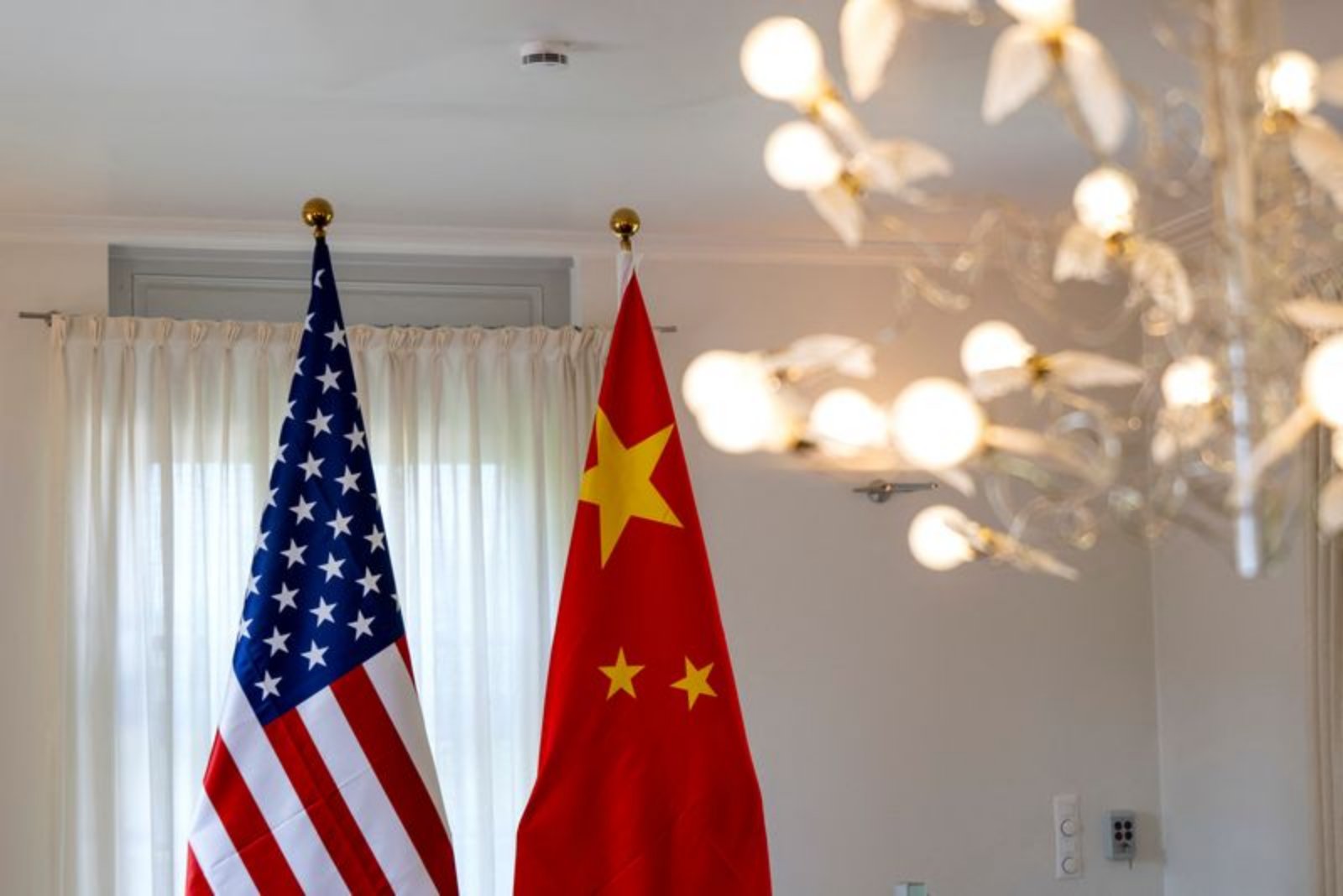
Washington - In the run-up to a planned April meeting between the presidents of the United States and China, U.S. officials have put on hold a number of technology-related restrictions and proposed bans that had been intended to limit Beijing's foothold in strategically sensitive sectors.
According to multiple people with direct knowledge of the deliberations who spoke on condition of anonymity, the range of measures now paused includes an existing ban on China Telecom's operations inside the United States and proposed restrictions on sales of Chinese-made equipment intended for U.S. data centers. The decisions also extend to draft bans on the domestic sale of routers produced by TP-Link and potential restrictions on the U.S. internet businesses of China Unicom and China Mobile. Another measure that has been set aside would have barred imports and sales of Chinese electric trucks and buses in U.S. markets.
Those officials said these steps, which have not been previously disclosed, reflect a broader move within the administration to temper actions that might provoke Beijing while leaders prepare for high-level diplomacy. The people described the shifts as part of a wider de-escalation that followed a meeting in October between the two presidents, at which the sides agreed a trade truce. At that October meeting, China also pledged to delay implementing painful export curbs on rare-earth minerals that are essential inputs for many technology supply chains worldwide, the officials said.
The Commerce Department defended its posture in a statement, saying it is actively using the authorities available to it to "address national security risks from foreign technology, and we will continue to do so." The department did not provide further detail on the paused measures or on the internal process that led to holding them.
Supporters of the decision argue that tempering aggressive regulatory actions may help defuse trade friction in the run-up to senior-level meetings. But critics counter that the moves increase U.S. vulnerability in several technology areas at a time when demand and construction of critical infrastructure are accelerating.
"At a moment when we are desperately trying to remove ourselves from Beijing's leverage over rare-earth supply chains, it is ironic that we're actually letting Beijing acquire new areas of leverage over the U.S. economy - in telecoms infrastructure, in data centers and AI, and EVs," said Matt Pottinger, who served as deputy national security advisor during the president's first term.
The Chinese Embassy, for its part, said Beijing opposes "turning trade and technological issues into political weapons" and welcomed cooperation with the United States that could make 2026 "a year where our two major countries advance toward mutual respect, peaceful coexistence, and win-win cooperation."
TP-Link Systems Inc., which officials noted was spun off from a Chinese firm and now operates from California, described itself as an independently owned American company with U.S.-managed software, U.S.-hosted data, and security practices aligned with U.S. industry standards. The company said any suggestion that it is subject to foreign control or poses a national security risk is "categorically false."
Officials did not say why the White House or China’s state-owned telecom companies - China Telecom, China Mobile and China Unicom - had not responded to queries about the paused measures. Sources familiar with the matter cited expectation that all sides sought to avoid moves that would complicate the upcoming summit diplomacy. The president is scheduled to visit Beijing in April, and he has extended an invitation for China's leader to travel to the United States later in the year.
According to the officials, the suite of measures now being deferred were crafted to prevent Beijing from gaining access to sensitive American data that could be used for coercion or intellectual property misappropriation, and to keep Chinese systems from being embedded deep within internet-connected networks in a manner that could enable sabotage of critical infrastructure.
Over much of the past year, Commerce Department undersecretary Jeffrey Kessler repeatedly delayed advancing these measures, citing the need to secure buy-in from both the White House and Commerce Secretary Howard Lutnick, the people said. The Commerce Department and Kessler did not respond to requests for comment on those accounts.
After the October trade truce was reached, department leadership reportedly instructed the staff responsible for policing foreign technology threats to pivot their focus toward Iran and Russia, according to two of the people. Those sources noted that Iran is not generally considered to pose a technology threat on the same scale as China or Russia. The Commerce Department declined to comment on the reported change in focus.
Last month, the department removed the senior official charged with leading the office in question. That official will be replaced by Katelyn Christ, a political appointee with prior experience at the same office, according to two people briefed on staffing. One source said Christ could restore some of the held measures if bilateral relations deteriorate after the April summit. The new appointee and the Commerce Department did not comment when asked about the staffing change or her potential policy priorities.
Those pressing for immediate action argue there is urgency. U.S. data center capacity is projected to expand sharply as AI-driven demand accelerates - a growth trajectory that a commercial real estate firm estimated at nearly 120% by 2030. Critics warn that allowing Chinese-linked hardware or software into these facilities heightens strategic risk.
David Feith, who served in earlier administrations, warned that Chinese-connected hardware in American data centers represents a mounting national security concern. He urged steps to mitigate the risk, saying American facilities could otherwise become what he described as "remotely controlled islands of Chinese digital sovereignty," with the U.S. unintentionally building strategic vulnerabilities into its AI and energy backbone.
Wendy Cutler, formerly an acting deputy U.S. trade representative and now with a policy institute focused on Asia, said it is understandable that the administration would pause punitive tech measures while pursuing stabilization with Beijing. She noted that China has signaled that its idea of stabilization includes no further export controls or other restrictive technology policies, and that such a stance is particularly salient as leaders prepare to meet in April. "Not only does it have leverage, it is willing to use it. It ties the president's hands," she said, referring to the potential Chinese use of rare-earth export restrictions.
Two people familiar with TP-Link's interactions with regulators said the company contacted the Commerce Department last year with proposals to mitigate national security concerns. That engagement, the sources said, helped clear the way for a narrower regulatory approach to the company's U.S. router sales.
In response to inquiries about potential restrictions aimed at its products, the company said its routers are not uniquely targeted for cyberattacks and that its code has undergone rigorous testing by U.S.-based experts to prevent any covert methods to bypass security controls. TP-Link also said it has fully cooperated with the Commerce Department and does not discuss the specifics of government investigations.
As officials balance near-term diplomatic objectives with longer-term strategic concerns, the administration's decision to pause several measures underscores the tension between using regulatory tools to protect national security and pursuing stabilization in bilateral relations. Whether the held measures are permanently shelved or reactivated will depend, the sources say, on how the two countries' leaders manage their talks and on subsequent shifts in bilateral trust and strategic calculation.