
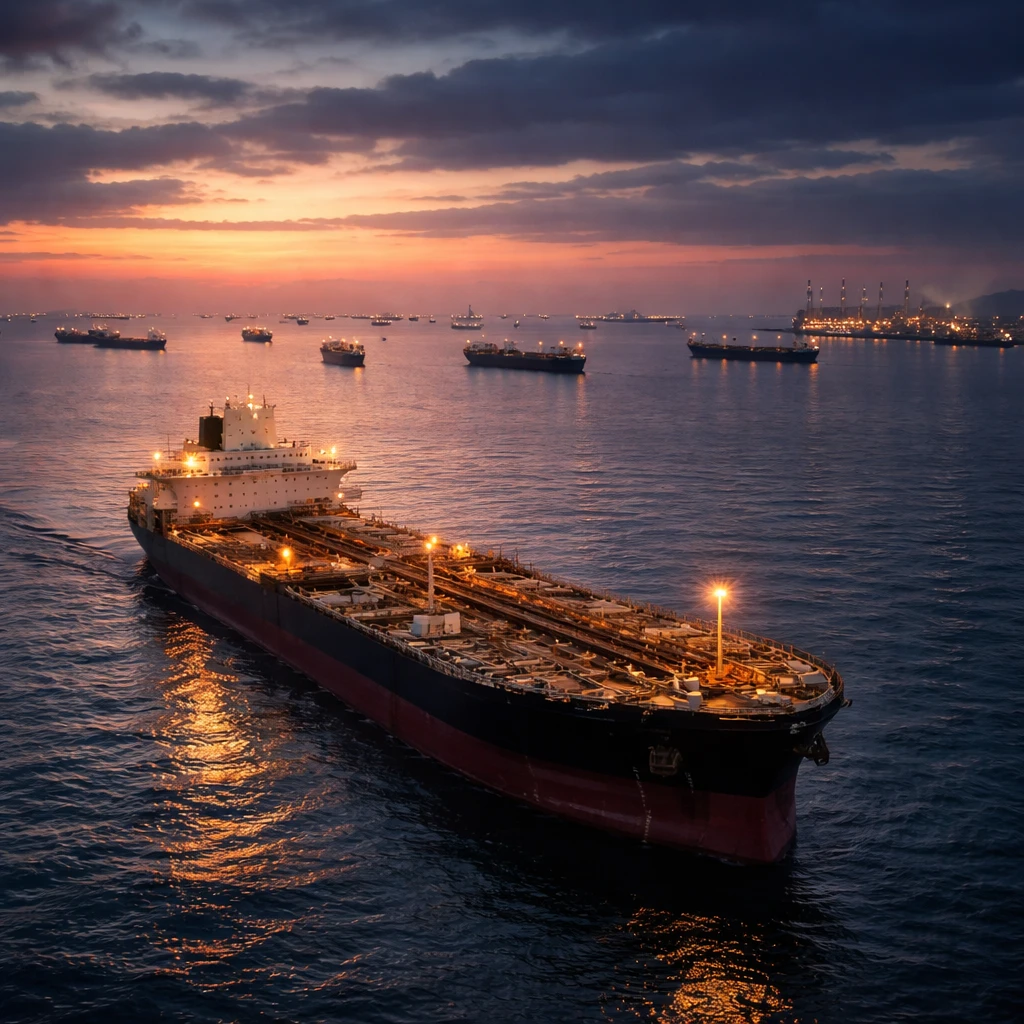
Treasury Secretary Scott Bessent said Thursday that U.S. officials are considering letting sanctioned Iranian oil that is presently stored on vessels enter the market as a tool to counter upward pressure on crude prices. Speaking on Fox Business's Mornings with Maria, Bessent put the volume of such oil at roughly 130 million barrels - crude that is currently located on water, he said, and which could be tapped to add supply.
Bessent noted that, despite ongoing tensions, the United States has allowed Iranian oil to continue flowing out of the Gulf. He described the option of permitting the oil on ships to come ashore as part of an effort to keep prices down, linking the measure directly to the goal of managing rising crude costs.
The comments arrived as benchmark Brent futures climbed above $119 a barrel on Thursday, a move Bessent connected to recent regional hostilities. He said Iran had struck energy facilities across the Middle East after an Israeli strike on Iran's South Pars gas field, and described the previous evening as the largest night of strikes on Iran. At the same time, he emphasized the United States was not conducting attacks on Iranian energy infrastructure.
Bessent characterized the Strait of Hormuz as a temporary chokepoint in the regional supply chain. In addition to the potential use of oil currently on vessels, he said the administration could carry out a unilateral release of oil reserves as part of its intervention toolbox. He was careful to distinguish those actions from market manipulation, stating the administration was not intervening in oil futures markets but rather creating physical supply by utilizing oil on water.
Taken together, the options Bessent outlined - permitting sanctioned cargoes to be marketed and releasing reserve barrels unilaterally - were presented as supply-side measures aimed at alleviating price spikes. He framed the initiatives as operational steps to increase available crude without engaging directly in derivatives markets.