
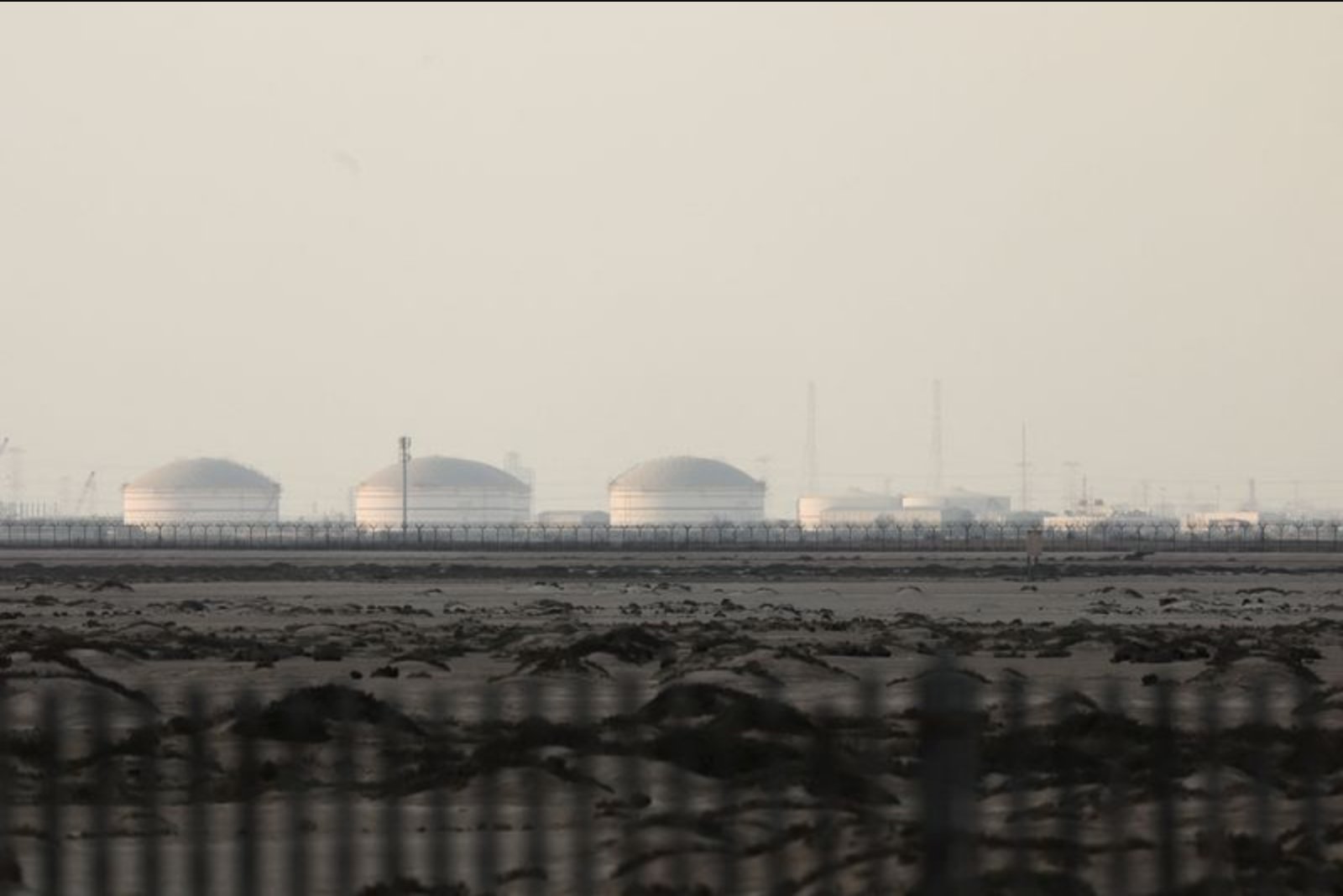
Global buyers facing the sudden loss of roughly 10 billion cubic feet per day (bcfd) of liquefied natural gas from Qatar confront constrained options in the United States, the world’s largest LNG producer. U.S. export plants convert nearly 19 bcfd of pipeline gas into LNG, according to LSEG data, but most facilities are already running at or near full capacity and much of that output is committed under long-term supply contracts.
Industry analysts and independent calculations point to a tight short-term supply picture. "There is no massive capacity on the sidelines," said Alex Munton, director of global gas and LNG at Rapidan Energy Group, highlighting the limited scope for rapid incremental output from U.S. exporters.
Leading U.S. exporter Cheniere Energy, which sold 46 million metric tons of LNG last year, was drawing more than 7 bcfd of feed gas into its two Gulf Coast terminals on the most recent reporting. The company has recently started production from Train 5 of its Stage 3 expansion at Corpus Christi. Train 5 is relatively small, with the capacity to produce 1.5 million tons per year, and is expected to take about a month to reach full output. Most of its expected output is already contracted to customers. Cheniere said it was monitoring developments and will deliver on its customer commitments.
Venture Global represents one of the more flexible U.S. options in the near term because of commissioning volumes from its Plaquemines plant in Louisiana. The company is selling as much as 4 bcfd of those commissioning volumes on the spot market, according to its chief executive. That spot availability gives Venture Global more ability to redirect cargoes if needed, the CEO said during an earnings call. Once fully online, Plaquemines will be capable of producing 35 million tons per year. The project’s approvals have evolved - it was originally approved for 20 million tons per year and later increased to 27.2 million tons - and it awaits final sign-off from the U.S. Department of Energy for additional expansion. If the Department of Energy were to grant that authorization quickly, Venture Global could boost output by up to 800 million cubic feet per day, though that would only cover a small portion of the capacity lost from Qatar. Venture Global declined further comment.
Another near-term source of new liquefaction supply is the Golden Pass LNG project, a joint venture between QatarEnergy and Exxon Mobil. Golden Pass is expected to begin initial production this month. The facility’s first phase, a 6 million ton per annum unit, is expected to require about 800 million cubic feet per day of feed gas when operating for initial shipments.
Analysts at EBW Analytics Group have noted that, with U.S. LNG exports already effectively at maximum capacity, the conflict cannot materially increase physical demand for U.S. gas in the short- to medium-term. That assessment reflects both operational limits and the contractual structure of most U.S. cargoes.
At the global level, energy analysts estimate total gas consumption at roughly 400 bcfd. Around 55 bcfd of that total is traded as LNG, with the United States, Australia and Qatar together accounting for about 60% of global LNG output, according to the International Gas Union. Prior to the production halt, Qatar supplied approximately 10 bcfd to buyers across Europe and Asia; Australia ships about 11 bcfd.
Smaller producers and projects offer only limited scope to make up the difference. LNG Canada has the capacity to produce up to 2 bcfd and was running at about 1.5 bcfd, per LSEG. In the Caribbean, Trinidad and Tobago’s Atlantic LNG can use roughly 1.2 bcfd of gas, though one train is mothballed and another is undergoing repairs. Atlantic was already running near 1 bcfd, leaving only about 200 million cubic feet per day of additional short-term export potential, according to LSEG.
Summing available near-term U.S. additions, calculations indicate that new American production likely to come online soon would be unlikely to exceed 2 bcfd, far short of the gap left by Qatar’s halted supply. Beyond incremental production, buyers in need of replacement volumes would also have to secure transport vessels and bear the cost of rerouting those ships to the other side of the globe.
Energy markets responded quickly to the supply shock. Gas prices jumped on Tuesday, with the Dutch TTF benchmark climbing to a near three-year high around $19 per million British thermal units (mmBtu), while the Japan-Korea Marker reached an eight-month high near $13 per mmBtu. Despite the likely major disruption to LNG flows, maritime data analytics platform Kpler reported no evidence so far of cargo diversions.
What this means for markets and buyers
The current configuration of global LNG supply - heavy concentration among a few large exporters, high utilization of available U.S. liquefaction capacity, and significant proportions of volumes locked into long-term contracts - implies that short-term responses to unexpected outages will be constrained. Incremental flows from commissioning volumes and newly starting plants will provide some relief, but only partially and over a range of timelines. The combined limitations of production, contractual commitments and shipping logistics mean the market will be dependent on a combination of marginal supply additions and demand responses in the near term.