
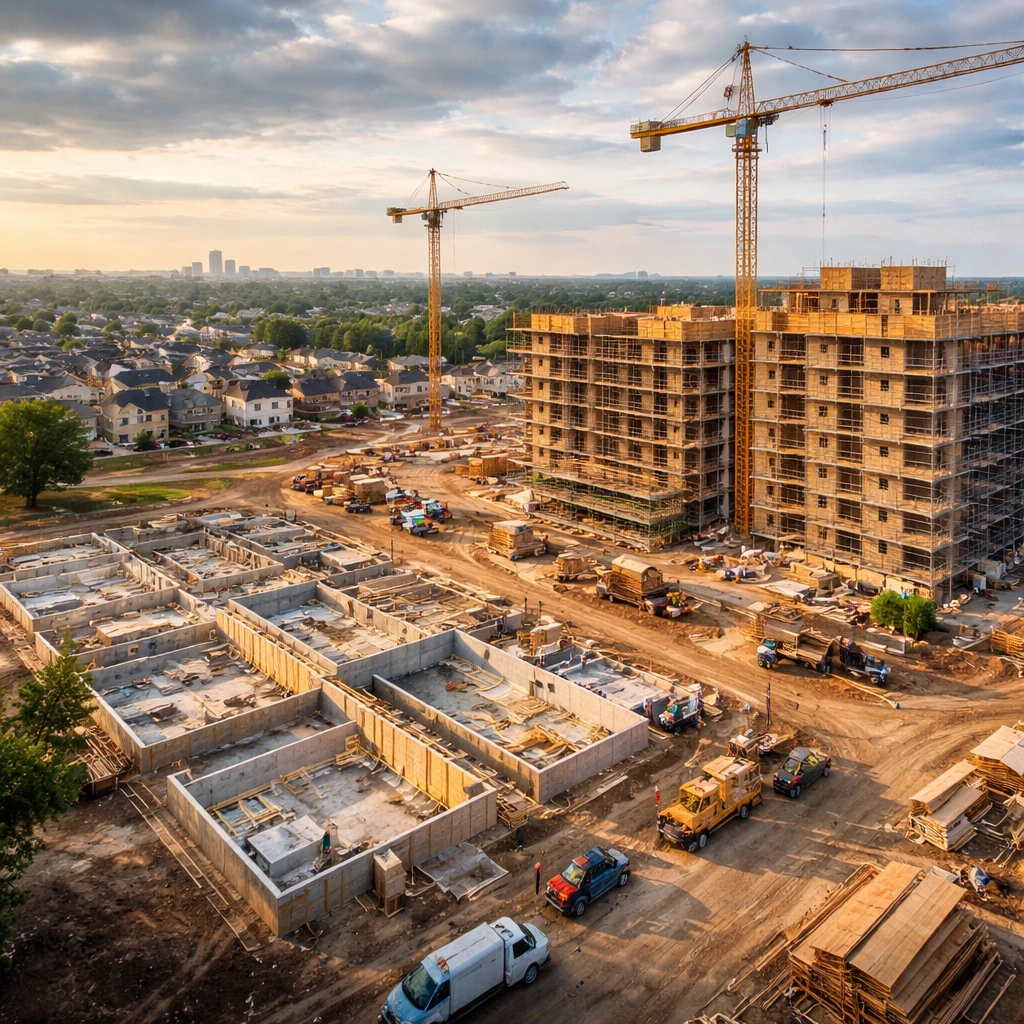
Barclays reported that U.S. housing starts rose 7.2% month-over-month in January to a seasonally adjusted annual rate of 1.487 million units. That outcome surpassed Barclays' internal projection of 1.395 million units and the consensus forecast of 1.341 million units.
The January gain continued a short sequence of increases following December's reading of 1.387 million units, which itself represented a 4.8% month-over-month uptick. The three-month moving average for starts reached 1.399 million units, the highest three-month average since April 2025.
Detailing the composition of activity, Barclays noted that multifamily starts increased in January while single-family starts receded after two consecutive months of growth. Overall, the headline starts series has trended upward since October, a pattern Barclays described as consistent with relatively stronger demand fundamentals in the housing market over the recent period.
Geographic performance was uneven. Starts rose sharply in the Northeast and the South, while the Midwest and the West saw declines. The South was the principal contributor to the national increase, adding 83,000 units in January and accounting for the bulk of the month-over-month gain.
Contrasting with the lift in starts, building permits declined by 5.4% month-over-month in January after a rise in December. Barclays attributed the permit fall primarily to weakness in multifamily permits, accompanied by a more modest drop in single-family permit issuance. The firm highlighted that permits have been on a sustained downward trajectory since the start of 2025 and that this trend extended into the first month of 2026. The three-month moving average for permits fell to 1.406 million units.
Barclays emphasized that permits often provide a more reliable signal of underlying housing trends than starts because permits are based on a larger sample and have leading properties for future construction activity. In that context, the decline in permits suggests caution for the outlook despite the contemporaneous rise in starts.
Other indicators of the construction pipeline showed mixed signals. Units under construction fell for a fourth straight month in January across both single-family and multifamily segments, even though the overall pipeline remains elevated relative to historical norms, particularly for multifamily housing. Meanwhile, housing completions advanced 4.8% month-over-month in January, marking three monthly increases in the past four months.
These data points present a split picture: starts have climbed recently, while permits and the units-under-construction trend point to medium-term moderation, especially in multifamily activity.