
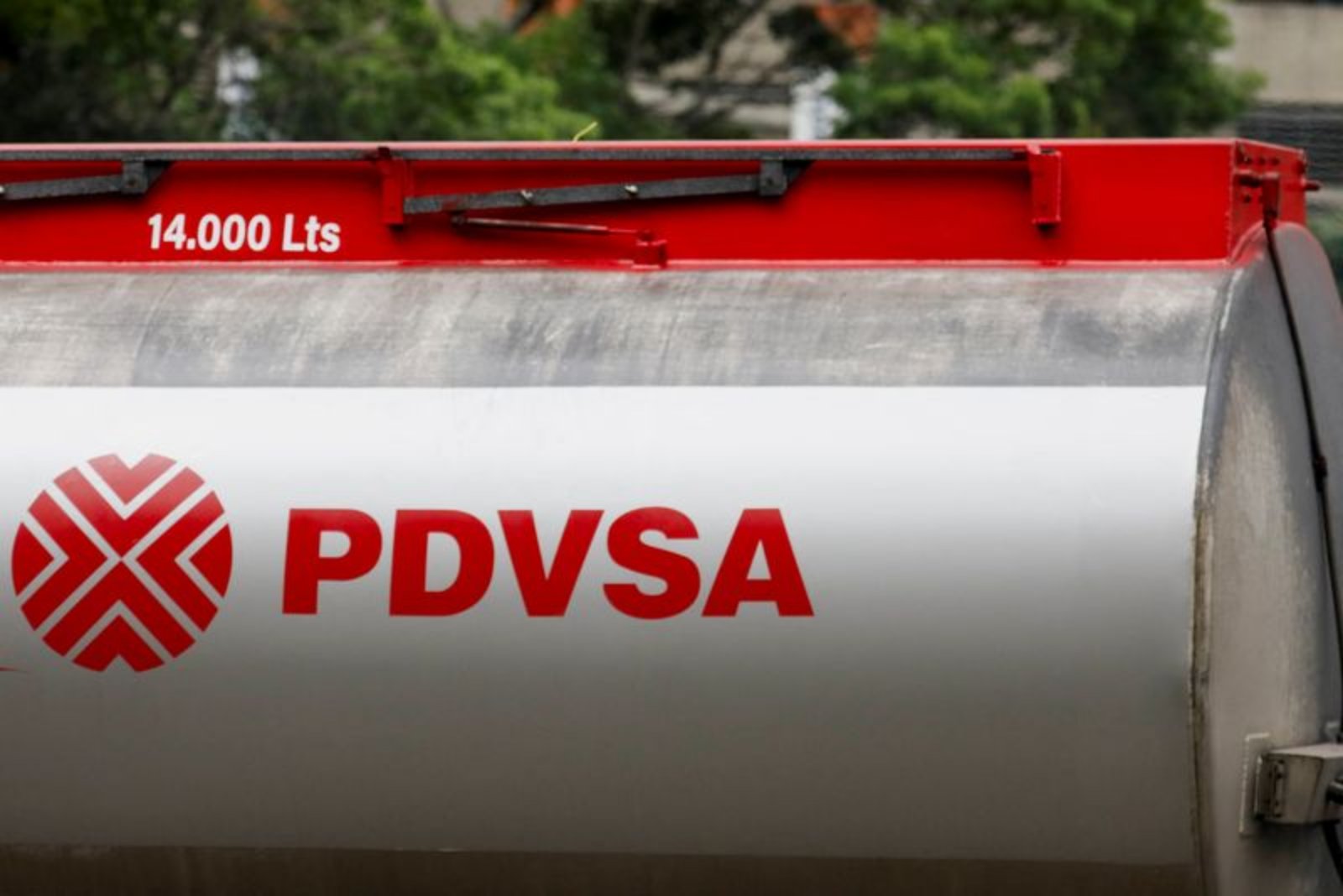
Venezuelan bond valuations strengthened on Wednesday after the U.S. government issued a general license that broadly authorizes U.S. companies to conduct business with the state oil company PDVSA. The policy shift is presented as a waiver to sanctions put in place in 2019 and follows other recent steps by the U.S. administration to ease measures on Venezuela after U.S. forces seized President Nicolas Maduro in January and amid a global rise in oil prices driven by the U.S.-Israeli war with Iran.
Market data from LSEG showed Venezuela's 2031 global bond increased by 1.75 cents to trade at 50.25 cents on the dollar, while PDVSA's 2027 bond rose 1.85 cents to 35.35 cents on the dollar. Traders and portfolio managers interpreted the license as an additional factor encouraging greater investor interest in Venezuelan assets.
Jeff Grills, head of U.S. cross markets and emerging markets debt at Aegon Asset Management, said the licensing move provides investors with another reason to be optimistic about Venezuela. He noted that bond prices had already been inching higher since the outbreak of the Middle East conflict and the accompanying spike in oil prices. According to Grills, the license "opens up further activities, to more players, to more investors."
Importantly, the newly announced waiver does not permit the issuance or trading of new bonds - a critical component of any comprehensive debt restructuring. Instead, it clears the way for foreign firms and investors seeking to participate in Venezuela's energy sector under the lifted restriction.
Market participants have placed some bets that accelerating the rehabilitation of Venezuela's oil infrastructure and restoring government revenues could shorten the path to a debt restructuring. Analysts and traders refer to a potential restructuring that could encompass roughly $150 billion in combined sovereign and PDVSA obligations.
Legal and regulatory perspectives remained cautious. Stephanie Connor, an attorney in the public policy and regulation group at Holland & Knight, said the license could provide operational flexibility for companies already active in Venezuela, but cautioned that it is premature to judge the longer-term value of PDVSA. "(The license) is probably going to give a little bit more flexibility to businesses operating on the ground, but in terms of the longer-term value of PDVSA, I think it’s too soon to tell," she said.
Political and corporate governance developments also unfolded on Tuesday when PDVSA’s board ratified Asdrubal Chavez to lead its U.S. subsidiaries: PDV Holding, Citgo Holding and Citgo Petroleum. That action followed U.S. President Donald Trump’s backing of interim President Delcy Rodriguez’s administration. Before the 2019 sanctions, Chavez had been denied a U.S. visa to run Citgo. Under the current framework, Chavez and his team would require authorization from the U.S. Treasury to assume control of the refiner, whose ownership could potentially change if Washington approves a court-organized auction of parent company PDV Holding.
For now, the license expands the operational options available to foreign investors and service providers in Venezuela’s energy sector while stopping short of enabling new bond issuance - an important caveat for those tracking the timing and structure of any future sovereign or PDVSA debt restructuring.