
U.S. equity futures moved slightly lower on Tuesday, reversing some of Monday’s gains, as an uptick in oil prices linked to developments around Iran kept trading sentiment guarded.
By 07:24 ET (11:24 GMT), the Dow futures contract was down 25 points, or about 0.1%. S&P 500 futures had eased by roughly 5 points, or 0.1%, and Nasdaq 100 futures had retreated around 43 points, or 0.2%.
Stocks on Wall Street had risen on Monday, supported in part by hopes that an international effort might assist U.S. initiatives to reopen the Strait of Hormuz - a strategically important waterway south of Iran that handles about a fifth of the world’s oil shipments. Those hopes were tempered, however, as several U.S. partners offered mixed responses to Washington’s call for assistance.
Britain and France indicated some willingness to discuss options with U.S. officials, while other allies, including Germany and Japan, rebuffed a direct request for help in unblocking the choke point. President Donald Trump had earlier said the United States would not need outside aid to restart tanker traffic, while also stating that "numerous countries" had told him they were on the way to providing help.
Energy markets moved notably higher on Tuesday. By 07:22 ET (11:22 GMT), Brent futures were trading around $103.13 a barrel, a gain of 2.9% on the session, while West Texas Intermediate crude was near $95.84 a barrel, up about 3.6%. Oil prices have surged by more than 40% since the start of the joint U.S.-Israeli bombardments on Iran in late February.
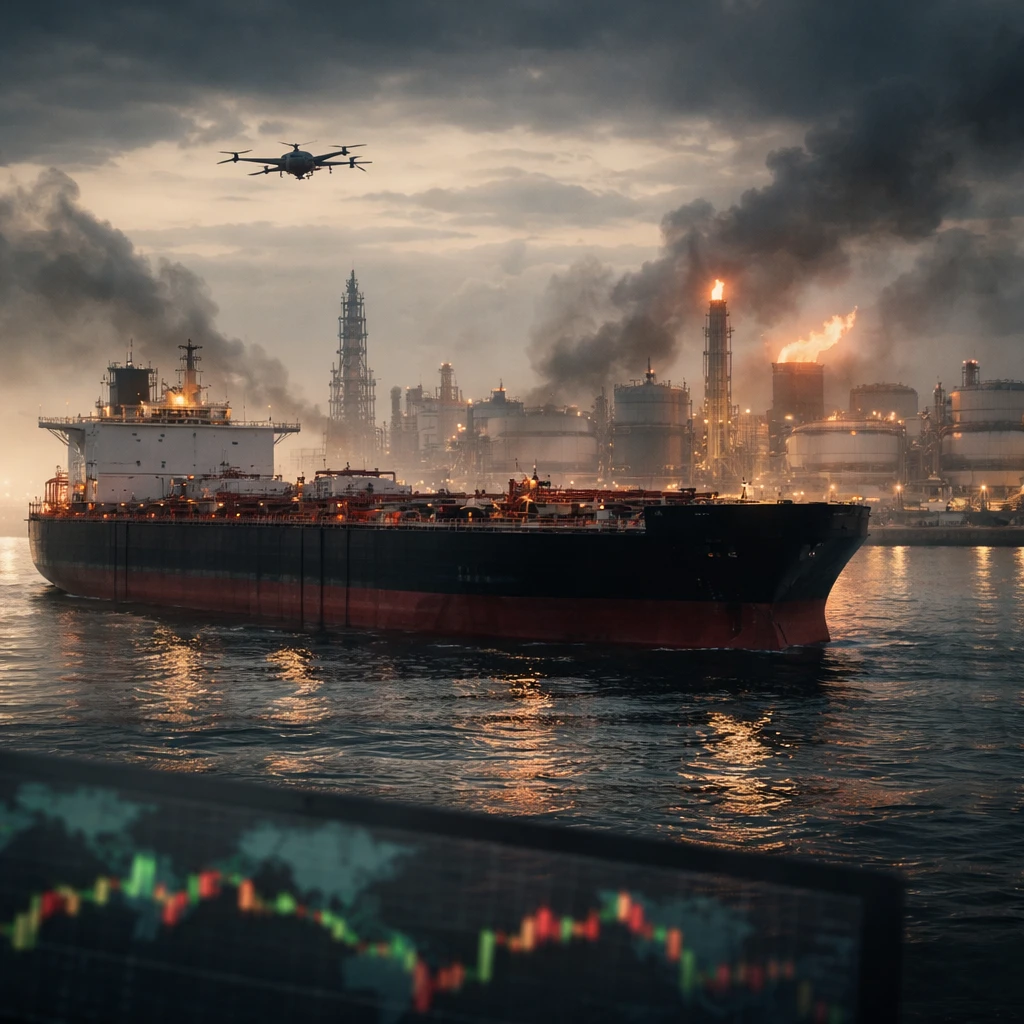
Adding to concerns over shipping and supply, early Tuesday reports said a projectile struck a tanker anchored near a port in the United Arab Emirates. The New York Times, citing the United Kingdom Maritime Trade Operations Center, reported the vessel was near the port of Fujairah at the southern end of the strait and suffered only minor damage.
UAE officials also attributed a fire at a key oil industry hub to a drone, a development that investors viewed as deepening fears over already constrained global supplies. The prospect that the conflict could extend or escalate has driven worries about an energy shock that would feed into higher global inflation.
Those inflation concerns have already affected corporate pricing decisions. Ed Bastian, chief executive of Delta Air Lines, told CNBC that the carrier had increased some ticket prices to offset fuel costs that have doubled since the start of the first quarter. Despite higher fuel costs, Delta’s shares rose in premarket trading after the airline said it expects earnings per share to remain within its previously stated guidance range, pointing to strong revenue.
Heightened inflation risks have put central banks in a difficult position. Major policymakers, including the Federal Reserve, the European Central Bank and the Bank of Japan, are scheduled to meet this week. Lukman Otunuga, senior market analyst at FXTM, told market reporters that central banks face a "complex balancing act," noting that conflict-driven inflation could push policymakers to reassess their 2026 outlooks and that markets have rapidly dialed back expectations for rate cuts. With the major central bank decisions due this week, Otunuga warned traders to expect "heightened volatility across equities, commodities and currencies."
Geopolitical maneuvering continued to influence market dynamics. President Trump requested a postponement of a planned meeting with Chinese leader Xi Jinping next month, after suggesting Beijing should use its influence with Iran to help reopen the strait. Over the weekend, the president publicly called on China to deploy its navy to secure the Strait of Hormuz.
The article’s reporting reiterated that China, which purchases oil from Iran, appears to have limited incentive to comply with that request. Tehran has reportedly allowed Chinese tankers to pass through the strait while warning it could target vessels carrying goods that might benefit the United States or its allies.
On the security front, media reports cited by the Wall Street Journal said Israel believes Iranian security chief Ali Larijani was killed in air strikes on Monday; the WSJ said it cited people familiar with the matter and added that Iranian state media would publish a statement from Larijani soon. Other reports named Gholamreza Soleimani, commander of Iran’s Basij paramilitary unit, as having been killed as well. There had been no confirmation from Iranian officials or state-backed media at the time of those reports.
Away from geopolitics and commodities, corporate newslines may also move markets. Digital contract signing platform DocuSign and athleisure retailer Lululemon Athletica were scheduled to report earnings after the U.S. market close. Semiconductor heavyweight Nvidia continued to draw attention during its developers conference; CEO Jensen Huang projected Nvidia would achieve $1 trillion in artificial intelligence chip sales by the end of 2027, compared with a $500 billion outlook for the current year. Huang also emphasized a bullish view of AI inference, calling it "the AI future."
Traders and investors will be watching both the unfolding geopolitical developments and upcoming central bank announcements closely, as both could materially affect inflation expectations, energy prices and equity market volatility in the coming days.
Key points
- U.S. futures dipped modestly after a prior session rally as rising oil prices tied to Iran-related incidents kept markets on edge - sectors most affected include energy, transportation and broad equities.
- Brent and WTI crude climbed sharply, with Brent trading above $100 a barrel, renewing concerns about energy-driven inflation and central bank policy responses - relevant to commodities and inflation-sensitive sectors.
- Investors are monitoring developments in geopolitics, major central bank meetings this week, and corporate results from companies including DocuSign, Lululemon and Nvidia - technology and consumer sectors also in focus.
Risks and uncertainties
- Escalation of conflict around Iran could further disrupt oil shipping routes and global supply, increasing energy price volatility and inflationary pressure - affecting energy, airlines and consumer-facing sectors.
- Policy responses from major central banks amid rising inflation concerns may create heightened volatility for equities, commodities and currencies - monetary policy-sensitive sectors face uncertainty.
- Unconfirmed media reports regarding high-level casualties in Iran introduce informational uncertainty; the lack of confirmation from Iranian officials increases the risk of rapid changes in market sentiment based on emerging news - security-sensitive assets and regional markets may be most affected.