
The United States has taken concrete steps toward securing access to Democratic Republic of Congo’s strategic mineral resources, but several entrenched obstacles continue to impede rapid progress, diplomats and industry sources said.
Kinshasa, home to the world’s largest cobalt supply and sizeable copper and lithium deposits, is central to Washington’s effort to reduce Western dependence on China for critical minerals. A December minerals pact between the U.S. and the DRC produced a 44-project shortlist that Congo delivered to Washington last month covering copper, cobalt, lithium, tin, gold and hydrocarbons.
U.S. officials frame the partnership as a vehicle to unlock investment and to help implement a peace agreement that the United States helped broker between the DRC and Rwanda. Kinshasa has publicly accused Rwanda of supporting the M23 rebel movement, which has been fighting Congolese forces in the east. But diplomats and industry figures who spoke on condition of anonymity said some shortlisted assets are located in politically sensitive areas or are tangled in permitting and ownership disputes, which makes rapid, dependable transactions unlikely.
Deliberate pacing or structural barriers?
One U.S. diplomat suggested that the Congolese government may be intentionally slowing the pace of new agreements as leverage to press Washington into applying firmer pressure on M23 before moving further. Reuters was not able to independently corroborate that assertion. A senior Congolese official dismissed the allegation as "speculation," noting that the pact itself prescribes phases for receiving offers and conducting negotiations.
The U.S. State Department reiterated that it remains deeply worried about violence in eastern Congo and is urging regional partners to reinforce the ceasefire. The department also said it wants to see progress on several major transactions and projects, including a proposal for Glencore to sell copper and cobalt assets to the U.S.-backed Orion consortium, Virtus Minerals’ bid for Chemaf, and an extension of the Lobito Corridor railway.
Security and ownership complicate investment math
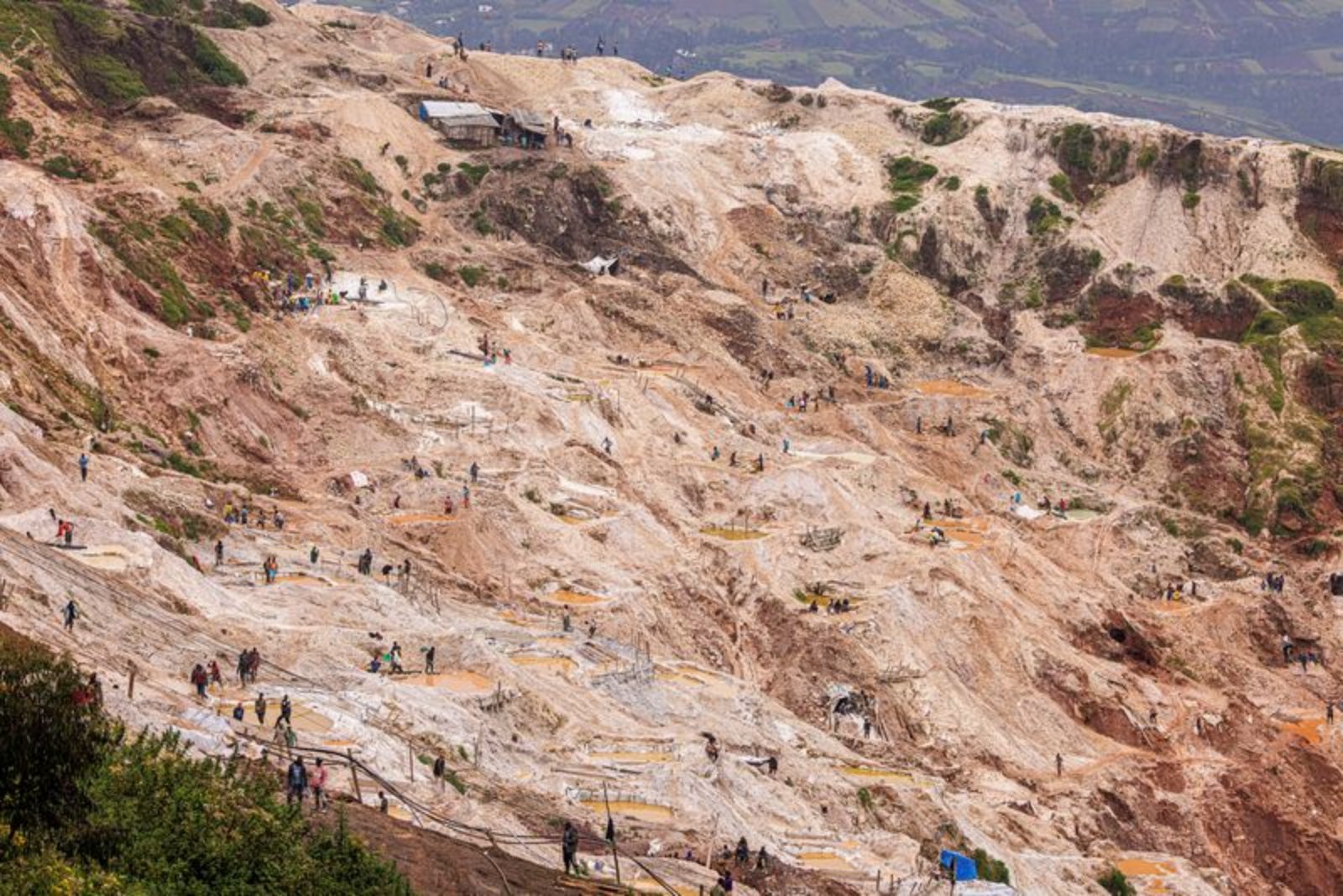
Some assets on Kinshasa’s shortlist sit in areas under the control of armed groups. The Rubaya mine, which supplies roughly 15% of global coltan and is under M23/AFC control, was cited as an example of how territorial control can deter investment. Analysts said Kinshasa’s inclusion of such sites in the shortlist signals that the government expects stronger U.S. intervention on security matters. Yet they also warned that investment is unlikely while rebel groups hold territory.
There are cases where U.S. diplomatic engagement has already eased security constraints enough for operations to resume. Alphamin Resources restarted its Bisie tin mine after U.S. pressure helped reduce fighting around the site. Still, the company warns that renewed clashes could jeopardize access and operations, underlining how fragile security gains can be.
Beyond security, the permitting regime itself is a structural brake. Analysts and advisers note that some projects have disputed permits, incomplete ownership records or deficient transparency reporting. High-grade copper-cobalt assets, such as concessions linked to Chemaf and state miner Gecamines, carry political disputes and complex permitting histories that make Western lenders wary.
Disputes and debt slow transactions
Transaction timelines have also slowed because of intra-industry disputes and heavy indebtedness. At the Manono lithium deposit, a U.S.-backed firm, KoBold, is attempting to resolve a dispute with Australia’s AVZ, while China’s Zijin appears to be preparing shipments from the same area. The sale of Chemaf to Virtus has hit snags after owners signalled the roughly $30 million bid does not cover the company’s substantial debts.
Even projects positioned as "easy wins" - for example, tailings reprocessing or the construction of cobalt refineries - are conditioned on governance reforms and concrete security guarantees from Kinshasa. Officials have told potential investors that success in these initiatives is contingent on reforms and guarantees Washington may be uniquely positioned to help deliver.
Compliance gap between Western and Chinese players
Western companies face compliance obligations that shape their pace of entry into Congo. These include anti-bribery vetting, the need to establish clean chains of title, and requirements to document community impacts. Chinese firms, operating under different standards, can move more quickly in many cases and are less encumbered by the due diligence and transparency regimes that Western investors must satisfy.
At Manono, Zijin’s head start on building roads, power links and port connections is already influencing project dynamics. KoBold’s local head said the company plans to share that infrastructure once the ownership disputes are resolved, reflecting a pragmatic approach that adjusts to assets already being developed by China-linked players.
The upshot is a contrast in operational tempo: Beijing-linked operators can absorb uncertainty and proceed with infrastructure and production build-out, whereas U.S.-backed firms often remain caught in extended due-diligence cycles.
Strategy versus execution
The diplomatic engagement from Washington has succeeded in drawing American attention and political capital into Congo’s mining sector. Kinshasa appears to be banking on that attention converting into security and political gains. But analysts caution that translating strategic intent into a faster mobilisation of Western capital will be difficult without firms willing to accept the long time horizons and risk profiles typical of major projects in Congo.
Washington has indicated a preference for "ready-to-produce" assets, which could yield nearer-term gains. A broader shift toward larger, longer-term investments would require U.S. companies to absorb Congo-level risk and tolerate multi-year waits for returns - a posture few are prepared to adopt at present, according to observers who study the geopolitics of natural resources in Africa.
What remains uncertain
For now, Chinese firms hold dominant positions across Congo’s copper-cobalt and other rare mineral sectors, controlling more than 70% of certain assets. Nothing in the current developments indicates Washington has significantly loosened Beijing’s grasp on those resources. What the U.S.-Congo engagement will look like over time, and whether it will lead to meaningful commercial shifts, is still an open question.
The combination of contested licences, security risks, debt overhangs and Western compliance obligations forms a set of practical constraints that will determine whether U.S. strategic resolve can turn into accelerated capital deployment and operational change on the ground.
Until these constraints are resolved, the pace of U.S. entry into Congo’s mineral sector is likely to be measured and uneven, even as high-level political commitments remain in place.