
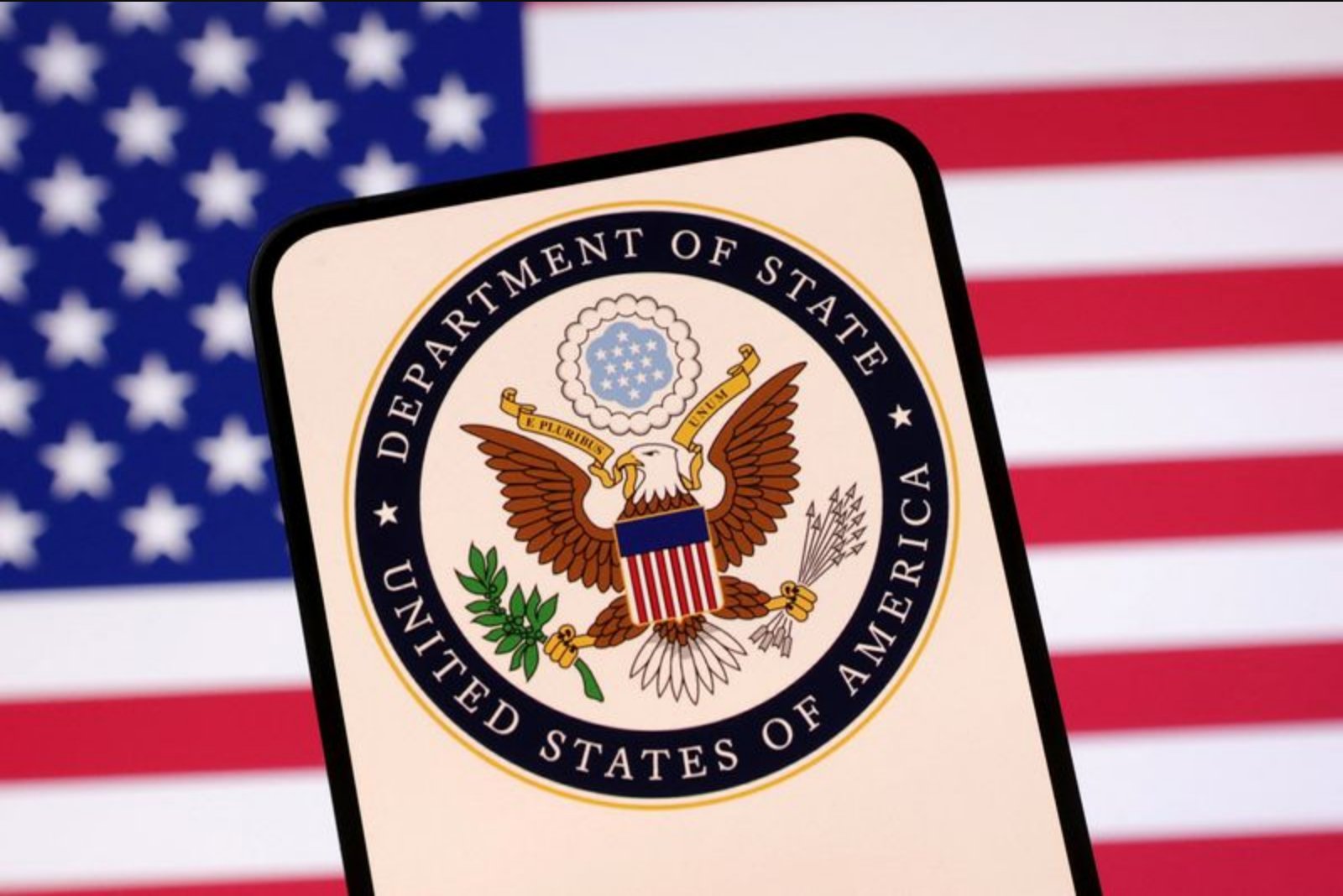
The U.S. State Department is assembling an internet portal designed to allow people in Europe and other regions to view material their governments have removed or blocked, three sources familiar with the initiative said. The site, the sources added, will be hosted at the web address freedom.gov.
Officials involved in planning have discussed including a virtual private network function to mask a user's geographic origin so traffic would appear to come from the United States. The sources also said the project will be configured so that user activity on the site is not tracked.
Undersecretary for Public Diplomacy Sarah Rogers is leading the effort, according to the sources. The rollout had been expected at last week’s Munich Security Conference but did not occur, the sources said. Reuters could not determine the reason for the delay. Two sources said some State Department staff, including lawyers, had raised questions or concerns about the initiative, though those sources did not specify the content of those concerns.
In a statement to Reuters, a State Department spokesperson said the U.S. government does not operate a censorship-circumvention program aimed specifically at Europe. The spokesperson emphasized that digital freedom is a priority for the department and cited the general proliferation of privacy and censorship-circumvention technologies like VPNs. The spokesperson also rejected the characterization that an announcement had been delayed and said it was inaccurate to assert that State Department lawyers had raised concerns.
Officials involved with the project view it as a tool to counter what they see as censorship. But the portal would put the United States in an unusual position of seemingly encouraging users to access material that may be illegal under local laws, a dynamic that could further complicate relations with allied European governments already facing disputes with Washington over trade, responses to Russia’s war in Ukraine, and other geopolitical issues.
European governments and the European Union maintain a markedly different legal framework for regulating speech online than that used in the United States. The EU subjects social media platforms and large internet services to rules that restrict or require rapid removal of content classified as illegal hate speech, terrorist propaganda, or harmful disinformation under a body of rules, laws and judicial decisions stretching back to 2008. Those enforcement mechanisms apply most heavily to major platforms such as Meta’s Facebook and X.
In recent actions that illustrate those enforcement regimes, X was fined 120 million euros in December for noncompliance with regulators. German authorities issued 482 removal orders in 2024 for content deemed to support or incite terrorism and compelled providers to take down 16,771 pieces of material. Separately, Meta’s oversight board ordered the removal of posts by a Polish political party that used a racial slur and portrayed immigrants in a criminalizing manner, a category that EU law treats as illegal hate speech.
Those European rules are the target of criticism from some U.S. officials who argue that the measures suppress political speech by right-wing figures in countries including Romania, Germany and France. The Trump administration has repeatedly foregrounded concerns about what it describes as the stifling of conservative voices online and has made free speech a foreign policy priority in meetings and outreach that includes European nations and Brazil, according to the sources.
Rogers has emerged publicly as an outspoken proponent of the administration’s stance on European digital content rules. Since taking office in October, she has traveled to more than half a dozen European countries, holding meetings in which representatives of right-leaning groups described to U.S. officials what they say are instances of repression. The department declined to make Rogers available for an interview.
Observers and former officials have signaled that the portal would be perceived in Europe as an intentional effort to undermine national content restrictions. Kenneth Propp, a former State Department official who worked on European digital regulations and now is at the Atlantic Council’s Europe Center, described freedom.gov as likely to be seen in Europe as a direct challenge to national law provisions. The sources also said Edward Coristine, a former member of a Trump-era Department of Government Efficiency and a participant in the National Design Studio, has been involved in the portal effort. Reuters was unable to reach Coristine for comment.
At present it is unclear what, if any, operational advantages the U.S. portal would offer beyond commercial virtual private networks and other existing privacy tools. The domain name freedom.gov was registered on January 12, according to the federal registry get.gov. On Wednesday the site displayed no substantive content; its landing page showed the National Design Studio’s logo, the phrase "fly, eagle, fly" and a log-in form.
Before the current administration, U.S. government programs had supported commercial VPNs and related tools as part of broader democracy-promotion efforts. Those earlier efforts focused on helping people in countries with restrictive information environments, including China, Iran, Russia, Belarus, Cuba, Myanmar and other states, to access free information. The current portal initiative appears to be oriented toward addressing access limitations imposed by allied and partner countries in Europe and elsewhere, according to the people familiar with the plan.
Implications for markets and sectors
- Technology platforms and major social media companies may face renewed scrutiny as governments debate access controls and enforcement regimes.
- Communications infrastructure and cybersecurity sectors could be affected if the portal incorporates VPN-like capabilities or prompts increased demand for circumvention tools and privacy technologies.
- Diplomatic and regulatory relations between the U.S. and European governments may influence cross-border compliance costs for digital services and platforms operating in both jurisdictions.
Contextual notes
The details in this report are drawn from sources familiar with the U.S. State Department planning process and comments from a State Department spokesperson. Some specifics, including internal concerns and the reasons behind the delayed unveiling, were not publicly detailed by the sources.